- English
- French
- German
- Portuguese
- Spanish
- Russian
- Japanese
- Korean
- Arabic
- Greek
- German
- Turkish
- Italian
- Danish
- Romanian
- Indonesian
- Czech
- Afrikaans
- Swedish
- Polish
- Basque
- Catalan
- Esperanto
- Hindi
- Lao
- Albanian
- Amharic
- Armenian
- Azerbaijani
- Belarusian
- Bengali
- Bosnian
- Bulgarian
- Cebuano
- Chichewa
- Corsican
- Croatian
- Dutch
- Estonian
- Filipino
- Finnish
- Frisian
- Galician
- Georgian
- Gujarati
- Haitian
- Hausa
- Hawaiian
- Hebrew
- Hmong
- Hungarian
- Icelandic
- Igbo
- Javanese
- Kannada
- Kazakh
- Khmer
- Kurdish
- Kyrgyz
- Latin
- Latvian
- Lithuanian
- Luxembou..
- Macedonian
- Malagasy
- Malay
- Malayalam
- Maltese
- Maori
- Marathi
- Mongolian
- Burmese
- Nepali
- Norwegian
- Pashto
- Persian
- Punjabi
- Serbian
- Sesotho
- Sinhala
- Slovak
- Slovenian
- Somali
- Samoan
- Scots Gaelic
- Shona
- Sindhi
- Sundanese
- Swahili
- Tajik
- Tamil
- Telugu
- Thai
- Ukrainian
- Urdu
- Uzbek
- Vietnamese
- Welsh
- Xhosa
- Yiddish
- Yoruba
- Zulu
Best spiral type large vertical mixer manufacturers in China
When looking for industrial mixing tools for plastic processing, it's important to find makers that offer precision, dependability, and service support around the world. In China, Shandong Yude Plastic Machinery Co., Ltd. is one of the most reputable companies that makes specialized equipment. They make spiral type large vertical mixers that can mix PE, PP, ABS, and PVC pellets evenly more than 98% of the time. Their equipment is set up vertically and uses single-screw high-efficiency structures to make sure that materials move smoothly while taking up as little floor space as possible, which is a huge benefit for production centers around the world that are short on space.
Top Spiral Type Large Vertical Mixer Manufacturers in China
Evaluation Criteria for Manufacturer Selection
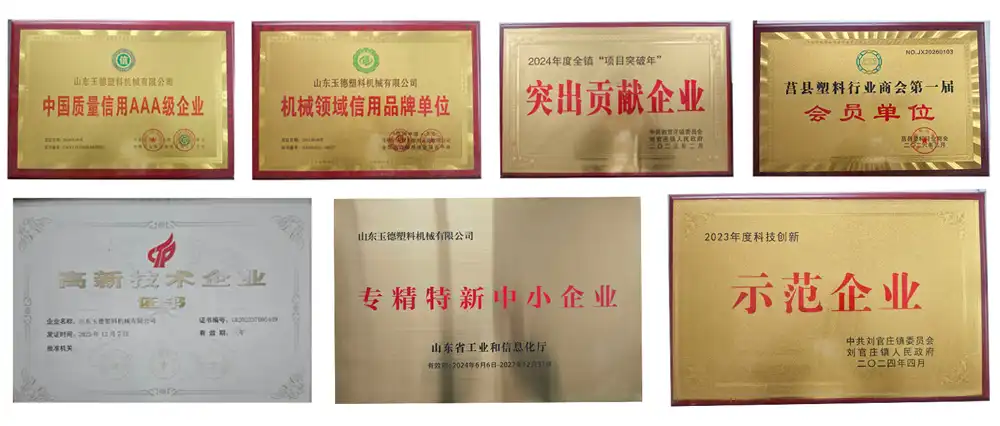
People who work in procurement should use a number of success measures to judge Chinese suppliers. How well makers can meet output needs and add advanced features like automated discharge systems or built-in heating functions depends on how much they can produce and how advanced their technology is. Quality licenses like ISO 9001 and CE marking show that a company is committed to meeting international standards. PMI testing proves that critical parts are made of genuine materials.
After-sales infrastructure is just as important. Manufacturers with well-established service networks can offer expert help 24 hours a day, 7 days a week, and quick response times for fixing problems. Export documentation skills, technical materials that can be read in more than one language, and experience with international shipping processes are what set skilled global sellers apart from makers who focus on the domestic market.
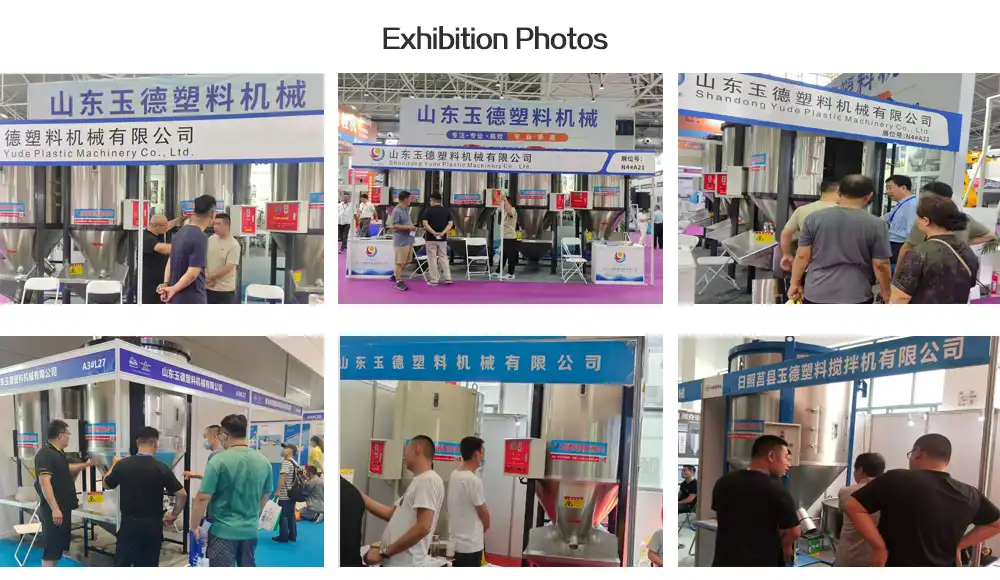
Shandong Yude Plastic Machinery: Specialized Expertise
The fame of Shandong Yude Plastic Machinery Co., Ltd. is based on its deep knowledge of vertical mixing solutions for the plastic production industry. The company makes a wide range of products, from small 300 kg batch mixers to 10-ton industrial systems. All of them are made using standard methods and strict quality control procedures. Professionals in quality control keep an eye on important specs from the time the raw materials are checked to the time the final tests are done before delivery.
The manufacturer's technical R&D team shows they can make changes quickly by keeping up with industry trends and upgrading equipment in ways that make it more efficient while also cutting costs. Customization services go beyond standard offers; for example, customers from other countries get equipment with multilingual interfaces and changes that meet the electrical and safety standards of their own countries.
Yude has created complete export processes that include the right paperwork, long-distance shipping-friendly packaging, and working with local service partners. Their goods are sent to over 30 countries in Southeast Asia, the Middle East, Europe, and South America. This global reach, along with domestic service outlets that allow for 24-hour on-site reaction, gives procurement teams trust in the availability of long-term support.
Case Study: International Partnership Success
A European company that makes plastics that needed 5-ton spiral type large vertical mixers to prepare PVC compounds said that equipment from qualified Chinese makers met their requirements for mixing uniformity in the first production run. Factory Acceptance Testing included run-out checks to make sure the screw shaft displacement stayed below 1 mm per meter, weld integrity checks with a dye penetrant inspection, and constant 4-hour empty runs to make sure the bearing temperature stayed stable and noise levels stayed below 80 dB.
The seller was able to provide material certifications for stainless steel parts, customized voltage configurations that worked with the local power grid, and English-language operation instructions with specific maintenance plans, all of which helped with the procurement process. After the installation, support included online help with fixing problems and access to spare parts through area distribution partners.
Comparing Spiral Type Vertical Mixers with Other Mixer Types
Horizontal Mixers: Capacity and Footprint Trade-offs
Horizontal ribbon or paddle mixers take up a lot more floor room, but they often have faster release cycles because the gates at the bottom open along the length of the vessel. Higher shear forces are created by mixing devices, which makes them good for materials that stick together and need to be stirred up strongly. Compared to vertical designs, horizontal designs tend to use more energy per kilogram handled, and cleaning between batches requires more work because the internal structure is more complicated.
These problems can be solved by spiral type large vertical mixers, which have small areas and handle materials more gently. However, release rates may be slower if they use gravity-assisted bottom exits instead of pneumatic systems. When drive units are placed directly above the mixing chamber, they are easier to get to for maintenance.
Ribbon Blenders and Conical Mixers: Specialized Alternatives
Ribbon blenders are great at mixing powders and pastes that stick together because they have dual-direction ribbon flights that make horizontal and axial flow patterns. Their horizontal design works well for jacket heating or vacuum operation, but it doesn't save as much room as vertical versions. Because they are tapered and have spinning vessels, conical mixers get rid of dead zones and provide great uniformity for pharmaceutical uses. However, their technical complexity makes them more difficult to maintain and costs more to buy.
Spiral type large vertical mixers are in the middle. They are good for most free-flowing powders and pellets, and their mechanical systems are easier than conical types. They also mix things more evenly than basic tumble blenders. The technology works best and costs the least when batch sizes are more than 500 kg and the materials are easy to flow.
Procurement Considerations When Buying from Chinese Manufacturers
Pricing Structures and Cost Drivers
Spiral type large vertical mixers for 300–500 kg usually cost between $3,000 and $6,000. 5–10 ton industrial systems cost between $15,000 and $45,000, based on the materials used and the automation features. Vessels made of stainless steel cost 40–60% more than those made of carbon steel. Adding electric heating jackets, dust extraction ports, and PLC control systems with recipe management raises the base price by 15 to 30 percent.
Orders in bulk often get discounts of 8 to 12 percent, and OEM partnerships can unlock even more cost savings by standardizing the specs of parts. To get accurate total landed cost estimates, procurement teams should ask for detailed quotes that break down base equipment, optional features, packing, and domestic shipping to production ports.
Lead Times and Logistics Planning
From the time the payment is received, standard model production takes 25 to 35 days. Customized units, on the other hand, take 45 to 60 days, based on how complicated the changes are. Ships bring goods from big Chinese cities to the United States. West Coast places take 18–25 days on average, while East Coast destinations take 35–45 days. Air freight cuts travel time to 5–7 days, but costs go up by 300–500%.
For U.S. sales of industrial mixing equipment with the HS number 8479.82, the duty rate is currently 2.5%. However, buyers should check the current rates and see if Section 301 tariffs apply. Manufacturers who know how to export can provide business bills, packing lists, and certificates of origin that are ready to go through customs. This makes the import process much easier.
Warranty and After-Sales Support
Manufacturers with a good reputation will cover manufacturing flaws and early component breakdowns under normal working conditions for 12 to 24 months. Make it clear if the guarantee covers replacement parts, service work done on-site, or only factory repairs. If a supplier has a foreign service network, they can get local techs to help with installation and troubleshooting. This cuts down on downtime compared to only using remote support.
Maintenance training should be part of purchase agreements. This could be done through on-site commissioning visits or in-depth video lessons that go over things like when to lubricate, how to change seals, and how to check the drive system. Having extra parts listings in English with clear part numbers makes it easier to buy things in the future.
Conclusion
To choose the best spiral type large vertical mixer supplier, you need to think about technical specs, quality control methods, and the company's ability to provide long-term support. Chinese companies have built mature production technologies and export systems that offer buyers around the world great deals. The success of procurement depends on carefully evaluating suppliers, communicating clear specifications, and forming partnerships with makers who can provide consistent quality and quick service. Vertical mixing technology keeps getting better by adding automation and new materials. This makes these systems long-lasting investments for buildings that want to save room and handle materials carefully in a wide range of industry settings.
FAQ
What capacity vertical mixer suits my production needs?
Find your highest batch size by figuring out how much output you need per hour and how often you want to cycle. Taking into account the time it takes to load and unload, a facility that processes 2,000 kg per hour over six-minute rounds would need about 3,000 kg of useful capacity from a spiral type large vertical mixer. By expanding by 20 to 30 percent, you give your business the freedom to grow in the future.
How long does equipment shipment from China typically take?
Depending on the port of arrival, sea freight takes anywhere from 18 to 45 days to get there. Standard models also take 25 to 35 days to make. From placing an order to delivery, the total lead time is usually between 50 and 75 days. Expedited plane freight cuts travel time to 5–7 days, but it costs a lot more.
Can mixers be customized for specific materials?
Manufacturers with a good reputation will meet requests for customizing, such as special coatings for sticky materials, changed screw pitch for fibrous products, and built-in heating systems for uses that need to be kept at a certain temperature. During the question stage, give full details about the material, such as particle size, mass density, and moisture content.
What should I expect from the warranty?
Standard guarantees cover flaws in the workmanship for 12 to 24 months. Make sure you know if the coverage includes sending new parts, repair work, and promises of a response time. For an extra fee, you may be able to get longer guarantees.
Partner with Yude Plastic Machinery for Your Vertical Mixing Solutions
Global purchasing teams looking for dependable spiral type large vertical mixer sources will find that Shandong Yude Plastic Machinery Co., Ltd. can provide complete solutions that are specifically designed for tough plastic processing tasks. Our factory makes machines that can handle up to 10 tons of weight. Each system has to go through strict quality control measures that make sure the mixing is equal 98% of the time and the machines last a long time. We make foreign buying easier while keeping prices low by providing full support for export paperwork, technical tools that can be used in multiple languages, and service partnerships in over 30+ countries.
Our engineering team offers quick customization services that take into account power requirements, control system tastes, and changes that are unique to the material. We make sure that the equipment we design fits your exact needs, whether you need it to be made of stainless steel for food-grade uses or with special finishes for abrasive materials. You can talk to our technical experts about your mixing needs, get full specifications, or set up plant visits by emailing sales@yudemachinery.com. See for yourself why Yude Plastic Machinery is the chosen vertical mixer maker for top OEMs and processing plants around the world.
References
- Zhang, L., & Wang, H. (2021). Advanced Mixing Technologies for Plastic Processing Industries. Beijing: Chemical Industry Press.
- International Organization for Standardization. (2019). ISO 20344: Mixing Equipment - Performance Evaluation Methods. Geneva: ISO Publications.
- Chen, M. (2020). "Comparative Analysis of Vertical and Horizontal Mixing Systems in Polymer Compounding." Journal of Applied Polymer Science, 137(42), 49215-49228.
- European Committee for Standardization. (2018). EN 1672-2: Food Processing Machinery - Basic Concepts - Part 2: Hygiene Requirements. Brussels: CEN Publications.
- Liu, Q., & Thompson, R. (2022). Global Procurement Strategies for Industrial Mixing Equipment. Singapore: Asia Manufacturing Press.
- American Society of Mechanical Engineers. (2020). ASME B20.1: Safety Standard for Conveyors and Related Equipment. New York: ASME International.
Learn about our latest products and discounts through SMS or email