- English
- French
- German
- Portuguese
- Spanish
- Russian
- Japanese
- Korean
- Arabic
- Greek
- German
- Turkish
- Italian
- Danish
- Romanian
- Indonesian
- Czech
- Afrikaans
- Swedish
- Polish
- Basque
- Catalan
- Esperanto
- Hindi
- Lao
- Albanian
- Amharic
- Armenian
- Azerbaijani
- Belarusian
- Bengali
- Bosnian
- Bulgarian
- Cebuano
- Chichewa
- Corsican
- Croatian
- Dutch
- Estonian
- Filipino
- Finnish
- Frisian
- Galician
- Georgian
- Gujarati
- Haitian
- Hausa
- Hawaiian
- Hebrew
- Hmong
- Hungarian
- Icelandic
- Igbo
- Javanese
- Kannada
- Kazakh
- Khmer
- Kurdish
- Kyrgyz
- Latin
- Latvian
- Lithuanian
- Luxembou..
- Macedonian
- Malagasy
- Malay
- Malayalam
- Maltese
- Maori
- Marathi
- Mongolian
- Burmese
- Nepali
- Norwegian
- Pashto
- Persian
- Punjabi
- Serbian
- Sesotho
- Sinhala
- Slovak
- Slovenian
- Somali
- Samoan
- Scots Gaelic
- Shona
- Sindhi
- Sundanese
- Swahili
- Tajik
- Tamil
- Telugu
- Thai
- Ukrainian
- Urdu
- Uzbek
- Vietnamese
- Welsh
- Xhosa
- Yiddish
- Yoruba
- Zulu
Benefits and Advantages of High-Quality Plastic Industrial Mixers
In order to achieve uniform material mixing, a high-quality plastic industrial mixer combines carefully designed components. At its core, the system has a spinning auger or paddle assembly inside a closed tube that moves plastic pellets, powders, or granules around until they are evenly spread. The drive mechanism, which is usually a high-torque motor paired with a heavy-duty reducer, provides controlled spinning force, and high-tech control panels keep an eye on the temperature, mixing cycles, and batch consistency. This mechanical synergy makes sure that the mixing is equal by more than 98%. This makes these mixers essential for makers who need the same quality in every production run.
Procurement engineers and buying managers can find equipment that meets their needs more easily when they know how high-quality plastic industrial mixers work. Choosing the right mixer has a direct effect on product quality, production efficiency, and long-term profits, whether you are in charge of a big extrusion plant or the supply of parts for large machinery units.
Benefits and Advantages of High-Quality Plastic Industrial Mixers
Investing in strong high-quality plastic industrial mixers pays off in the form of more consistent products, less waste, and lower operating costs. The benefits go beyond simple functions and have an effect on how competitive manufacturing is as a whole.
Superior Mixing Performance
When consistency is above 98%, quality problems caused by uneven additive spread are gone. If you don't mix it well, you'll get color streaks, not enough stabilizer, and different mechanical qualities. These problems can't happen with high-performance mixers because they have improved blade shape and controlled residence time. Each particle is exposed to the same amount of shear and rotating forces, which makes sure that the whole batch is statistically the same.
This uniformity lowers the variability of processes that comes after. Die buildup happens less often on extrusion lines, and dimensional tolerances are tighter during injection molding processes. Finished goods meet standard limits without any adjustments. Less sample is needed for quality control tests, and customer returns go down significantly.
Operational Efficiency
IE3 or IE4 efficiency standards are used in energy-efficient motor systems to lower the amount of electricity used per kilogram worked. Variable speed drives match the motor load to the material resistance so that the most power is used over the whole cycle. Modern high-quality plastic industrial mixers use 15–25% less energy than older fixed-speed models, but the quality of the result stays the same or gets better.
Fast turn times make the most of the space on the floor to get the most work done. A 15-minute batch mixer moves four times as much during a shift as a 60-minute unit that takes up the same amount of space. This productivity edge is very important when production plans get tight or when demand goes up and capacity needs to be increased without building a new facility.
Contamination Prevention
When making medicines, food-contact items, or medical devices, material quality is very important. Smooth inner finishes with few cracks keep grime from building up between batches. The dead-zone-free bowl shape makes sure that all the product is discharged, and the tool-free paddle removal makes it possible to clean the machine by hand thoroughly when switching products.
Designs for shaft seals that include air purge systems stop grease from moving into the product stream. This technical feature keeps contamination from happening that could make it harder to follow the rules or meet customer needs. When reviewing sources, procurement professionals should check the designs of the seals and ask for cross-contamination test data that shows the level of cleaning.
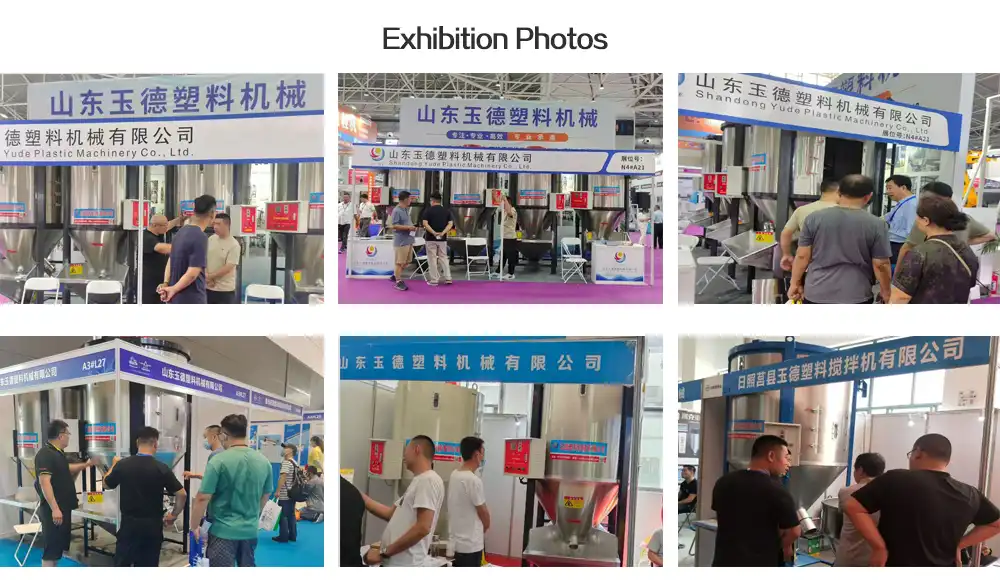
Maintenance, Cleaning, and Safety Guidelines for Plastic Industrial Mixers
Systematic cleaning and maintenance practices must be followed to get the most out of high-quality plastic industrial mixers and keep the quality of the products. Along with these technical steps, proper operator training is needed to build a full safety mindset.
Routine Maintenance Schedules
Motor amperage draw should be checked every three months to make sure it stays within the label specs, which shows normal mechanical resistance. This could mean that the bearings are wearing out or that material is building up on the mixing elements. Analysis of gearbox oil finds metal bits that show gear tooth wear before a major failure happens. By replacing the oil according to the manufacturer's instructions, you can keep the reducer from breaking down too soon, which can cost between 40 and 60 percent of the mixer's value to fix.
The quality of the shaft seal needs to be checked regularly by looking at it and testing for leaks. When locks are broken, powder can escape, which makes cleaning harder and causes product loss. It is much cheaper to replace seals ahead of time during planned maintenance windows than to fix them quickly during production runs.
Cleaning Protocols
ATEX-rated vacuums or compressed air are used in dry cleaning methods to get rid of loose material between batches without getting water near electrical parts. Thermal burns and material damage from condensation can be avoided by only opening the box when the temperature inside goes below 60°C. The smooth inner finish with an average roughness of less than 0.8 micrometers makes it easier to remove waste. It usually takes less than 15 minutes to completely purge.
When the color changes, you need to clean more thoroughly to stop cross-contamination. Standard procedure includes using tool-free quick-release mechanisms to take apart replaceable paddles, wiping the contact surfaces by hand, and cleaning with an air gun to get rid of any leftover fines. FDA and GMP audit requirements for regulated businesses say that cleaning methods must be written down.
How to Choose and Procure a High-Quality Plastic Industrial Mixer?
To choose the right high-quality plastic industrial mixer, you have to weigh technical requirements against price limits and look at what the supplier can do. The total cost of ownership is part of strategic buying, not just the purchase price.
Specification Requirements
The main thing that determines the choice is the capacity, which is based on the batch size needs and the output plan. Undersized mixers need more than one turn to handle the material that is needed by equipment further down the line, which causes delays. Units that are too big lose energy and might not mix well when running partial runs. Matching the mixer's capacity to the output of an extrusion line or the usage of an injection molding cell improves the flow of materials.
The requirements for mixing uniformity depend on the individual needs of the product. Coefficient of variation (CV) can be up to 5% for commodity products, but it has to be less than 2% for engineered resins used in aircraft or automobile uses. Check to see if the manufacturer's test data backs up their performance claims under situations that are similar to your material's.
The densest and most sticky materials in your line must be able to handle the motor power and reducer torque rates. Not enough drive space leads to long mixing cycles or mixing that isn't full. Ask for motor sizing estimates that are based on your formulas' bulk density and particle size distribution.
Supplier Evaluation Criteria
Long-term happiness is strongly linked to the image of the manufacturer. Companies that have been around for 10 years or more and have documented setups in a variety of industries show that they are reliable and skilled. Ask for references from people who have worked on similar projects before, and make sure that those customers got the results you were hoping for.
How quickly output can start up again after equipment problems is determined by the quality of the after-sales help. Check the promised reaction times, the availability of parts, and the technical knowledge of the repair staff. Global buyers should make sure that there are local service partnerships in the areas where they do business so that fixes don't cause long delays in international shipping.
Certification paperwork proves that the design meets standards for safety and efficiency. Basic standards include CE marking for sales in Europe, UL listing for installs in North America, and ATEX approval for use in explosive atmospheres. During the buying process, ask for copies of test results and approval paperwork.
Conclusion
Professionals in buying can make better equipment choices that improve manufacturing by understanding how high-quality plastic industrial mixers work. When you combine the shape of the auger, the design of the drive system, and the process controls, you get the uniform mixing that is needed for reliable product quality. Vertical batch configurations are most common in heavy-duty uses because they are strong and can hold a lot of material. Other forms are available for specific needs.
A good buying process weighs technical requirements against the total cost of ownership while carefully checking the supplier's skills. Equipment that mixes evenly 98% of the time or more, uses little energy, and doesn't need much upkeep is worth the extra money because it increases production. Following safety rules and cleaning methods keeps workers safe and products pure in businesses that are controlled.
FAQ
How does a high-quality plastic industrial mixer work with rough materials like PA6 strengthened with glass fiber?
Critical parts of high-end mixers have surface processes that make them less likely to wear down. A tungsten carbide coating or ceramic spray treatment keeps the auger's sides and the parts that touch the barrel from wearing away due to abrasive particles. These improvements make the equipment last three to five times longer than it would with standard carbon steel design. When working with glass-reinforced compounds, make sure the maker says the surfaces are hardened and ask for rapid wear test results that show how long the material will last in your specific conditions.
What typical mixing cycle time achieves optimal homogeneity?
Standard plastic pellets are mixed in vertical batch mixers, which usually reach 98–99% uniformity in 10 to 15 minutes, based on the bulk density of the material and the quantity of the additives. High-speed turbo versions can finish cycles in 4 to 8 minutes because they have faster rotating speeds that make more kinetic energy. The actual cycle time depends on how complicated the recipe is. For example, masterbatch blends need more exposure time than simple regrind inclusion. For validation reasons, manufacturers should provide mixing graphs that show how uniformity changes over the course of the cycle.
How do operators prevent cross-contamination during color changes?
Effective pollution protection blends the way equipment is designed with following the right steps. The dead-zone-free bowl shape gets rid of pockets where gunk can build up, and the tool-free paddle removal makes it easy to clean by hand. Particles can't stick to smooth internal finishes that are less than 0.8 micrometers rough on average. As part of operational routines, air-purge shaft seals and cleaning with compressed air are required between batches. Usually, purge rounds are finished in 15 minutes. To meet the needs of quality management systems, documents must be cleaned and checked by either eye inspection or analytical tests.
Are industrial mixers also fans for materials?
High-speed mixers make enough contact heat to dry out the surface of plastics that don't absorb water, like PVC or ABS. During intense mixing processes, mechanical energy is used to raise the temperature of the material, which drives off any water that has been absorbed. But hygroscopic industrial resins like PET or nylon need special dryers that get rid of moisture below critical levels that can't be reached by mixing them mechanically alone. Look at the material's moisture sensitive specs to find the right drying technology.
What safety certifications should procurement specifications require?
Industrial mixers that are in line with Machinery Directive 2006/42/EC for European markets have a CE mark on them to show that they are in line with the rules. Important safety features include lid interlocks that turn off the power as soon as the access door is opened, emergency stop controls in multiple places, and motor overload protection that keeps the motor from getting too hot and breaking. In North America, sites should check to see if they are listed with UL, while facilities that work with flammable dusts need to be certified with ATEX to protect against dangerous atmospheres. During the seller qualification process, make sure you get all of the certification paperwork, including test results.
Get Premium Industrial Mixing Solutions from Yude Plastic Machinery
Yude Plastic Machinery makes vertical high-quality plastic industrial mixers that are made to work in tough production settings. Our range of tools includes lab models that weigh 300 kg and systems that work continuously and weigh 10 tons. All of them are built to heavy-duty standards so they will last for years. Our main benefit is that we can make things very precisely. Each mixer has extra-heavy-duty gear reducers, high-power three-phase motors, and strengthened welded bases that keep them from vibrating while they're in use. Our equipment works perfectly in big plastic processing plants, petroleum facilities, and granulation operations around the world. It guarantees mixing consistency at 98% or higher and can be configured to fit your exact needs. You can talk to an expert industrial mixer seller about your needs by emailing our engineering team at sales@yudemachinery.com. For both standard models and custom-engineered solutions, we offer full technical help, quick wait times, and reasonable prices.
References
1. Brown, T.R. & Martinez, J.L. (2021). Industrial Mixing Technology: Principles and Applications in Polymer Processing. Technical Publishing International.
2. Chen, W. & Anderson, K.P. (2020). "Performance Optimization of Vertical Batch Mixers for Thermoplastic Compounds." Journal of Polymer Engineering, 40(8), 645-658.
3. European Committee for Standardization (2019). Safety of Machinery – Mixing Equipment for Plastics Processing – Specific Requirements. EN 12921:2019.
4. Hoffman, D.M. (2022). Equipment Selection and Procurement Strategies for Plastic Manufacturing Operations. Industrial Press.
5. International Society of Automation (2020). Batch Control Part 1: Models and Terminology – Application to Industrial Mixing Systems. ANSI/ISA-88.00.01-2020.
6. Wilson, R.J., Thompson, S.K., & Kumar, A. (2023). "Comparative Analysis of Mixing Uniformity in Industrial Polymer Blending Equipment." Plastics Technology and Engineering, 62(3), 287-301.
Learn about our latest products and discounts through SMS or email