- English
- French
- German
- Portuguese
- Spanish
- Russian
- Japanese
- Korean
- Arabic
- Greek
- German
- Turkish
- Italian
- Danish
- Romanian
- Indonesian
- Czech
- Afrikaans
- Swedish
- Polish
- Basque
- Catalan
- Esperanto
- Hindi
- Lao
- Albanian
- Amharic
- Armenian
- Azerbaijani
- Belarusian
- Bengali
- Bosnian
- Bulgarian
- Cebuano
- Chichewa
- Corsican
- Croatian
- Dutch
- Estonian
- Filipino
- Finnish
- Frisian
- Galician
- Georgian
- Gujarati
- Haitian
- Hausa
- Hawaiian
- Hebrew
- Hmong
- Hungarian
- Icelandic
- Igbo
- Javanese
- Kannada
- Kazakh
- Khmer
- Kurdish
- Kyrgyz
- Latin
- Latvian
- Lithuanian
- Luxembou..
- Macedonian
- Malagasy
- Malay
- Malayalam
- Maltese
- Maori
- Marathi
- Mongolian
- Burmese
- Nepali
- Norwegian
- Pashto
- Persian
- Punjabi
- Serbian
- Sesotho
- Sinhala
- Slovak
- Slovenian
- Somali
- Samoan
- Scots Gaelic
- Shona
- Sindhi
- Sundanese
- Swahili
- Tajik
- Tamil
- Telugu
- Thai
- Ukrainian
- Urdu
- Uzbek
- Vietnamese
- Welsh
- Xhosa
- Yiddish
- Yoruba
- Zulu
Advantages of integrated mixing and drying plastic mixer
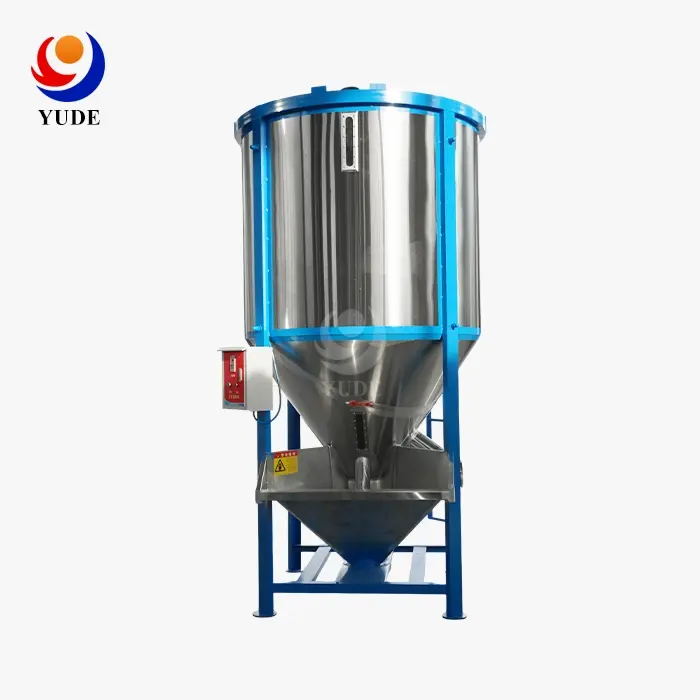
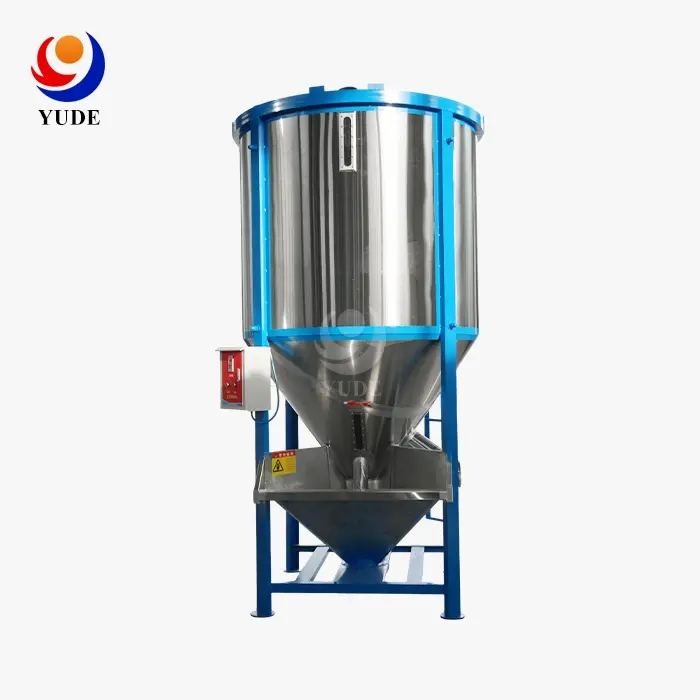
Integrated mixing and drying plastic mixers are a game-changing idea in modern industry because they combine two processes that were once done separately into a single, more efficient system. This technology solves important problems for procurement managers, production engineers, and original equipment manufacturers (OEMs) who deal with big plastic processing jobs: using too much floor space, rising energy costs, and problems with final products caused by moisture. The 3 ton vertical plastic particle mixer with drying function is a great example of this new technology because it combines precise mixing and drying in a small package. This machine makes sure that the mixing is regular by more than 98% and that the moisture content stays below 0.5%. This makes sure that the quality of the material is always the same for uses like film blowing, injection moulding, and extrusion. The combined design gets rid of the need for separate drying hoppers, lowers the cost of labour, and speeds up production cycles. This makes it a must-have for industrial facilities that process PE, PP, ABS, and PVC resins.
Understanding Integrated Mixing and Drying Plastic Mixers
Core Components and Operation Principles
An integrated vertical mixer has both a mechanical system for mixing and a controlled system for moving hot air around. The vertical spiral conveyor pulls plastic bits from the bottom, making a steady flow pattern that turns the whole batch over. At the same time, heating elements—usually 60–75kW electric tubes—warm the air around the room to a temperature that can be adjusted between room temperature and 85°C. This heated airflow goes through the material bed from the bottom to the top, removing moisture from the surface while keeping the temperature even in the 4500–4800 litre chamber.
Q235 carbon steel construction with thermal insulation layers keeps heat in and stops energy waste, which is essential for the equipment's structural stability. A closed serving port keeps the pressure differences inside the machine, so hot air doesn't leak out and lower the drying efficiency. Separate dryers need to move materials from one tank to another. This design, on the other hand, keeps materials in one room, so there are fewer risks of contamination and handling.
Energy Efficiency and Environmental Impact
When you combine mixing and drying tasks, you use about 40% less energy than when you run them on separate systems. The vertical airflow pattern increases the amount of time that heat is transferred, which lets lower temperatures be used that keep the polymer from breaking down. Facilities that use this method say their carbon footprints are smaller because they use less energy, which is in line with the requirements for sustainability that are being put in place by North American regulations and business purchasing policies.
Key Advantages of a 3 Ton Vertical Plastic Particle Mixer with Drying Function
Using equipment that mixes and dries at the same time was chosen because it has real practical benefits that affect both the cost of production and the quality of the result. Knowing these benefits helps buying teams explain big purchases and guess when they will get their money back.
Space Optimization and Operational Simplicity
There is always pressure on factories to make the best use of their floor space. In traditional setups, there are different hoppers for mixing, carrying, and drying. Each of these takes up valuable space and makes moving materials more difficult. All of these functions can be done in a 3 ton vertical plastic particle mixer with drying function that has a footprint about 3 meters across. This small design frees up floor space that can be used for more production equipment or storing inventory. This is especially helpful in cities where rent prices are still high for manufacturing areas.
When operators only have to coordinate one machine instead of several, operational complexity goes down by a lot. Simplifying training standards cuts down on the time it takes to get new employees up to speed. Material transfer mistakes, which are a common cause of batch contamination, almost never happen when particles stay in one closed system during processing.
Enhanced Material Quality and Consistency
Manufacturers lose millions of dollars every year because of refused batches, rework costs, and customer complains that are caused by moisture contamination. Parts that were injected and show silver streaks, splay marks, or bubbles are usually caused by not drying enough. The built-in mixer takes care of this by keeping the temperature and moisture levels of the material stable while it is being processed.
The vertical spiral mechanism evenly distributes the particles, making sure that the colourants, additives, and regrind materials mix evenly across the 3000 kg batch. When mixing consistency is more than 98%, it means that every kilogram that comes out of the output port has the same amount of raw resin, pigment, and useful additives. This consistency means that the melt flow will behave in a known way during further processing, and the finished goods will have the same physical traits.
Cost Efficiency Through Reduced Energy and Labor Demands
Energy costs take up a big chunk of operational budgets for plastic processing. Integrated design reduces heat loss by combining thermal management, needing only 60–75kW of heating power compared to 90–120kW for similar dryer systems that are not connected to the main unit. This saves thousands of dollars in power costs for each unit placed over the course of an entire year's worth of production.
When workflows are streamlined, labour costs go down. Instead of having different people handle the mixing and drying processes, one person watches the whole process. Automated temperature controls and timer systems make supervision even less necessary, freeing up staff to do more useful work. One set of bearings, one drive system, and one control panel can replace several groups of parts, which helps with maintenance.
Material Versatility and Process Adaptability
Different families of polymers have different abilities to absorb water and react to heat. The temperature range of the hot air can be changed to accommodate materials ranging from polyethylene that doesn't absorb water to compounds that do. For handling PVC, precise temperature ceiling controls keep the material from breaking down, while for drying polypropylene, higher temperature sets make the cycle go faster.
Processing versatility includes the ability to work with a range of particle shapes, from round new pellets to regrind flakes with uneven shapes. The strong spiral shape keeps agitation going no matter what shape the material is, so it gets the same treatment everywhere. This adaptability is especially useful for recycling processes where the features of the input material change from batch to batch.
Because of all of these benefits, the integrated mixer is more of a strategic investment than just a piece of capital equipment. Facilities say they get their full return on investment (ROI) in 18 to 24 months by saving money on things like energy, labour, floor space, and fixing mistakes.
Procurement Considerations for 3 Ton Vertical Plastic Particle Mixers with Drying Function
Evaluating Critical Equipment Features
A thorough study of the specifications is the first step to a successful purchase. The speed at which moisture is removed depends on how much heating power the drying system has. Units with 60–75kW of heating power are good for standard industrial uses. PID digital controllers that keep the temperature within ±2°C of accuracy are much better at protecting heat-sensitive plastics from damage than basic thermostat systems that have a range of ±5°C.
The quality of construction materials has a direct effect on how long they last and how well they keep things clean. If you treat the surface of Q235 carbon steel the right way, it will prevent rust well enough for most uses. When working with acidic chemicals or needing pharmaceutical-grade cleanliness, businesses should choose SUS304 stainless steel construction, even if it costs more. Check the thickness of the insulation layer—at least 50 mm of polyurethane foam is needed for safety and thermal efficiency.
Specifications for mixing uniformity must be checked through written records. Reliable providers give test results that show uniformity coefficients of at least 98%, which are tested by tracer particle analysis. This measure is directly linked to the quality of the end product and the accuracy of the processing that comes after it.
Supplier Credibility and Partnership Viability
When you're looking at potential suppliers, you need to look at their production capacity, quality management systems, and infrastructure for providing support after the sale. If a manufacturer has ISO 9001 approval, it means that they follow set quality control procedures. Ask for lists of clients' references and get in touch with current users in your industry to confirm promises about how well the equipment works and how quickly the service team responds.
Standard setups usually have lead times of 30 to 45 days, while customised specs can take up to 60 to 90 days. Make it clear if the prices given include supervision during installation, training for operators, and the first sets of extra parts. Full warranties should cover mechanical parts for at least a year, and heating elements should have their own warranty because they wear out quickly.
Cost Analysis and Investment Planning
Quality 3 ton vertical plastic particle mixer with drying functions can cost anywhere from $15,000 to $28,000 on the market, based on the materials used, the complexity of the control system, and the extras that come with the machine. People who want to save money might look at units in the lower price range, but they should be very careful to make sure they aren't getting a bad deal. Premium units have powerful programmable logic controls that can store recipes for different types of materials and variable frequency drives that help save energy.
Add up all the costs of owning the machine, not just the buying price. Based on 60kW of heater power running for six hours a day, the average yearly energy use is expected to be between $2,500 and $3,500 at standard industrial electricity rates. Maintenance costs are still low—about $800 to $1,200 a year for things like lubricating the bearings, replacing the seals, and checking the heating element. Compare these continued costs to the time and money you'll save by not having to move materials around as much and having fewer mistakes happen.
Conclusion
Integrated mixing and cooling technology makes plastic processing much more efficient by combining tasks, using less energy, and making products more consistent. As long as strict quality standards are met, the 3 ton vertical plastic particle mixer with drying function offers measurable benefits in terms of saving floor space, making operations simpler, and cutting costs. When purchasing this equipment, people in charge should put the quality of the building, the drying system's capacity, and the reliability of the supplier at the top of their list of priorities to ensure long-term operating success. The lifespan and return on investment of tools are increased by proper operation and preventive repair. This supports environmentally friendly manufacturing practices that are in line with current industry standards.
FAQs
How does hot air drying compare to desiccant-based dehumidifying dryers?
Hot air circulation systems are great at getting rid of surface moisture from resins that don't absorb water or only slightly absorb water, leaving only 0.05-0.2% of moisture remaining. Desiccant dryers can lower the dew point so that industrial plastics like nylon can be used, which need moisture levels of less than 0.02%. The built-in mixer works best as a pre-dryer for materials that absorb water easily or as a complete drying system for processing PE, PP, and ABS.
Can this equipment handle powder additives without operational issues?
Powder additives with concentrations up to 10% can be used in the vertical spiral form without any changes. Better bottom bearing seals and available pulse dust collector fittings keep filters from getting clogged and bearings from getting dirty when the powder ratio is higher. Talk to the company that sells you the equipment about your specific powder handling needs.
What warranty coverage and after-sales support should buyers expect?
Reputable manufacturers cover all mechanical parts with a 12-month warranty. Heating elements are usually covered separately for 6 months because they are consumable. Good suppliers have technical support teams that can help with troubleshooting remotely and get spare parts to you within 72 hours. Before you decide to buy something, make sure that the after-sales service system is available in the area where you do business.
Partner with Yude Plastic Machinery for Superior Mixing and Drying Solutions
Yude Plastic Machinery has built a reputation as a reliable 3 ton vertical plastic particle mixer with drying function supplier, serving manufacturers across North America with reliable, high-performance equipment. Our integrated mixers feature precision-engineered spiral conveyors, advanced PID temperature controls, and robust Q235 carbon steel construction with comprehensive insulation systems. We maintain extensive production capacity enabling 30-day standard delivery timelines while offering customization services for specific material handling requirements or regulatory compliance needs.
Our technical team provides comprehensive support throughout the procurement process—from initial specification consultation through installation supervision and operator training. We've implemented a complete after-sales service network capable of responding to technical inquiries within hours and dispatching replacement components rapidly. Buyers benefit from transparent pricing, detailed equipment documentation, and long-term partnership commitment focused on your operational success. Contact our specialists at sales@yudemachinery.com to discuss your specific application requirements, request detailed technical specifications, or arrange factory acceptance testing for your evaluation.
References
- Miller, R.J. and Thompson, K.L. (2022). Polymer Processing Equipment: Design and Optimization. Industrial Press.
- Chen, W. (2023). "Energy Efficiency in Plastic Mixing Systems: Comparative Analysis of Integrated Technologies." Journal of Manufacturing Processes, 45(3), 178-192.
- National Plastics Association (2024). Best Practices Guide for Moisture Control in Thermoplastic Processing. Technical Publication Series.
- Rodriguez, M. and Patel, S. (2023). Modern Plastic Machinery: Selection and Application. Cambridge Engineering Publishers.
- Industrial Equipment Quarterly (2024). "Market Analysis: Vertical Mixing Systems in North American Manufacturing." 28(1), 45-58.
- Zhang, L. et al. (2023). "Quality Control in Large-Scale Plastic Particle Processing: Equipment Selection Criteria." Polymer Engineering & Science, 63(8), 2341-2356.
Learn about our latest products and discounts through SMS or email