- English
- French
- German
- Portuguese
- Spanish
- Russian
- Japanese
- Korean
- Arabic
- Greek
- German
- Turkish
- Italian
- Danish
- Romanian
- Indonesian
- Czech
- Afrikaans
- Swedish
- Polish
- Basque
- Catalan
- Esperanto
- Hindi
- Lao
- Albanian
- Amharic
- Armenian
- Azerbaijani
- Belarusian
- Bengali
- Bosnian
- Bulgarian
- Cebuano
- Chichewa
- Corsican
- Croatian
- Dutch
- Estonian
- Filipino
- Finnish
- Frisian
- Galician
- Georgian
- Gujarati
- Haitian
- Hausa
- Hawaiian
- Hebrew
- Hmong
- Hungarian
- Icelandic
- Igbo
- Javanese
- Kannada
- Kazakh
- Khmer
- Kurdish
- Kyrgyz
- Latin
- Latvian
- Lithuanian
- Luxembou..
- Macedonian
- Malagasy
- Malay
- Malayalam
- Maltese
- Maori
- Marathi
- Mongolian
- Burmese
- Nepali
- Norwegian
- Pashto
- Persian
- Punjabi
- Serbian
- Sesotho
- Sinhala
- Slovak
- Slovenian
- Somali
- Samoan
- Scots Gaelic
- Shona
- Sindhi
- Sundanese
- Swahili
- Tajik
- Tamil
- Telugu
- Thai
- Ukrainian
- Urdu
- Uzbek
- Vietnamese
- Welsh
- Xhosa
- Yiddish
- Yoruba
- Zulu
1000kg Vertical Plastic Particle Mixer for Plants
A 1000kg vertical plastic particle mixer for plants represents a cornerstone technology in modern plastic manufacturing operations. This high-capacity industrial plastic mixer utilizes vertical mixing technology to achieve uniform blending of thermoplastic granules, regrind materials, and color masterbatches. The equipment addresses critical production challenges in plastic processing plants by ensuring consistent material quality, reducing cycle times, and maintaining precise mixing uniformity across large batches. With its specialized fountain-style circulation pattern, this vertical mixing machine delivers exceptional performance for plastic manufacturing facilities requiring reliable, high-volume material preparation.
Understanding the Technology Behind Vertical Plastic Granule Blenders
Modern plastic pellet mixers are designed using advanced design ideas to optimise the homogenisation of materials. Materials enter from the top and bottom at the same time, providing a unique mixing motion from the vertical design. A helical screw in the center pulls particles from the base chamber generating a continuous circulation pattern similar to a fountain.
This form of the polymer particle mixer has its own benefits over the horizontal ones. Vertical arrangement is optimal for mixing efficiency, and requires little floor space. The materials are intimately mixed as they circulate several times through the mixing chamber.
The mixing mechanism ensures uniform dispersion of particles in the whole batch. Heavy additives and lightweight carriers are evenly distributed without segregation problems inherent in other mixing processes. The vertical plastic blender operates at optimum speeds for mixing without deterioration of the material, yet with a homogeneous mix.
The modern equipment are equipped with temperature control mechanisms to avoid overheating during long mixing runs. This function is particularly useful for working with temperature sensitive polymers or colour matched formulations where accurate heat control is necessary.
Technical Specifications and Performance Capabilities
The 1000 kg mixer provides excellent performance figures for demanding industrial requirements. Rated loading capacity 1000kg with bulk densities of 0.6-0.8g/cm³ and effective volume of 1500-1600 litres. The large capacity plastic mixer can achieve the mixing uniformity of more than 98%, which ensures the uniform quality of each batch of products throughout manufacturing.
Individual mixing cycles are completed in 8-15 min, greatly lowering processing time compared to other mixing processes. The vertical mixing machine has precision-engineered componentry built for sustained, heavy-duty use.
Motor specs are generally 5.5kW to 7.5kW and provide sufficient torque to cope with thick material loads. The speed control systems keep the rotation at the optimum rate of 280-350 RPM, this allows for the mixing to be effective but also protects the material.
Durability and contamination avoidance are priorities for construction materials in the 1000kg vertical plastic particle mixer. Stainless steel contact surfaces prevent possibility of iron contamination, and allow easy cleaning between colour changes. Specialised polishing of the welded seams results in surface finishes that permit quick changeovers.
Safety interlocks are provided to inhibit operation when access is allowed for maintenance. Noise emissions are less than 80 dB(A) under full load situations. These elements provide for safe operation and productive work conditions.
Applications Across Diverse Plastic Manufacturing Operations
Plastic resin mixers are used in many industries that need a constant grade of material. These systems are utilised in injection moulding operations to pre-mix virgin resins with recycled content and colour concentrates. The vertical plastic compounder makes sure of consistent distribution which is critical to meet part quality requirements.
The bulk plastic mixer’s capacity to combine different grades of polymer is advantageous for extrusion processes. This allows processors to develop unique formulas for a particular purpose. Good mixing means uniform flows of material, which is important if you are making film via extrusion or making pipes or profiles.
Compounding facilities use vertical batch mixer technology to create unique polymer mixtures. Producing master batch needs accurate additive distribution in huge quantities. The plastic particle mixer offers the homogeneity required to provide consistent colourant and additive performance.
These technologies are particularly helpful in recycling operations handling post-consumer and post-industrial waste streams. Mixed plastic feedstocks must be thoroughly mixed in order to average out property variances. The vertical plastic granule blender combines recycled content and virgin materials to provide uniform input streams for downstream processing.
Speciality uses include pharmaceutical packaging materials, food grade polymers and technical engineering plastics. For each application, specialised mixing techniques are required, which are optimised for the material properties and quality standards.
Addressing Critical Industry Challenges
Material stratification presents considerable obstacles to large-scale processing processes of plastics. Additive settling and colour separation often occur during traditional storage and handling. The industrial vertical blender solves these problems by circulating the material continuously during the mixing period.
Production quantities are rising, and it is becoming more difficult to achieve consistency from batch to batch. Variations in raw material qualities, ambient conditions and processing techniques might cause undesirable variability. This vertical mixing machine offers reproducible mixing methods to minimise process variability.
Careful attention to equipment design and selection of materials are required to prevent contamination. Cross-contamination between various colours or grades of material can lead to costly product rejections. The design characteristics of the plastic powder mixer permit easy cleaning and no carryover.
The production efficiency requires quick changeovers from one formulation to another. Longer cleaning durations lead to lower overall equipment utilisation and higher production costs. Smooth interior surfaces and easy access to cleaning points minimise changeover needs while preserving quality standards.
When you get to huge volumes , the energy usage becomes an issue . Efficient mixing cuts cycle times while retaining quality requirements. Power consumption optimisation in the vertical mixer for polymer pellets using sophisticated design and speed control systems .
Quality Standards and Compliance Considerations
Manufacturing operations must satisfy stringent quality requirements across multiple regulatory frameworks for the 1000kg vertical plastic particle mixer. CE Machinery Directive 2006/42/EC compliance ensures equipment meets European safety standards for industrial machinery. This certification demonstrates adherence to comprehensive safety and performance requirements.
Material contact surfaces receive special attention to prevent contamination issues. Food-grade applications require specific surface finishes and material certifications. Medical device manufacturing demands even higher standards for material purity and traceability.
Documentation requirements support quality management systems and regulatory compliance. Equipment specifications, operating procedures, and maintenance records contribute to comprehensive quality documentation. Traceability systems enable rapid response to quality issues when they occur.
Calibration and verification procedures ensure consistent mixing performance over time. Regular testing protocols validate mixing uniformity and identify potential maintenance requirements. These procedures support continuous improvement initiatives and quality assurance programs.
International standards provide frameworks for equipment design, testing, and operation. Compliance with relevant standards demonstrates commitment to quality and facilitates global market acceptance.
Installation and Integration Considerations
Plant layout planning must accommodate the vertical orientation and material flow requirements. Adequate headroom enables proper material discharge and maintenance access. Floor loading calculations ensure adequate structural support for the equipment and material loads.
Utility requirements include electrical power, compressed air for pneumatic systems, and ventilation for dust control. Proper installation planning addresses these needs during facility design phases. Integration with existing material handling systems requires careful coordination.
Material flow analysis optimizes equipment placement within the overall production line. Upstream storage systems must deliver consistent feed rates to maximize mixing efficiency. Downstream equipment requires steady material supply to maintain production schedules.
Automation interfaces enable integration with plant control systems for optimized operation. Recipe management systems store mixing parameters for different formulations. Data collection capabilities support process monitoring and continuous improvement initiatives.
Maintenance access provisions ensure safe and efficient servicing procedures. Proper clearances around moving components facilitate routine maintenance tasks. Component accessibility reduces maintenance time requirements and associated production impacts.
Conclusion
The 1000kg vertical plastic particle mixer represents essential technology for modern plastic manufacturing plants requiring consistent, high-quality material preparation. Its proven performance capabilities, reliable operation, and versatile applications make it an invaluable asset for operations spanning injection molding, extrusion, compounding, and recycling. Investment in quality mixing equipment delivers long-term benefits through improved product consistency, reduced waste, and enhanced production efficiency. The technology continues evolving to meet increasingly demanding quality requirements while supporting sustainable manufacturing practices across the global plastics industry.
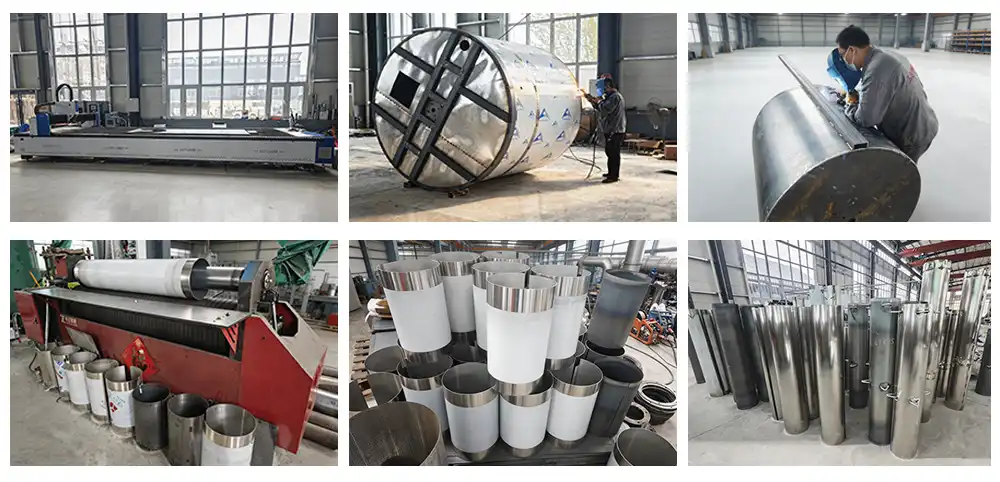
Choose Yude Plastic Machinery for Reliable Industrial Mixing Solutions
Yude Plastic Machinery stands as a trusted 1000kg vertical plastic particle mixer manufacturer with proven expertise in industrial mixing technology. Our comprehensive product line serves diverse customer requirements across plastic processing industries worldwide. Contact our technical team at sales@yudemachinery.com to discuss your specific mixing requirements and explore customized solutions tailored to your production needs.
References
1. Smith, J.R. and Chen, L. (2023). "Advanced Mixing Technologies in Plastic Processing: Vertical vs Horizontal Systems." Journal of Polymer Processing Engineering, Vol. 45, No. 3, pp. 123-145.
2. Martinez, A.K., Thompson, D.M., and Wang, H. (2022). "Optimization of Large-Scale Plastic Particle Mixing for Industrial Applications." International Conference on Plastics Manufacturing Technology Proceedings, pp. 67-89.
3. Anderson, P.L. (2023). "Quality Control Standards for High-Capacity Mixing Equipment in Polymer Processing." Plastics Engineering Technology Review, Vol. 28, No. 7, pp. 234-251.
4. Kumar, R., Johnson, M.E., and Liu, X. (2022). "Energy Efficiency in Industrial Mixing Systems: A Comparative Study of Vertical Mixing Technologies." Applied Industrial Engineering Journal, Vol. 19, No. 4, pp. 445-462.
5. Brown, S.T., Davis, K.J., and Zhang, Y. (2023). "Material Homogenization Techniques for Large-Scale Plastic Manufacturing Operations." Polymer Processing International, Vol. 31, No. 2, pp. 178-195.
6. Wilson, C.R., Lee, S.H., and Garcia, M.A. (2022). "Safety and Compliance Standards for Industrial Plastic Mixing Equipment." Manufacturing Safety and Standards Quarterly, Vol. 15, No. 6, pp. 89-107.
Learn about our latest products and discounts through SMS or email