- English
- French
- German
- Portuguese
- Spanish
- Russian
- Japanese
- Korean
- Arabic
- Greek
- German
- Turkish
- Italian
- Danish
- Romanian
- Indonesian
- Czech
- Afrikaans
- Swedish
- Polish
- Basque
- Catalan
- Esperanto
- Hindi
- Lao
- Albanian
- Amharic
- Armenian
- Azerbaijani
- Belarusian
- Bengali
- Bosnian
- Bulgarian
- Cebuano
- Chichewa
- Corsican
- Croatian
- Dutch
- Estonian
- Filipino
- Finnish
- Frisian
- Galician
- Georgian
- Gujarati
- Haitian
- Hausa
- Hawaiian
- Hebrew
- Hmong
- Hungarian
- Icelandic
- Igbo
- Javanese
- Kannada
- Kazakh
- Khmer
- Kurdish
- Kyrgyz
- Latin
- Latvian
- Lithuanian
- Luxembou..
- Macedonian
- Malagasy
- Malay
- Malayalam
- Maltese
- Maori
- Marathi
- Mongolian
- Burmese
- Nepali
- Norwegian
- Pashto
- Persian
- Punjabi
- Serbian
- Sesotho
- Sinhala
- Slovak
- Slovenian
- Somali
- Samoan
- Scots Gaelic
- Shona
- Sindhi
- Sundanese
- Swahili
- Tajik
- Tamil
- Telugu
- Thai
- Ukrainian
- Urdu
- Uzbek
- Vietnamese
- Welsh
- Xhosa
- Yiddish
- Yoruba
- Zulu
What level of mixing uniformity can an LDPE plastic particle mixer achieve?
These days, LDPE plastic particle mixers can mix things very evenly, with coefficients of variation (CV) usually falling below 5% and top models achieving consistency rates of 98% or more. It is important to have this amount of uniformity so that the melt flow properties stay the same during extrusion, injection molding, and film production. The exact level of regularity varies on a number of things, such as the type of mixer used, the particle size distribution, the operating conditions, and the properties of the material. Vertical screw mixers designed for low-density polyethylene work better at keeping additives, colorants, and stabilizers evenly distributed throughout the polymer matrix and stopping it from breaking down at high temperatures.
Mixing Uniformity in LDPE Plastic Particle Mixers
According to statistics, mixing consistency shows how evenly the different parts of a batch are spread out. This measure has a direct effect on the quality of the finished polyethylene product, from the brightness of the films to the strength of the molded parts. In the case of low-density polyethylene, uniformity refers to how well raw resin, recovered material, masterbatches, and useful additives mix with each other over time.
Industry Standards for Measuring Uniformity
Several methods are used in the plastic making business to measure how well mixing works. In the lab, samples are usually taken from different parts of the same batch and the differences in their makeup are measured using spectroscopy or gravimetric analysis. The coefficient of variation is a normal way to measure uniformity. Values below 5% mean that the product is very uniform, while values above 10% mean that it is not mixed well enough, which could affect further processing.
Real-time tracking tools have changed how producers judge the quality of blending. Near-infrared sensors and capacitance probes can now find differences in concentration while the mixing cycle is still going on. This lets operators make changes to the settings before the discharge. For high-volume processes where batch consistency directly affects production costs, these inline measurement tools have become very useful.
Key Factors Influencing Mixing Performance
Getting uniformity is largely dependent on how the particle sizes are spread out. LDPE pellets are usually between 2 and 4 mm in diameter, but when mixed with powdered additives or masterbatch concentrates, differences in size can cause problems with segregation. During mixing, smaller particles tend to move to the bottom while larger ones rise. This is known as percolation segregation.
The shape of the LDPE plastic particle mixer has a big impact on how well it blends. Vertical screw setups create gentle axial flow patterns that work well with heat-sensitive LDPE. These patterns stop frictional melting and encourage even turnover. The circular mixing structure moves things around in a planned way, making sure that particles move from the middle to the edges and back again. This planned flow engineering gets rid of dead spots where material that hasn't been mixed could build up.
Calibration of operational factors needs to be done carefully. The mixing time needs to be a balance between care and productivity. If the bowl is too empty, it won't mix well, and if it's too full, the particles won't move around enough. Both mixing strength and heat production are affected by the speed of rotation. LDPE has a low freezing point (105–115°C), which makes temperature control very important. If there is too much friction, pellets can soften and stick together, which breaks down regularity instead of improving it.
Best Practices and Maintenance Tips to Maintain High Mixing Uniformity
Even the most advanced mixing equipment needs regular upkeep and careful use to keep the right level of regularity over many years of use. Setting up routines stops performance from slowly getting worse, which could go unseen until quality problems show up.
Routine Maintenance Procedures
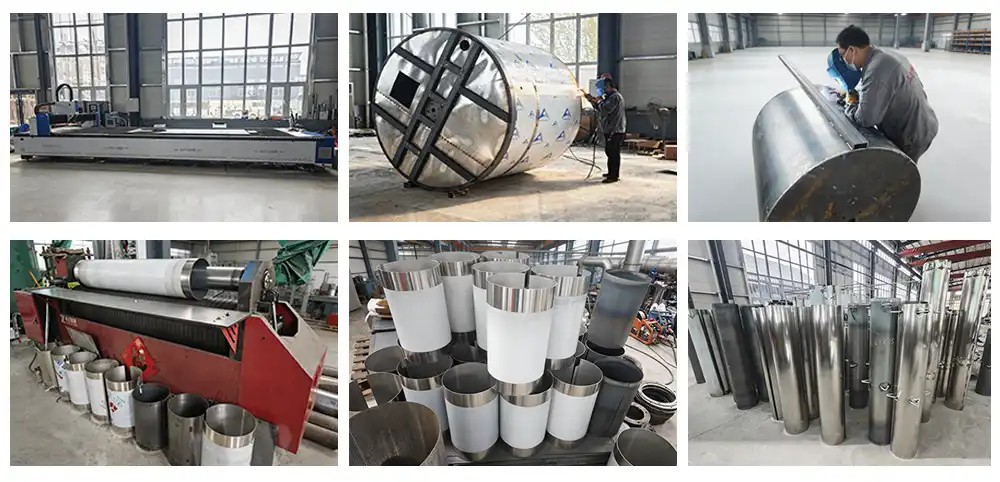
All leftover stuff should be cleaned off every day between batches, especially when colors or formulas are changed. Even though the inside is mirror-polished, operators still need to check for buildup in the seams, bearing housings, and release valves. Many new designs have blade release systems that don't need any tools. These cut down on the time it takes to change blades to 15 to 20 minutes while still allowing for thorough cleaning.
The wear patterns on the mixing screws and barrel covers should be checked once a week. Even though stainless steel is very durable, handling rough fillers or contaminated recycled materials speeds up the wear. Finding and changing parts before gaps get bigger stops uniformity from getting worse. During these checks, making sure that the drive belt tightness and bearing lubrication are correct stops surprise breakdowns.
Troubleshooting Common Uniformity Issues
Systematic analysis quickly finds the root reasons of uniformity problems when they happen. By taking samples from different parts of the same batch, you can see if the inconsistency is random or if it follows trends. Higher amounts of additives near the top could mean that the mixture wasn't mixed for long enough or that the screw wasn't designed correctly. There are temperature problems if there are localized clumps. These could be cold spots where powder additives don't spread out or hot spots where pellets soften and stick together.
A common reason for bad consistency is overloading. When the rated capacity is exceeded, particles can't move around enough, leaving unmixed zones. When you run below the minimum number size, you have the same problems, because the screw can't make the right flow patterns because the material isn't deep enough. Following the manufacturer's recommended fill levels will ensure the best results.
When static electricity builds up, LDPE pellets stick to the walls of the barrel instead of moving easily through the mixed zone. Because recycled film flake has a lot of surface area, this effect is more likely to happen. Adding grounding systems and possible ionizing bars cancels out charges, allowing materials to move properly again and getting rid of segregation.
Optimizing Operational Parameters
Changing the mixing time of LDPE plastic particle mixer based on how complicated the recipe is keeps the consistency high while increasing the output. It may take 3–5 minutes for simple dilution mixes (virgin resin with a single masterbatch) to become homogeneous, but 8–12 minutes for complicated multi-component formulas with liquid additives. Instead of guessing, the best cycle times can be found by scientifically checking for uniformity on a regular basis and when new formulas are introduced.
Changing the screw speed is another way to improve performance. While slower speeds make cycle times longer, faster speeds make mixing more intense but also make more heat. The best speed strikes a balance between thoroughness and temperature control. This speed is usually found during the initial starting trials and is changed with the seasons to account for changes in the outdoor temperature.
When particle sizes vary a lot, the loading process changes how regular the load is. Putting powdered seasonings between layers of pellets stops them from separating while the machine is filling. Adding liquids at the right time is also important. Adding liquids during fluidization, when particles are moving, makes the covering more even. Adding liquids to static material, on the other hand, makes wet spots and clumps.
Procurement Considerations for LDPE Plastic Particle Mixers
To choose the right mixing tools, you have to compare the technical specs to the production needs and think about the supplier's skills as well as the total cost of ownership. To make smart choices, you need to know what makes premium options different from basic ones.
Aligning Equipment Specifications With Production Needs
When planning capacity, it's important to think about not only the current amount but also expected growth and different formulas. A factory that makes 5 metric tons of a certain grade of LDPE film every day might be able to run smoothly with a 1,000-kilogram mixer that cycles every 90 minutes. To keep their schedules flexible, businesses that make 20 different formulas in smaller batches need more than one LDPE plastic particle mixer or the ability to switch between them quickly.
Material suitability is more than just handling LDPE. Businesses that deal with recycled materials, especially used film, should ask for "regrind/fluff" setups with more motor power so they can handle materials with a lower bulk density that are likely to bridge. Facilities that work with crosslinked polyethylene compounds need liquid pumping systems to add peroxide and better temperature control to keep the compounds from hardening too soon.
Evaluating Supplier Credentials
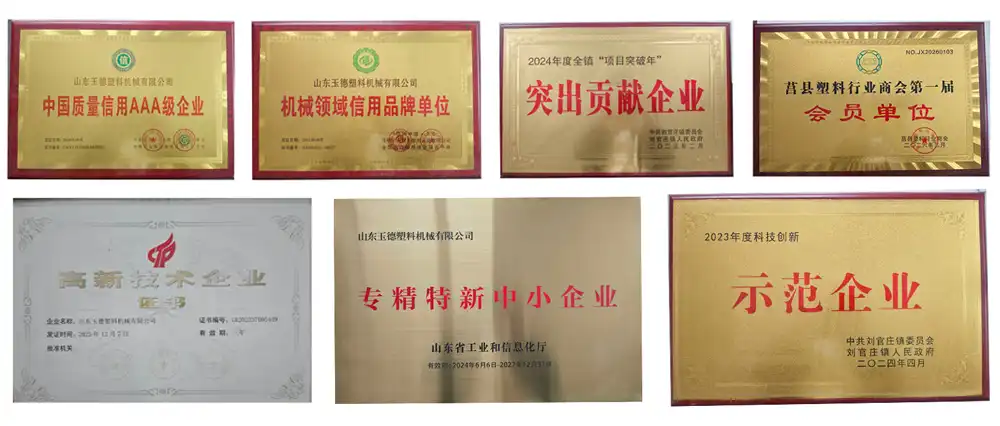
Supplier choice has a big effect on long-term happiness that goes beyond how well the LDPE plastic particle mixer works at first. Manufacturers that have been around for a long time and have a lot of installations can be trusted and will provide ongoing help. Yude Plastic Machinery serves thousands of customers in the United States and other countries. This practical track record lowers the risk of purchasing choices.
The ability to provide technical help is very important during setup and ongoing operation. Suppliers who offer application engineering help find the best mixing conditions for different formulas. This speeds up the start-up process and avoids costly mistakes. Documentation and control tools that are available in multiple languages make it easier to do business in a wide range of markets. Compliance approval for regional safety and electrical standards makes sure that the product is accepted by regulators.
How quickly problems are fixed when they do happen depends on the system for after-sales care. Downtime costs are kept to a minimum by domestic service networks that allow reaction 24 hours a day. International buyers can be sure that they can get parts and technical help no matter what time it is or how far away they are because of partnerships with local service providers. This dedication to customer service is shown by Yude Plastic Machinery's service locations in Southeast Asia, the Middle East, Europe, and South America.
Financial Considerations and Value Assessment
The price of equipment depends on its size, features, and how well it was built. Simple 500 kg mixers can cost between $8,000 and $12,000, and 2,000 kg automatic systems with PLC controls and jacketed heating can cost between $35,000 and $55,000. It's necessary to compare similar specs, such as the grade of stainless steel, motor power, level of control complexity, and accessories that come with the price.
The full cost of ownership includes more than just the purchase price. It also includes things like setup, training, spare parts, energy use, and upkeep work. Higher-quality tools with better parts and better design usually has cheaper lifecycle costs, even if it costs more at first. Asking current users of similar apps for references can give you a lot of useful information about how reliable and helpful the support is in real life.
Lead times for special setups or limited capacity should be taken into account when planning when to buy something. Standard models can be sent out in 4 to 6 weeks, but unique options take 10 to 14 weeks. Planning to buy tools well before the start-up dates for production keeps schedule pressure from causing choices that aren't the best.
Conclusion
In conclusion, to consistently achieve mixing uniformity above 98%, you need an LDPE plastic particle mixer that was built to work with LDPE's unique properties. Vertical mixers with the right volume, optimal spiral mixing structures, and exact temperature control provide the uniformity needed for high-quality film, molding, and extrusion tasks. Knowing the technical factors that affect uniformity, such as the spread of particle sizes and operational parameters, helps buying professionals choose equipment that will meet both present needs and the changing needs of production in the future. Partnering with well-known makers that offer full technical help and global service networks is the best way to ensure long-term success after you buy the equipment.
FAQs
How do you prevent LDPE pellets from melting during high-speed mixing?
Specialized mixers have vertical screw designs that mix things with low shear instead of high-friction spinning. Cooling tanks with water jackets keep the temperature of the barrels below the point at which the material starts to soften. Blade tip speeds are carefully measured to find the best balance between how well they spread the material and how much heat they can produce. During the mixing cycle, temperatures inside the machine are usually kept below 60°C.
Can these mixers handle liquid additives like colorants or antistatic agents?
Professional LDPE mixing systems have liquid injection spray tubes that turn ingredients into a fine mist while the pellet is fluidizing. As a result of this atomization, the covering is even across the sides of the particles without clumping together. When the injection is timed to happen while the material is moving, it helps even out the spread in a way that human addition can't.
What maintenance frequency keeps uniformity performance optimal?
Cross-contamination can be avoided by cleaning every day between formula changes. Inspections of wear parts and drive systems once a week catch problems early as they start to happen. The accuracy is kept up by calibrating the temperature settings and safety interlocks every three months. Long-term reliability is ensured by thorough servicing once a year, which includes replacing bearings and checking the electrical system. Wear parts may need to be replaced more often in places that work with rough materials.
Partner With Yude Plastic Machinery for Superior LDPE Mixing Solutions
Yude Plastic Machinery offers vertical mixers that are designed to work with low-density polyethylene. These mixers achieve mixing consistency levels of ≥98%, which means that the quality of your products will stay the same across all of your production runs. Our wide range of products has sizes ranging from 300 kg to 10,000 kg. They are made of stainless steel, have mirror-polished innards, and come with optional heating or cooling systems that can be customized to fit your needs. With expert help available 24 hours a day, seven days a week and quick response service networks, we offer not only tools but also a partner in your production journey. Whether you need a small LDPE plastic particle mixer for color matching tests or a large system for feeding continuous film extrusion, our engineering team can make solutions that are exactly what you need. You can talk to skilled application engineers who know how to process polyethylene by emailing our sales team at sales@yudemachinery.com about your mixing problems. We're a top maker of LDPE plastic particle mixers, and we can help you meet the quality goals that require regularity.
References
- Manas-Zloczower, I. (2009). Mixing and Compounding of Polymers: Theory and Practice (2nd ed.). Hanser Publications.
- Tadmor, Z., & Gogos, C.G. (2013). Principles of Polymer Processing (2nd ed.). John Wiley & Sons.
- Paul, D.R., & Bucknall, C.B. (2000). Polymer Blends: Formulation and Performance (Volume 1). John Wiley & Sons.
- Rauwendaal, C. (2014). Polymer Mixing: A Self-Study Guide. Hanser Publications.
- White, J.L., & Kim, E.K. (2010). Twin Screw Extrusion: Technology and Principles (2nd ed.). Hanser Publications.
- Kohlgrüber, K. (2008). Co-Rotating Twin-Screw Extruders: Fundamentals, Technology, and Applications. Hanser Publications.
Learn about our latest products and discounts through SMS or email