- English
- French
- German
- Portuguese
- Spanish
- Russian
- Japanese
- Korean
- Arabic
- Greek
- German
- Turkish
- Italian
- Danish
- Romanian
- Indonesian
- Czech
- Afrikaans
- Swedish
- Polish
- Basque
- Catalan
- Esperanto
- Hindi
- Lao
- Albanian
- Amharic
- Armenian
- Azerbaijani
- Belarusian
- Bengali
- Bosnian
- Bulgarian
- Cebuano
- Chichewa
- Corsican
- Croatian
- Dutch
- Estonian
- Filipino
- Finnish
- Frisian
- Galician
- Georgian
- Gujarati
- Haitian
- Hausa
- Hawaiian
- Hebrew
- Hmong
- Hungarian
- Icelandic
- Igbo
- Javanese
- Kannada
- Kazakh
- Khmer
- Kurdish
- Kyrgyz
- Latin
- Latvian
- Lithuanian
- Luxembou..
- Macedonian
- Malagasy
- Malay
- Malayalam
- Maltese
- Maori
- Marathi
- Mongolian
- Burmese
- Nepali
- Norwegian
- Pashto
- Persian
- Punjabi
- Serbian
- Sesotho
- Sinhala
- Slovak
- Slovenian
- Somali
- Samoan
- Scots Gaelic
- Shona
- Sindhi
- Sundanese
- Swahili
- Tajik
- Tamil
- Telugu
- Thai
- Ukrainian
- Urdu
- Uzbek
- Vietnamese
- Welsh
- Xhosa
- Yiddish
- Yoruba
- Zulu
What is the working principle of a vertical spiral lifting circulation mixer?
When working with plastic pellets in injection molding, extrusion, or granulation, two problems always come up: the pellets have too much wetness and the colors are not spread out evenly. A plastic particle drying and mixing machine uses a clever mechanical method called vertical spiral lifting circulation to solve both problems at the same time. This machine has a spiral auger that turns and controlled hot air flow inside a vertical, insulated room. The hot air moves through the material while the spiral auger keeps pulling pellets up. As the granules fall back down, they are heated and mixed mechanically over and over again until the moisture content drops below 0.5% and the mixing is constant over 98% of the time. Unlike batch dryers, which heat materials in one place, this movement method keeps areas from getting too hot and makes sure that each pellet gets the same treatment. This makes it essential for hygroscopic resins like ABS, PVC, PE, and PP.
Understanding the Working Principle of a Vertical Spiral Lifting Circulation Mixer
Vertical spiral lifting circulation mixers work by making a continuous path for material flow that makes the most touch between hot air and plastic pellets. This part breaks down the chemical processes and mechanical parts that make this equipment work so well.
The Vertical Spiral Lifting Mechanism
An extra-thick carbon steel spiral blade on a vertical shaft is at the center of the plastic particle drying and mixing machine. This spiral spins at a set speed when the mixing motor is turned on. It picks up pellets from the bottom of the Q235 carbon steel barrel and moves them up the chamber wall. The spiral's pitch and width are designed to keep a gentle pulling action that doesn't break up the pellets or make dust. When pellets hit the top, centrifugal force and gravity push them back down to the center and bottom, making a pattern that looks like a waterfall. This mechanical movement does two things at once: it physically mixes different colored pellets or masterbatch ingredients, and it also lets the drying wind hit the surfaces of new materials.
Hot Air Circulation and Heat Transfer
At the same time, the heating device makes controlled hot air, that can be heated to any temperature between room temperature and 85℃. You can choose between electric heating tubes or steam heating setups, depending on the layout of your building. The warm air comes in through carefully placed openings and flows through the moving pellet mass. The layer of padding around the barrel keeps the inside temperature stable by reducing heat loss to the outside. A blocked feed outlet keeps hot air from escaping, which ensures the highest level of thermal efficiency. As the pellets move through this warm area, water moves from the center of the pellets to the outside and evaporates into the airstream. The mix of heat and mechanical movement speeds up the removal of wetness much more than static heating alone could.
Integration of Drying and Mixing Functions
Separate dryers and mixers are needed in traditional processing lines, which takes up more floor room and time for transfers. The vertical spiral lifting circulation form combines these two tasks into a single area. In a normal cycle, color powders or chemicals added at the top mix well with the base resin as the whole thing moves around. The constant turning action stops particles from separating by size or density, which happens a lot in horizontal mixers. While this is going on, the same airflow that mixes the pellets also dries them. The amount of moisture drops evenly throughout the batch, instead of having a wet center with dry layers around it. The single mixing and drying time can be changed by the production team based on the original wetness levels. The time can be anywhere from 20 to 60 minutes, depending on the type of material and the humidity.
When mechanical movement and thermal treatment work together, they make processes more efficient than when they are used separately. When the pellets come out of the system, they are all the same color, properly dried, and ready to be fed right into molding or extrusion equipment further down the line, without having to go through any extra steps of handling.
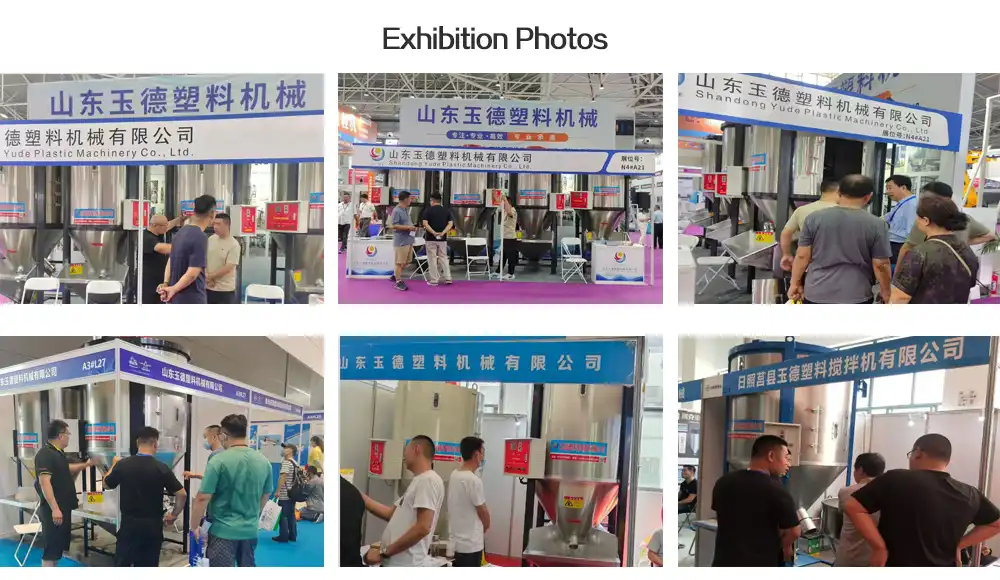
Types of Plastic Particle Drying and Mixing Machines Compared
Knowing the different types of tools that are out there helps procurement engineers choose options that fit their operational needs and capital budgets. There are different ways to prepare materials on the market, and each has its own benefits.
Integrated Vertical Spiral Systems Versus Standalone Units
Integrated equipment that mixes and dries with hot air takes up the least amount of room and is best for places that use a lot of different types of plastic or change the colors often. These systems, like the vertical spiral lifting circulation mixers we talked about here, stop moving materials between different units, which lowers the risk of contamination and the cost of labor. The maximum loading capacity can be changed to fit bulk densities between 0.6 and 0.8g/cm³, and the effective amounts can be adjusted to fit your batch sizes. When you pair separate drying hoppers with separate color mixers, you need twice as much floor room and two sets of controls, which makes the process more difficult. When you add up the total cost of installing multiple machines, including plumbing, electrical work, and structure supports, the capital cost difference usually works out better for integrated systems.
Automated Control Systems Versus Manual Operation
Modern plastic particle drying and mixing machines have programmable logic controllers that take care of setpoints for temperature, timing for circulation, and warning conditions without the user having to constantly watch them. These automatic systems keep a closer eye on the process, which lowers variation from batch to batch that impacts the quality of the end product. People who work with manual tools have to keep an eye on the temperatures and guess when the mixing is done based on what they see, which introduces the possibility of human mistake. Automated systems record operating data for quality checks and fixing, which is something that ISO-certified businesses are asking for more and more. The gains in labor efficiency are big in high-volume settings where workers can watch over several tools at once instead of having to individually care for each one.
Capacity and Footprint Considerations
The amount of production must be balanced with the amount of plant room and energy infrastructure that is available. Small businesses that process 300 kg to 500 kg per batch can benefit from small units that can fit into small areas for extra equipment. Larger companies that use injection molding cells all the time need vertical mixers with capacities between 600 kg and 10 tons. Vertical designs naturally take up less floor space than horizontal designs of the same volume, which makes them a good choice for places that don't have a lot of room. Since energy use goes up with capacity, making sure that your equipment matches your real output keeps it from cycling inefficiently. Instead of buying too much capacity "just in case," procurement teams should figure out how often batches really need to be made. This is because putting small amounts through big mixers wastes energy and makes cycle times longer.
When deciding what kind of tools to buy, you should think about how much it will cost you in total over the years. Integrated vertical spiral systems usually have lower running costs than keeping several separate units because they use less energy and change materials more quickly.
Conclusion
Plastic particle drying and mixing machines are a tried-and-true way to get plastic pellets ready for processing. The combined method of drying and mixing at the same time is more efficient than using separate pieces of equipment. This is especially true for tasks that need to change materials often or work with resins that are sensitive to wetness. Manufacturers can get the most out of this equipment by understanding its mechanical principles, operational factors, and servicing needs. Concerns about the environment and worker safety are playing a bigger role in buying choices, leading people to choose designs that use less energy and keep workers safe. To choose the right tools, you have to weigh the technical specs against the needs of the company and the supplier's abilities. Buying the right equipment for preparing materials pays off in the form of higher-quality final goods, fewer mistakes during processing, and lower overall running costs over the life of the equipment.
FAQ
Can vertical spiral mixers handle abrasive glass-reinforced materials?
Yes, but the choice of materials and the time between upkeep needs to be changed. The thickened carbon steel spiral structure can handle light wear from glass-filled materials with up to 30% reinforcing. For circular surfaces with a higher glass content, you need to specify finishes that don't wear down or better metalwork. When working with rough materials, inspections should happen once a month instead of every few weeks, because worn circles create dead zones where materials don't mix and circulation isn't as good. Some makers make spiral leading edges with wear inserts that can be replaced. This lowers the cost of long-term upkeep.
How does this equipment compare to honeycomb dehumidifying dryers?
Vertical spiral mixers are great at removing surface moisture and mixing, while honeycomb dehumidifiers go after molecular moisture in plastics that absorb a lot of water. For the right preparation, dehumidifying dryers are still needed for engineering plastics like nylon or polycarbonate that need dew points below -40°C. For common plastics, the spiral mixer works best as a combination machine. In critical situations, it works best as a pre-dryer and blender before dehumidifying dryers. Which one you choose will depend on your individual plastic needs and quality standards.
What cleaning procedures work best for color changes?
For cleaning to work, all the material must be emptied out, and then compressed air must be pumped through the barrel and spiral. High-quality machines have polished interiors that don't let color stick to them and doors that can be taken off for checking at the base. Running a small cleanup mix of natural resin through the whole cycle gets rid of any color that is still there in places that are hard to reach. If you use metal tools to scratch the inside of the containers, the scratches will leave pigments behind that will get into later runs and make them dirty.
Partner with Yude Plastic Machinery for Reliable Material Preparation Solutions
Getting regular processing results starts with making sure the material is ready, and picking the right tools provider will determine your long-term success. Yude Plastic Machinery makes vertical plastic mixers that range from small 300 kg units to 10-ton industrial systems. Each plastic particle drying and mixing machine is made to have a mixing consistency of more than 98% and a moisture content of less than 0.5%. Our production sites keep a close eye on quality while parts are being machined and put together, and our expert team can quickly make changes to meet non-standard needs. As a company with a lot of experience making plastic particle drying and mixing machines, we've sent them to over 30 countries in Southeast Asia, the Middle East, Europe, and South America, offering full support that includes local compliance changes and language interfaces. Our 7x24 after-sales service system makes sure you can get expert help whenever you need it. It's backed up by customer file management that keeps track of the history of your tools for quick support. Contact our team at sales@yudemachinery.com to talk about your unique material preparation problems and get a solution plan that takes into account your production volume, material types, and budget.
References
- Rauwendaal, C. (2014). Polymer Mixing: A Self-Study Guide. Hanser Publications, Munich.
- Tadmor, Z. & Gogos, C.G. (2006). Principles of Polymer Processing, 2nd Edition. John Wiley & Sons, Hoboken.
- Goodship, V. (2004). Practical Guide to Injection Moulding. Rapra Technology Limited, Shawbury.
- Bayer MaterialScience. (2012). Drying and Crystallization of Engineering Plastics: Technical Guidelines. Bayer Technical Documentation Series.
- Crawford, R.J. & Throne, J.L. (2002). Rotational Molding Technology. William Andrew Publishing, Norwich.
- SPE Plastics Engineering Handbook Development Committee. (2006). Plastics Engineering Handbook of the Society of Plastics Engineers, 5th Edition. Springer Science, New York.
Learn about our latest products and discounts through SMS or email