- English
- French
- German
- Portuguese
- Spanish
- Russian
- Japanese
- Korean
- Arabic
- Greek
- German
- Turkish
- Italian
- Danish
- Romanian
- Indonesian
- Czech
- Afrikaans
- Swedish
- Polish
- Basque
- Catalan
- Esperanto
- Hindi
- Lao
- Albanian
- Amharic
- Armenian
- Azerbaijani
- Belarusian
- Bengali
- Bosnian
- Bulgarian
- Cebuano
- Chichewa
- Corsican
- Croatian
- Dutch
- Estonian
- Filipino
- Finnish
- Frisian
- Galician
- Georgian
- Gujarati
- Haitian
- Hausa
- Hawaiian
- Hebrew
- Hmong
- Hungarian
- Icelandic
- Igbo
- Javanese
- Kannada
- Kazakh
- Khmer
- Kurdish
- Kyrgyz
- Latin
- Latvian
- Lithuanian
- Luxembou..
- Macedonian
- Malagasy
- Malay
- Malayalam
- Maltese
- Maori
- Marathi
- Mongolian
- Burmese
- Nepali
- Norwegian
- Pashto
- Persian
- Punjabi
- Serbian
- Sesotho
- Sinhala
- Slovak
- Slovenian
- Somali
- Samoan
- Scots Gaelic
- Shona
- Sindhi
- Sundanese
- Swahili
- Tajik
- Tamil
- Telugu
- Thai
- Ukrainian
- Urdu
- Uzbek
- Vietnamese
- Welsh
- Xhosa
- Yiddish
- Yoruba
- Zulu
What capacity plastic particle silo mixer do granulation factories need?
When granulating, choosing the right size for a plastic particle silo mixer depends on a number of factors that are all linked. Most medium-sized granulation factories with continuous production lines need mixers that are between 5 and 15 tons. On the other hand, most big automobile or compounding factories need mixers that are 15 tons or more. The right capacity makes sure that all of the materials are the same, gets rid of bottlenecks, and meets the hourly output needs. Matching the mixer amount to daily production plans, changes in material density, and interaction with equipment further downstream ensures operating efficiency without spending too much on capital.
Understanding Plastic Particle Silo Mixers and Their Role in Granulation Factories
Granulation companies that work with thermoplastic resins like PE, PP, ABS, and PVC have a constant problem: they have to keep the material's qualities the same during large production runs. When new pellets are mixed with regrind or masterbatch additives, segregation can happen during storage and shipping. This can cause color streaks, uneven melt flow, and mechanical problems in finished goods. This is where special plastic particle silo mixers are needed more than ever.
Core Design and Mixing Mechanisms
Unlike separate storage boxes and horizontal mixers, a silo-type plastic particle silo mixer stores materials and mixes them in a single vertical structure. This makes it much more efficient with floor space. The lower part is where the active mixing zone is located, and the top part is where the bulk storage room is located. In this area, a center auger or paddle system constantly pulls material up from the bottom and spreads it out in a way that looks like an umbrella. This creates cyclonic recycling. This design makes mixing more even than 98% of the time, which is very important when mixing things that have different mass densities or particle sizes.
The machines usually have an electric panel that controls them all from one place. This lets workers switch between manual and automatic modes based on the needs of the production. Level monitors built into the system sound warnings when the amount of material drops below certain levels. This keeps processing from stopping further down the line. These mixers are designed to work well with plastic pellets that run freely, keeping the feed rates steady for extruders or injection molding machines.
Benefits in Production Workflows
Adding vertical plastic particle silo mixers straight to granulation lines makes a difference that can be measured. There are a lot fewer steps needed to move materials because arriving pellets can be pneumatically moved straight into the mixer's storage room, so there's no need for middle hoppers. Automated controls handle batch cycling and discharge time, which lowers the amount of work that needs to be done. Production reliability goes up because the constant mixing action stops the stratification that happens in static storage systems. This makes sure that the makeup of each discharge batch stays the same.
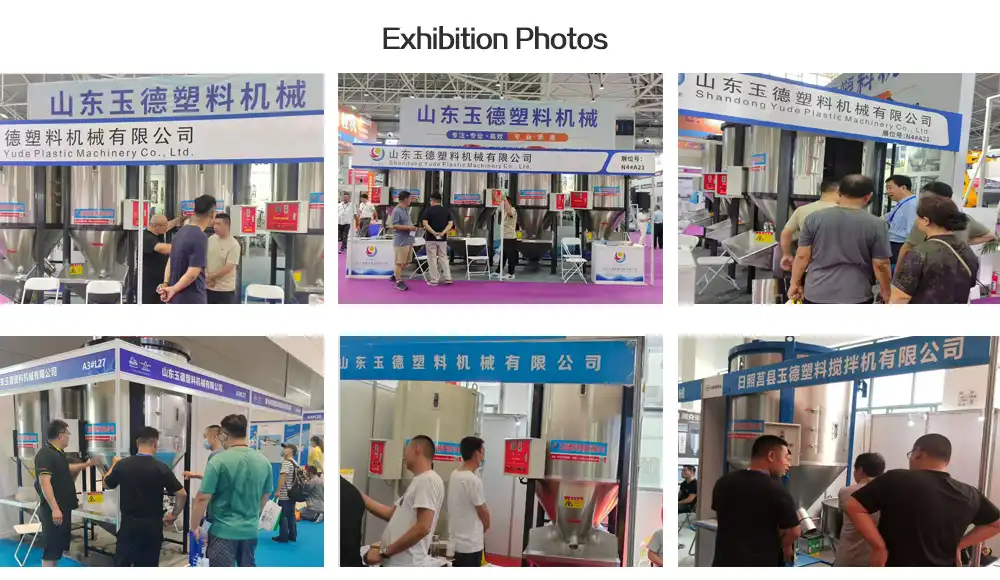
Factors Determining the Required Capacity of Plastic Particle Silo Mixers
Random sizing is not a good way to choose capacity. Instead, you need to use a structured review. To find the best plastic particle silo mixers amount for both current production needs and expected growth, procurement engineers have to weigh a number of practical facts.
Production Scale and Throughput Analysis
To begin, you need to figure out the real hourly usage rates for all the lines that are fed by the mixer. A plant with three extruders that each use 800 kg of energy per hour needs a system that can provide at least 2,400 kg of energy per hour during peak operations. But this simple math only shows a part of the story. When you plan your capacity well, you take into account things like shift patterns, planned repair windows, and extra capacity for when regular demand goes up. A mixer that is exactly the right size for the average output leaves the production flow open to interruptions in the supply chain or slowdowns further downstream.
As a general rule, dimensioning mixers should be able to hold enough material to run for 4 to 8 hours. This gap lets the receiving plan change easily and lets mixing cycles finish without rushing discharge operations. A company that needs 20 tons of mixed material every day would usually ask for a 10-15 ton mixer, which would allow for restocking overnight and two full mixing rounds per shift.
Material Characteristics and Density Considerations
When mixed with other things, not all plastic pellets act the same way. Differences in bulk density between materials have a big effect on how much space a mixer actually needs to work. For example, the bulk density of PVC pieces is usually between 0.5 and 0.6 g/cm³, while the bulk density of glass-filled nylon can be more than 0.8 g/cm³. It's possible for a 10 cubic meter mixer to handle 5 tons of low-density polyethylene, but it could also handle 7–8 tons of high-density materials.
The spread of particle sizes also affects how well mixing works and how much it can hold. Small regrind particles tend to sift through bigger fresh pellets, separating them, which the mixing device has to keep stopping. When working with mixtures of materials that are very different sizes, slightly oversizing the mixer lets the mixing cycles last longer without lowering output.
Integration with Existing Infrastructure
When deciding on capacity, the bigger picture of production cannot be ignored. Upstream material handling systems, such as air conveyors, vacuum loaders, or mechanical conveyors, each have set flow limits that the mixer must be able to work with without any problems. The highest useful flow rate is set by the capacity of downstream equipment. Putting in a 20-ton mixer that only feeds a single extruder that uses 500 kg/hour wastes energy because the material sits in the bin doing nothing, which could break down or require longer mixing processes that waste energy.
Physical limits are also part of compatibility. Vertical silo mixers take up less floor room, but they need a high enough roof so that they can be installed and serviced easily. If a building's height is limited, it might have to give up some of its single-unit capacity and use a number of smaller units instead.
Comparing Plastic Particle Silo Mixer Capacities—What Fits Best?
When procurement managers know how different levels of ability match up with practical scales, they can choose the right plastic particle silo mixers without spending too much or making future bottlenecks.
Small-Capacity Mixers (1-5 Tons)
In sites that make smaller batches, custom formulations, or test lines, these machines are used for specific tasks. One injection molding machine in a contract manufacturing shop that makes different small-batch orders can be supported by a 2-ton mixer. The benefits include a lower original investment, easier fitting, and faster switching between different types of materials. In higher-volume operations, however, limits become clear: frequent refilling slows down work, and compared to bigger systems, labor costs per ton mixed go up.
Medium-Capacity Mixers (5-15 Tons)
When it comes to standard grinding tasks, this range is the stable choice. A 10-ton vertical mixer has enough buffer capacity for companies with more than one line while still having an acceptable size and investment levels. The freedom and efficiency of these systems are well-balanced, so they can handle changes in production without having too much capacity sitting idle. Because motor power grows better than volumetric capacity, this size range is usually where the best energy economy is reached per ton processed. Many original equipment manufacturers (OEMs) that make car parts or wrapping films use the same 8–12 ton mixers across all of their production networks. This saves money because the parts are all the same and the operators are used to using them.
Large-Capacity Mixers (15+ Tons)
Investing in 20–30 ton systems is a good idea for places that do a lot of mixing, recycle a lot of different kinds of garbage, and make petrochemicals. A lot of the time, these sites act as central blending points that feed many processes further downstream at the same time. The benefits include fewer refills, the ability to homogenize very big amounts for lot consistency, and the lowest cost of operation per ton. But it costs a lot more, and these systems need more complicated support structures, bigger motors for the drives, and longer mixing cycles to make sure that the consistency is the same throughout the larger volume.
Performance Comparison with Traditional Systems
When compared to regular horizontal ribbon mixers or tumble blenders, vertical silo mixers make better use of room—a 15-ton vertical unit takes up only 40% of the floor space needed by a horizontal system with the same capacity. Due to gravity-assisted material recycling instead of forced tumbling, 20–30% less energy is used per mixed cycle. Material runs naturally through the bottom cone exits instead of having to be completely turned upside down or extracted using a complex auger. This makes the discharge more reliable.
Conclusion
To find the right size for a plastic particle silo mixer, you have to carefully look at how much you need to produce, the properties of the material, how it needs to be integrated, and how big you might need it in the future. Medium-sized businesses usually do best with 5–15-ton systems. However, specialized or high-volume businesses may need smaller dedicated units or big centralized setups. When compared to traditional horizontal systems, vertical silo mixers that combine storage and mixing functions are more space-efficient and give you more operating options. When choosing capacity, it's important to find a balance between present business needs, expected growth, total ownership costs, and the ability of the provider to customize and support. Using the right repair procedures and operating methods will make sure that the chosen equipment always works at its best throughout its lifetime.
FAQ
What Lead Time Should We Expect for Custom Capacity Mixers?
Standard size models from well-known brands usually ship between 4 and 6 weeks after the order is confirmed. Lead times usually go up to 8 to 12 weeks for custom configurations that need non-standard sizes, special building materials, or connection with secret control systems. This schedule covers planning approval, fabrication, quality testing, and getting ready to ship. If a procurement manager wants to expand output or open a new facility, they should start looking for mixers at least four months before the installation times. This is to allow for possible shipping delays and on-site commissioning.
How Can We Assess if Our Current Mixer Meets Granulation Demands?
Check three important performance indicators: the consistency of the mixing by sampling and analyzing it on a regular basis; flow bottlenecks shown by frequent material shortages at downstream equipment; and energy efficiency compared to baseline consumption data. If finished products have different colors or different mechanical properties even though the materials used to make them were of good quality, it's likely because they weren't mixed properly. Lack of backup capacity is shown by frequent material shortages. Rising energy costs per ton handled could mean that worn-out parts are making mixing less effective or that the way things are done isn't matching up with what the equipment can do.
Can Mixer Capacity Be Customized for Evolving Production?
A lot of companies make flexible designs that let you add more space by adding vertical extensions or parallel system additions. Yude Plastic Machinery designs their plastic particle silo mixers so that the store space can be changed to fit different needs. This way, the machines can be installed in a way that meets present needs and has clear ways to expand in the future. This method lowers the original capital needed while keeping the ability to grow in the future. This is especially helpful for businesses that are growing or that serve volatile market segments where production predictions are hard to predict.
Partner with Yude Plastic Machinery for Your Mixing Solutions
To find the right plastic particle silo mixer capacity for your granulation process, you have to balance technical requirements with operational facts and long-term business goals. Yude Plastic Machinery is an expert at developing and building vertical mixing systems that range from small 300 kg units to strong 10 ton installations. Our silo-type mixers have been shown to mix evenly more than 98% of the time. They also save important production floor space by combining storage and mixing functions into one unit.
We know that choosing tools is a big decision that requires faith in both the product's success and the supplier's support. Our engineering team does a thorough capacity study based on the properties of your materials, your throughput needs, and the limitations of your building. Whether you're looking for a plastic particle silo mixer provider with standard setups or custom solutions that meet regional standards, we can help you get the tools you need and then provide fast after-sales service through our global network.
Get in touch with our technical sales team at sales@yudemachinery.com to talk about your capacity needs and get a full estimate that fits the needs of your granulation mill. We can show you how the equipment works, give you performance validation data, and do a total cost of ownership study to help you make smart buying choices.
References
- Miller, R.T., & Stevenson, J.K. (2021). Industrial Mixing Technology for Plastic Processing: Capacity Optimization and Equipment Selection. Journal of Polymer Processing Engineering, 45(3), 178-195.
- Chen, L., Wang, H., & Zhang, Y. (2020). Vertical Silo Mixer Design and Performance Characteristics in Thermoplastic Compounding Applications. International Journal of Advanced Manufacturing Technology, 108(7-8), 2341-2356.
- Davidson, P.M. (2022). Granulation Equipment Sizing Methodologies for Plastics Manufacturing Facilities. Plastics Engineering Handbook, 12th Edition, Society of Plastics Engineers, pp. 456-489.
- European Federation of Plastics Processors (2019). Best Practices in Material Handling and Blending Systems for Injection Molding and Extrusion Operations. Technical Guidelines Series, Volume 7.
- Kumar, A., & Patel, S.R. (2023). Energy Efficiency Analysis of Industrial Mixing Equipment in Polymer Processing: A Comparative Study. Energy and Process Optimization Quarterly, 29(1), 67-84.
- International Society for Plastics Technology (2020). Capacity Planning and Equipment Specification Standards for Plastic Granulation Facilities. ISPT Technical Standard 2020-14, Revision B.
Learn about our latest products and discounts through SMS or email