- English
- French
- German
- Portuguese
- Spanish
- Russian
- Japanese
- Korean
- Arabic
- Greek
- German
- Turkish
- Italian
- Danish
- Romanian
- Indonesian
- Czech
- Afrikaans
- Swedish
- Polish
- Basque
- Catalan
- Esperanto
- Hindi
- Lao
- Albanian
- Amharic
- Armenian
- Azerbaijani
- Belarusian
- Bengali
- Bosnian
- Bulgarian
- Cebuano
- Chichewa
- Corsican
- Croatian
- Dutch
- Estonian
- Filipino
- Finnish
- Frisian
- Galician
- Georgian
- Gujarati
- Haitian
- Hausa
- Hawaiian
- Hebrew
- Hmong
- Hungarian
- Icelandic
- Igbo
- Javanese
- Kannada
- Kazakh
- Khmer
- Kurdish
- Kyrgyz
- Latin
- Latvian
- Lithuanian
- Luxembou..
- Macedonian
- Malagasy
- Malay
- Malayalam
- Maltese
- Maori
- Marathi
- Mongolian
- Burmese
- Nepali
- Norwegian
- Pashto
- Persian
- Punjabi
- Serbian
- Sesotho
- Sinhala
- Slovak
- Slovenian
- Somali
- Samoan
- Scots Gaelic
- Shona
- Sindhi
- Sundanese
- Swahili
- Tajik
- Tamil
- Telugu
- Thai
- Ukrainian
- Urdu
- Uzbek
- Vietnamese
- Welsh
- Xhosa
- Yiddish
- Yoruba
- Zulu
Wear-Resistant Vertical Mixer for PE Plastic Pellets
When your polyethylene processing line demands exceptional blending consistency and equipment durability, a specialized PE plastic particle mixer engineered with wear-resistant components becomes essential. These vertical mixers integrate optimized spiral structures specifically calibrated to PE pellet density and flow characteristics, achieving mixing uniformity exceeding 98% while preventing material agglomeration. The strategic combination of barrel materials selected for PE compatibility and reinforced mixing elements ensures prolonged service life across demanding production environments, from film extrusion to injection molding operations.
Understanding Wear-Resistant Vertical Mixers for PE Plastic Pellets
At our production plant, we've witnessed how well-designed PE plastic particle mixers can completely change the way polyethylene is processed. The unique way these units work is that an improved center auger gently pulls PE pellets—whether they are HDPE, LDPE, LLDPE, or MDPE—within a conical cylinder. This creates a cascade effect that makes sure the pellets are all the same and don't break down.
Operating Principles of Vertical Mixing Technology
Instead of harsh cutting, the main function of PE plastic particle mixer depends on controlled convection mixing. The spiral auger turns at set speeds, which are usually between 300 and 800 RPM but rely on the size of the batch and the properties of the material. As pellets rise up the room walls, gravity moves them around naturally through the middle, making a pattern of constant circulation. This soft but effective movement stops the buildup of static electricity that happens a lot with PE powders while keeping the integrity of the pellets, which is very important when mixing up to 30% fresh resin with regrind.
Wear-Resistant Materials and Construction Standards
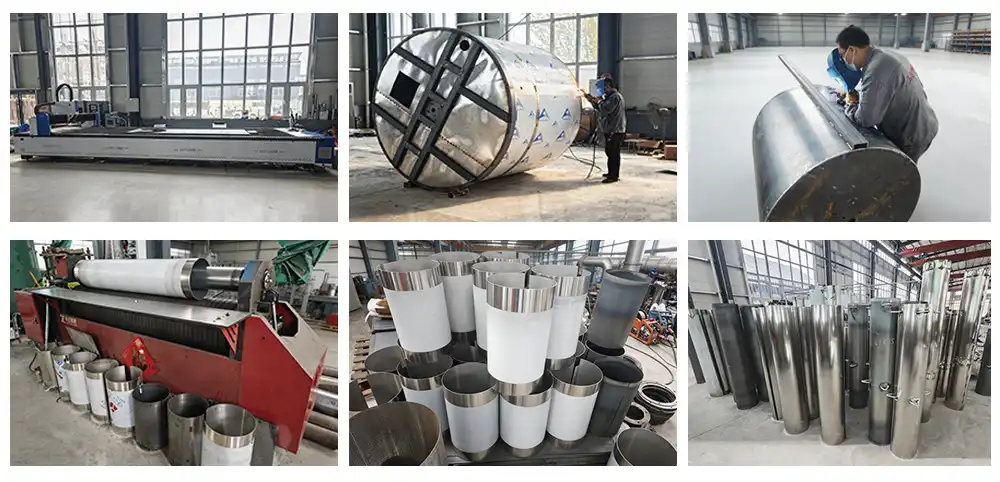
Based on PE's unique chemical qualities, our engineering team decides which materials to use first. Mixing tanks made of SUS304 or SUS316 stainless steel and cleaned to a level of 0.4µm on the inside keep materials from sticking together and allow for quick color changes, which can be done in as little as 15 to 20 minutes. Special wear-resistant metals or carbide coatings are used on the mixing paddles and augers, which makes them last 40–60% longer than normal steel options. This is especially helpful when working with rough materials that have mineral fillers or glass fiber supports.
Achieving Superior Homogeneity in PE Applications
Three important B2B manufacturing situations that come up often are directly addressed by the mixing factors that were built into our vertical systems. In HDPE pipe extrusion, the carbon black masterbatch needs to be precisely spread out at a percentage of 2.5% to 2.5%. This needs to be able to spread out in a way that stops UV degradation fails at the weld points. Low-shear mixing is needed for LDPE film blowing operations to stop frictional heat generation that leads to early melting or agglomerates that make fisheyes on high-speed lines going over 200 meters per minute. For rotational molding, you need a high-intensity fluidizing action to cover crushed PE powder surfaces with pigment particles. This makes sure that the walls are all the same thickness and that the final hollow containers don't have any color hotspots.
Types and Key Specifications of PE Plastic Particle Mixers
There are different designs of vertical mixers available to meet different output needs. When procurement teams understand these differences, they can better match the skills of tools with the needs of operations.
Capacity and Batch Size Considerations
Our PE plastic particle mixers range from small 300-500 kg units that can be used for lab tests and developing unique compounds to large 600 kg–10 ton systems that can support ongoing production lines. The shape of the conical chamber naturally allows for better release than horizontal designs. Full-bottom dump gates allow for full material removal, which keeps the mixture homogeneous and stops contamination between batches. Larger units have multiple heating zones that dry out hygroscopic ingredients first, keeping the moisture level below 0.02% before processing.
Energy Efficiency and Performance Metrics
When compared to older models, modern vertical mixers with IE3 or IE4 efficiency motors use 18–25% less energy per kilogram of mixed material. The dynamic balance of main shafts keeps vibration levels below 2.8 mm/s. This makes bearings and seals last much longer and requires less upkeep. Depending on the percentages of additives and the level of homogeneity needed, mixing rounds usually last between 20 and 60 minutes. Modern programmable logic controls store recipes so that batches are made consistently across multiple shifts.
Specialized Coatings and Surface Treatments
The use of special coats is a big step forward in technology that has helped extend the life of PE plastic particle mixers. Electroless nickel plating on the inside gives the sides equal resistance to corrosion and release qualities. When working with recovered PE regrind that has contaminants in it, ceramic composite coatings that are sprayed using thermal spray methods provide excellent resistance to wear. These surface treatments keep materials from building up during long production runs and make cleaning easier. This has a direct effect on business efficiency measures that procurement managers care about.
C
hoosing the Right Wear-Resistant Vertical Mixer for Your Industry
When looking for the best mixing tools, you need to think about more than just the initial buy price. The total cost of ownership includes how much energy the equipment uses, how often it needs to be maintained, how much time it is used for production, and how consistent the quality is over its lifetime.
Performance-to-Cost Evaluation Framework
We walk our customers through a structured evaluation process that looks at expected output volumes, the types of materials that are processed each year, and the quality standards that end-product uses require. When compared to human blending or equipment that is too small, a 1000 kg vertical mixer that handles 8–12 batches per day usually pays for itself in 18–24 months because it cuts down on fail rates and labor costs. Our methods achieve mixing consistency of ≥98%, which directly leads to consistent Melt Flow Index readings. This keeps extruded products from having color streaks and keeps virgin material and regrind from separating because of changes in density.
Certifications and Compliance Standards
PE plastic particle mixer that is going to be sold in North America has to show that it meets CE safety standards for interlock devices that stop repair workers from accidentally operating the equipment. Our vertical mixers have air-purge shaft seals that use positive pressure to keep particles from getting into bearing housings and multi-point wiring to get rid of static electricity. These traits are especially helpful when working with PE powders that tend to collect static electricity. For food-grade uses, documentation packages include material tracking certificates. For installations in classified hazardous areas, ATEX compliance certificates are also included.
Real-World Application Success Stories
One big film company in the Midwest fixed quality problems that kept happening by switching to our wear-resistant vertical mixer, which has mirror-polished internals and deflector cone removal that doesn't require any tools. The time it took to change colors cut by 40%, and the number of contaminated products that had to be thrown away dropped from 3.2% to 0.4%. A Texas pipe extrusion plant that works around the clock said that unexpected maintenance went down by 33% after moving to our carbide-coated auger design. The original parts are still working after 18 months of continuous use. The results that have been written down show that our engineering method really does add value to tough industry settings.
Conclusion
Choosing and using wear-resistant vertical mixers for handling PE plastic pellets is a smart choice that affects how efficiently the process works, how consistent the product quality is, and how much it costs to run. Specialized engineering that takes into account polyethylene's unique density, flow characteristics, and static properties gives measured benefits in a wide range of uses, from extruding pipes to rotating molds. When purchasing managers look at different mixers, they shouldn't just look at the price at first. They should also look at how regular the mixing is, how durable the parts are, and how much the whole thing will cost over its lifetime. The proven performance gains our customers achieve, such as lower reject rates, faster changeover times, and longer maintenance intervals, prove that vertical mixing technology is a good choice for tough industrial PE processing settings.
FAQs
What maintenance practices extend vertical mixer service life?
Preventive repair is based on setting up regular check times. To keep particles from getting into bearing housings, check PTFE shaft seals once a month and replace them every 2000 hours of use. When handling color masterbatches, clean the inside surfaces once a week to keep them from getting contaminated. Check the tightness of the drive belt and grease the bearings every three months using the manufacturer's recommended greases. The internally mirror-polished surfaces of good mixers make cleaning them a lot easier and keep materials from sticking. Modern models have air-purged seal systems that use positive pressure to keep particles out. This is especially helpful when working with glass-fiber reinforced materials that are rough and speed up the wear on regular seals.
How do vertical mixers compare to twin shaft or ribbon blenders?
Vertical mixers are great at gentle convective mixing, which is great for PE pellets that are easy to break. This keeps fines from being made, which can happen with strong twin shaft designs. The conical shape makes the outflow better, as it achieves 99.5%+ emptying compared to the 92–95% emptying that happens with horizontal ribbon blenders that have dead zones. Vertical layouts take up less floor room, which is helpful in buildings that are limited on space. However, horizontal ribbon mixers are better for mixing very small amounts of additives (less than 0.5%) that need a lot of dispersing action. The best choice for you will rely on your material ratios, batch numbers, and needs for quality consistency.
What factors determine appropriate mixer capacity selection?
Find out how much capacity is needed by looking at the hourly flow needs and the acceptable mixing cycle times. Taking into account the time it takes to load and unload, a 1000-kg mixer that goes through 30 rounds per hour can produce between 1600 and 2000 kg per hour. When sizing equipment, think about how much production will grow in the future. Running mixers at 70–85% of their stated capacity makes them work more efficiently and last longer. The bulk density of a material has a big effect on its volumetric capacity. For example, LDPE pellets take up 15-20% more space than HDPE pellets of the same weight. Models that use less energy and have IE3+ motors lower running costs by 18 to 25 percent over equipment lifetimes of more than 15 years.
Partner with Yude Plastic Machinery for Superior Mixing Solutions
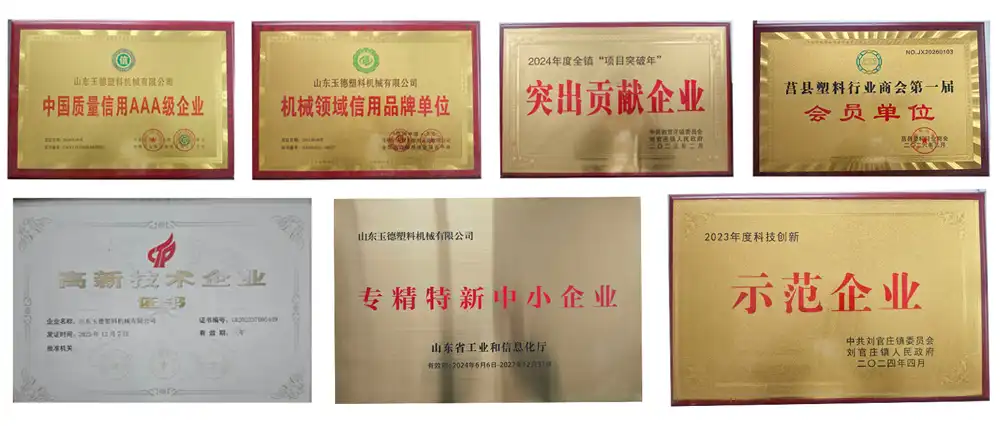
Yude Plastic Machinery is an expert at making wear-resistant vertical mixers that are designed to meet the needs of polyethylene handling. Our wide range of products, from 300 kg lab units to 10 ton industrial systems, can handle a wide range of production sizes. We can also customize our products to make sure they work best with your facility's needs. We are your trusted PE plastic particle mixer seller because we have strict quality control measures, quick expert help through our 24x7 support infrastructure, and reasonable prices made possible by large production volumes. Email our engineering team at sales@yudemachinery.com to talk about the problems you're having with mixing materials and to get thorough specs and quotes that are made to fit your needs.
References
- Tadmor, Z., and Gogos, C.G. (2013). Principles of Polymer Processing. Wiley-Interscience, Hoboken, New Jersey.
- Chaudhuri, B., Muzzio, F.J., and Tomassone, M.S. (2010). "Modeling of Heat Transfer in Granular Flow in Rotating Vessels." Chemical Engineering Science, 65(19), 5353-5361.
- Paul, E.L., Atiemo-Obeng, V.A., and Kresta, S.M. (2004). Handbook of Industrial Mixing: Science and Practice. John Wiley & Sons, Hoboken, New Jersey.
- Cullen, P.J. (2009). Food Mixing: Principles and Applications. Wiley-Blackwell, Oxford, United Kingdom.
- Muzzio, F.J., Robinson, P., Wightman, C., and Brone, D. (1997). "Sampling Practices in Powder Blending." International Journal of Pharmaceutics, 155(2), 153-178.
- Rauwendaal, C. (2014). Polymer Extrusion. 5th Edition, Hanser Publications, Munich, Germany.
Learn about our latest products and discounts through SMS or email