- English
- French
- German
- Portuguese
- Spanish
- Russian
- Japanese
- Korean
- Arabic
- Greek
- German
- Turkish
- Italian
- Danish
- Romanian
- Indonesian
- Czech
- Afrikaans
- Swedish
- Polish
- Basque
- Catalan
- Esperanto
- Hindi
- Lao
- Albanian
- Amharic
- Armenian
- Azerbaijani
- Belarusian
- Bengali
- Bosnian
- Bulgarian
- Cebuano
- Chichewa
- Corsican
- Croatian
- Dutch
- Estonian
- Filipino
- Finnish
- Frisian
- Galician
- Georgian
- Gujarati
- Haitian
- Hausa
- Hawaiian
- Hebrew
- Hmong
- Hungarian
- Icelandic
- Igbo
- Javanese
- Kannada
- Kazakh
- Khmer
- Kurdish
- Kyrgyz
- Latin
- Latvian
- Lithuanian
- Luxembou..
- Macedonian
- Malagasy
- Malay
- Malayalam
- Maltese
- Maori
- Marathi
- Mongolian
- Burmese
- Nepali
- Norwegian
- Pashto
- Persian
- Punjabi
- Serbian
- Sesotho
- Sinhala
- Slovak
- Slovenian
- Somali
- Samoan
- Scots Gaelic
- Shona
- Sindhi
- Sundanese
- Swahili
- Tajik
- Tamil
- Telugu
- Thai
- Ukrainian
- Urdu
- Uzbek
- Vietnamese
- Welsh
- Xhosa
- Yiddish
- Yoruba
- Zulu
Specifications to consider when choosing a large capacity plastic mixer
Getting the right high-volume mixing tools can make your production go more smoothly and improve the quality of your products. Buyers should pay attention to the specs that directly affect output, uniformity, and operating efficiency when considering a large capacity plastic mixer. These heavy-duty machines handle loads ranging from 500 kg to over 20 tons, so it's important that the specs are correct. The right mixer must be able to evenly distribute large amounts of material and be able to handle the mechanical stresses of constant use. Some important things to think about are rated capacity that matches your production volume, mixing uniformity percentages above 98%, power setups that match the density of your material, and building quality that doesn't break down over time when heavy loads are applied.
Understanding High-Volume Mixing Equipment Fundamentals
Operational Principles Behind Industrial Blending Systems
Controlled patterns of material movement inside closed rooms are what make industrial mixing tools work. Mechanical stirring is the main idea behind it. It stops particles from separating, which can happen when you mix things that have different densities or sizes of particles. Modern systems use twin-screw or multi-screw designs to make flow zones that overlap. This makes sure that every particle experiences the same shear forces and journey lengths. This method solves the important issue of stratification that happens in large amounts, where heavy additives settle down and lighter base resins float to the top.
Main Mixer Configurations and Their Applications
The market is dominated by vertical conical forms because they have great discharge qualities and are easy to clean. The upward spiral ribbon motion and gravity-assisted material flow in these units create a waterfall effect that keeps moving the batch around. Horizontal ribbon mixers are used when softer mixing is needed or when dealing materials that are easily broken. When there are a lot of extra materials or materials that don't move well, large capacity plastic mixer twin-shaft systems work better than other system types. Knowing how your materials behave, like whether they are free-flowing pellets, cohesive powders, or sticky masterbatch, will help you make a design choice that stops bridging, rat-holing, and uneven spread.
Design Features Affecting Mixing Performance
The shape of the chamber has a big effect on how well it mixes. The ratio of the chamber's height to its width changes how the stay time is distributed and how much energy is used. Blade shapes need to fit the features of the material; for example, narrow ribbons that work well with free-flowing pellets don't work well with sticky compounded materials that need wider paddles. Material suitability is more than just chemical protection; the finish on the surface is also very important. Mirror-polished innards with a surface roughness rating of less than 0.8 µm keep materials from sticking together when colors are changed, which cuts down on downtime and material waste. Different types of discharge devices exist, such as pneumatic butterfly valves for automatic systems and human slide gates for batch processes. Each type affects the cycle time and the amount of work that needs to be done.
Critical Specifications to Evaluate When Selecting Industrial Mixing Equipment
Capacity and Batch Size Requirements
To match the mixer's ability to the needs of the production, more than just amount calculations need to be done. The rated loading capacity tells you how much weight the drive system can handle without getting overloaded. For heavy-duty types, this is usually between 10 and 30 tons. Effective volume, which takes into account the room needed for stirring, measures the real available space. For industrial-scale units, this is usually between 15 and 48 cubic meters. Your actual throughput depends on how these standards relate to each other. When you don't think about your capacity, you have to split batch, which doubles the cycle time and raises the cost of labor. Motors that are made for 20-ton loads use too much power when running 8-ton batches, so overspecifying loses money and energy. Find out how much material you use every hour during peak production, and then choose tools that can give 120 to 150% of that rate to account for changes in the process and maintenance windows.
Mixing Speed Control and Material Handling
Variable frequency drives are no longer just a choice; they are now necessary. Different materials need different amounts of stirring. For example, fresh resin pellets mix well at slower speeds, but masterbatch concentrates need more shear to break up clumps. Single mixing rounds usually last between 20 and 50 minutes, but this depends on how complicated the recipe is and how uniform you want it to be. Modern machines have programmed recipes that change the speed patterns automatically during the cycle, starting with high-speed dispersion and then moving on to gentle homogenization. This keeps heat-sensitive plastics from breaking down and makes sure that all of the additives are spread out evenly. Being able to fine-tune rotational speed is especially useful when working with various recipes on the same piece of equipment. This way, you don't have to choose between being gentle with the ingredients and mixing them quickly.
Power Configuration and Drive System Robustness
For heavy-duty tasks, the large capacity plastic mixer motor needs to be sized so that it can keep putting out force even when it's fully loaded. Industrial vertical mixers usually have two motors that are each 75 to 315 kW. This gives them backup power and even spread of the drive force. Many setups have a mechanical weak spot in the gear reduction system. Extra-heavy-duty hard tooth surface gear reducers can handle the cyclical loads that comes with start-stop batch operations. Tooth wear or catastrophic breaking can cause inadequate reduction systems to fail early, leading to extended downtime and costly fixes. Check that the service factor is greater than 1.5 for constant industrial use, and make sure that the designs of the bearings can handle radial loads from uneven material distribution during the filling and release phases.
Structural Durability and Construction Quality
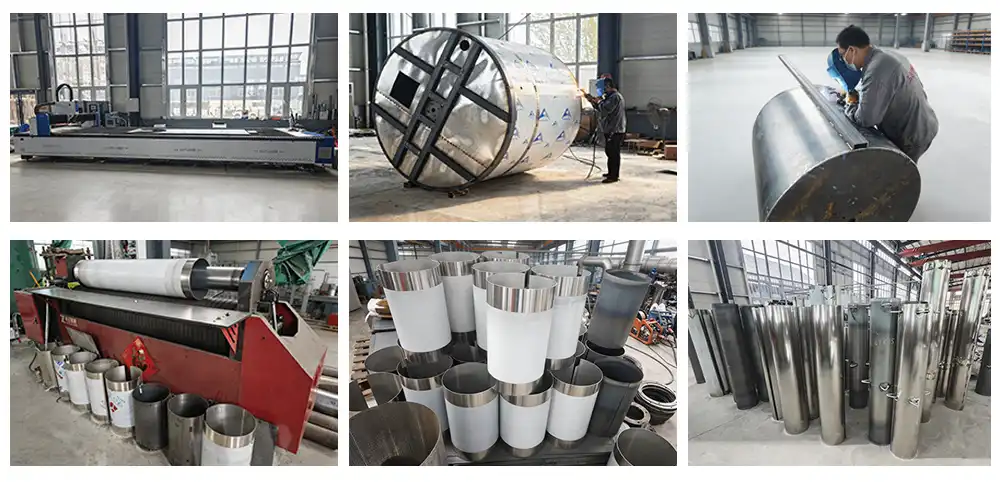
How a material is made directly affects how long it lasts and how much it costs to maintain. Our Big Vertical Plastic Pellet Mixer has thickened Q235 carbon steel barrels with walls that are more than 30 mm thick. This makes them very resistant to damage from material charging and heat stress cycles. This strong construction stops the barrel from deforming, which happens in lighter-duty units and leads to seal failure and bearing misalignment. The reinforced base design has vibration-damping features that stop the shaking and drifting that is common in large machines. This keeps floor bolts and nearby equipment safe from repeated loads. Anti-corrosion treatments make the product last longer in damp places, and stainless steel construction (SUS304 or SUS316) is available for uses that need to be very careful about contamination or are exposed to additives that rust.
As batch sizes get bigger, these structural issues become more important. A 500 kg mixer can handle small flaws in the design, but a 20-ton unit turns every weakness into a working failure. For weld seam integrity, non-destructive testing is needed. Dye penetrant or X-ray screening shows that joints can handle thousands of pressure cycles without cracking from wear and tear. Whether your operation keeps material changes clean or gets black spots from grease and powder leaking from bearings depends on how reliable the seals are.
Comparing Equipment Options for Optimal Selection
Scale Considerations: Large Versus Small Capacity Units
There are trade-offs between centralized high-capacity equipment and a number of smaller mixers that go beyond the initial cost of the equipment. Large capacity systems combine the infrastructure for moving materials, which cuts down on the number of charging stations, discharge lines, and control panels that need to be maintained and tended to by operators. Four 5-ton mixers can be replaced by a single 20-ton mixer, which takes up less room and needs fewer workers. But this centralization makes things more vulnerable; if one piece of equipment breaks, it stops whole production lines instead of just lowering capacity by 25%. Smaller, more spread-out systems make it possible to process different formulas at the same time, so there is no need for cleaning to be done between runs. Because of lower surface-area-to-volume ratios and economies of scale in drive efficiency, bigger equipment usually uses less energy per kilogram produced.
Manual Versus Automated Operation
Automation changes mixing from a batch process that requires a lot of work to an ongoing operation that is watched over. In manual systems, workers have to measure ingredients, start cycles, keep an eye on progress, and make sure that the time of discharge matches up with equipment further downstream. This method works well for low-volume production where recipes change often and the cost of scripting is higher than the cost of labor saves. Automated installs combine PLC controllers with HMI touchscreens that let you handle recipes, keep track of batches, and watch them from afar. Pre-programmed formulas get rid of mistakes in weighing and make sure that recipes are always the same across shifts and workers. Modern systems talk to equipment that moves materials uphill and processing equipment that moves materials downstream. They coordinate the flow of materials to keep buffer stock to a minimum and output to a maximum. Depending on how much work costs and how much is made, technology usually pays for itself in 18 to 36 months.
Industry-Specific Requirements and Compliance
For polymer processing, you need large capacity plastic mixer that meets specific standards that go beyond the general rules for industrial tools. For uses that come into touch with food, you need materials and finishes that are FDA-approved, don't let bacteria grow, and are easy to clean. In pharmaceutical compounding, validation paperwork is needed to show that the equipment can be cleaned and that the mix is equal within very tight statistical limits. Explosions can happen in places where chemicals are processed, so electrical systems need to be ATEX-certified and be able to purge with harmless gas. Knowing these application-specific needs when choosing tools keeps you from having to pay a lot of money to fix problems or repair everything when regulators find out you aren't following the rules. Reliable makers back up regulatory entries with material approvals, test results, and design paperwork. Offshore providers, on the other hand, often don't have the technical resources to meet the needs of different jurisdictions.
Conclusion
When choosing industrial mixing tools, it's important to carefully look at the technical specs, the needs of the business, and the supplier's skills. Capacity needs to match output needs while keeping efficiency high across all operating levels. Quality of construction affects how long something lasts and how much it costs to maintain, so strong design is necessary even if it costs more at first. For a balance between saving time and money on code, the level of automation should match the amount of work being done and how complicated the plan is. A supplier's selection process includes more than just the price of the equipment. It also includes the ability to customize, the availability of expert help, and the ability to get parts in the future. Procurement teams get equipment that consistently performs well, increases operational efficiency, and provides reliable service over a longer operational life by carefully taking these factors into account.
FAQ
What maintenance intervals are recommended for industrial mixing equipment?
Comprehensive maintenance plans include eye checks every day for leaks and strange noises, lubrication of bearings and drive parts once a week according to the manufacturer's instructions, and thorough checks every month to look at how the blades and seals are wearing. Checking the dynamic balance, trying the electrical system, and checking the structural stability should all be part of the yearly maintenance. Professional inspections every three months are helpful for setups that get a lot of use because they record the state of the equipment and find problems before they break.
Which factors most significantly influence energy efficiency in mixing operations?
The main things that affect how much energy something uses are its efficiency rate, the losses in the drive system, and its working load factor. Running equipment at full capacity gets the most out of it, while running it at half amounts uses more energy per kilogram. Instead of set speeds that waste energy by stirring things up too much, variable frequency drives let you fit the speed to the needs of the material. Baseline efficiency is kept up throughout an item's service life by avoiding bearing wear and material buildup through proper upkeep.
Can mixing equipment be customized for unique material handling requirements?
Reliable makers allow for a lot of customization to solve particular processing problems. Changes include special blade shapes for tough materials, jacketed heating or cooling to control temperature, different output designs that fit the layout of the plant, and electrical systems that won't blow up in dangerous places. When quoting for customization, it's important to talk about the application in detail so that engineering solutions meet real operating needs instead of expected ones.
Partner with a Trusted Large Capacity Plastic Mixer Supplier
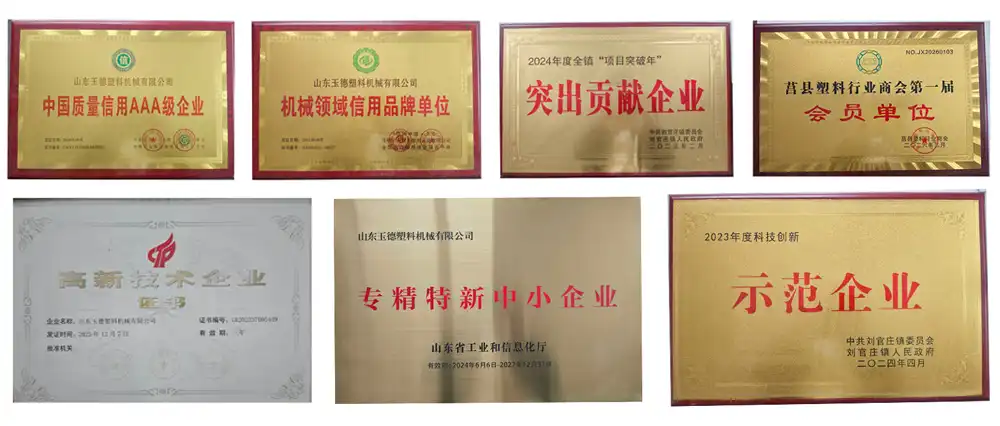
Yude Plastic Machinery offers industrial mixing solutions that improve production stability and efficiency by combining decades of manufacturing experience with full customer support. Our Large Vertical Plastic Pellet Mixer uses tried-and-true twin-screw technology to achieve uniformity of over 98% in amounts ranging from 10 to 30 tons. Its heavy-duty design guarantees years of reliable use. We can fully customize our tools to fit the properties of your materials, the needs of your building, and the compliance standards in your area. Our world after-sales network provides quick technical help and genuine replacement parts, which cuts down on downtime when production needs to keep going. Send an email to sales@yudemachinery.com to talk to our engineering team about your application needs and get a full quote that meets all of your needs. You can see our whole line of products at yudemachinery.com, and that's why thousands of makers around the world choose Yude Plastic Machinery as their top choice for large capacity plastic mixer manufacturer.
References
- Richardson, J.F., Harker, J.H., and Backhurst, J.R. (2002). Particle Technology and Separation Processes. Butterworth-Heinemann Chemical Engineering Series.
- Paul, E.L., Atiemo-Obeng, V.A., and Kresta, S.M. (2004). Handbook of Industrial Mixing: Science and Practice. John Wiley & Sons, Inc.
- Cullen, P.J. (2009). Food Mixing: Principles and Applications. Wiley-Blackwell Publishing.
- Harnby, N., Edwards, M.F., and Nienow, A.W. (1992). Mixing in the Process Industries. Butterworth-Heinemann Ltd.
- Muzzio, F.J., Shinbrot, T., and Glasser, B.J. (2002). "Powder technology in the pharmaceutical industry: the need to catch up fast," Powder Technology, Vol. 124, Issues 1-2, pp. 1-7.
- Poux, M., Fayolle, P., Bertrand, J., Bridoux, D., and Bousquet, J. (1991). "Powder mixing: Some practical rules applied to agitated systems," Powder Technology, Vol. 68, Issue 3, pp. 213-234.
Learn about our latest products and discounts through SMS or email