- English
- French
- German
- Portuguese
- Spanish
- Russian
- Japanese
- Korean
- Arabic
- Greek
- German
- Turkish
- Italian
- Danish
- Romanian
- Indonesian
- Czech
- Afrikaans
- Swedish
- Polish
- Basque
- Catalan
- Esperanto
- Hindi
- Lao
- Albanian
- Amharic
- Armenian
- Azerbaijani
- Belarusian
- Bengali
- Bosnian
- Bulgarian
- Cebuano
- Chichewa
- Corsican
- Croatian
- Dutch
- Estonian
- Filipino
- Finnish
- Frisian
- Galician
- Georgian
- Gujarati
- Haitian
- Hausa
- Hawaiian
- Hebrew
- Hmong
- Hungarian
- Icelandic
- Igbo
- Javanese
- Kannada
- Kazakh
- Khmer
- Kurdish
- Kyrgyz
- Latin
- Latvian
- Lithuanian
- Luxembou..
- Macedonian
- Malagasy
- Malay
- Malayalam
- Maltese
- Maori
- Marathi
- Mongolian
- Burmese
- Nepali
- Norwegian
- Pashto
- Persian
- Punjabi
- Serbian
- Sesotho
- Sinhala
- Slovak
- Slovenian
- Somali
- Samoan
- Scots Gaelic
- Shona
- Sindhi
- Sundanese
- Swahili
- Tajik
- Tamil
- Telugu
- Thai
- Ukrainian
- Urdu
- Uzbek
- Vietnamese
- Welsh
- Xhosa
- Yiddish
- Yoruba
- Zulu
Achieving Consistent Plastic Pellet Color Mixing with a 30 Ton Vertical Plastic Particle Mixer
To mix plastic pellet colors consistently on an industrial scale, you need tools that can do it reliably across huge batches. The 30 Ton vertical plastic particle mixer with heating function solves this problem by mixing vertical spiral circulation with built-in thermal systems. This makes sure that the distribution of pigments is ≥98% even across 30,000 kg loads. This machine gets rid of color streaking and batch-to-batch variation, which are very important for companies that make a lot of plastic parts because uniformity in appearance has a direct effect on brand image and customer acceptance rates.
Benefits of Using a 30 Ton Vertical Plastic Particle Mixer with Heating for Color Mixing
When manufacturers try to keep the color quality the same across big production runs, they run into problems that smaller-scale tools can't solve. Using high-capacity heated vertical mixers has benefits that go beyond just being able to handle larger batches. These benefits include basic changes in product quality and business costs.
Superior Color Dispersion Uniformity
Vertical screw physics creates the fountain effect, which pushes material from the bottom of the chamber to the top in a steady stream. Pigment concentrates added at any point in the load are exposed to this circulation pattern over and over again. This keeps the layers from forming, which can happen in systems that are static or not stirred enough. When this forceful circulation is paired with even heating, it breaks up pigment clumps and makes sure that masterbatch carriers fully melt and cover each pellet.
Color streaking, which looks like bands or spots on finished goods, is caused by pigments not being spread out enough during pre-processing. Injection molding companies that make parts for cars or housings for consumer goods can't stand these kinds of flaws because customers will reject the products right away. When 30 Ton vertical plastic particle mixer with heating function units are used correctly, the ≥98% uniformity standard cuts down on color-related quality failures to almost nothing. This protects manufacturers' names and keeps them from having to pay for expensive product refunds.
Operational Scalability and Production Continuity
To make pipe, profile, or film goods, extrusion lines use a certain amount of base materials every shift. When these operations are fed from multiple small mixer batches, each batch changeover adds new factors, such as slight differences in temperature or time, or colors that haven't been completely cleaned out from previous batches. These all make the process less stable. One 30 Ton vertical plastic particle mixer with heating function batch can keep production going for a long time, getting rid of the need for these changeover factors and raising the total process capability indices.
The large amount also acts as a cushion when there are problems getting materials. Instead of stopping production right away when shipments of materials arrive late, processors can use the big mixed batch while they work out logistics problems. This resilience directly leads to better rates of machine utilization and more reliable service to customers.
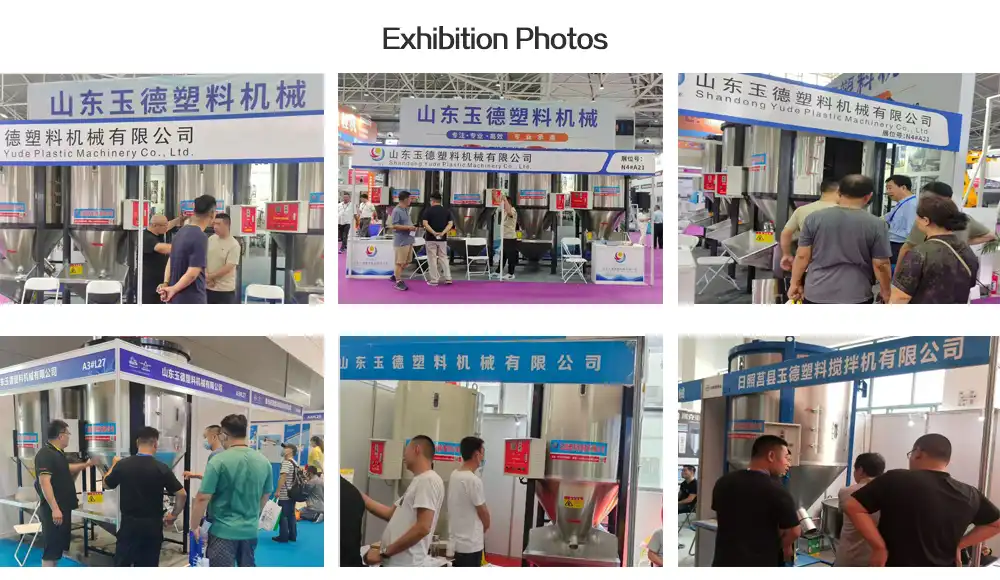
Implementing Best Practices for Optimal Plastic Pellet Color Mixing
When used incorrectly, even a high-quality 30 Ton vertical plastic particle mixer with heating functions gives disappointing effects. Setting up structured working processes will help your high-capacity heated mixing equipment do what it's supposed to do, which is improve quality and efficiency.
Material Preparation and Loading Procedures
Color powders and base resins often come in different sizes and thicknesses of particles. By pre-blending small amounts of materials before adding them to the main mixer, concentrates are spread out more evenly in the large volume. Adding pigments in the middle of the filling process instead of at the beginning or end makes the original spread better and cuts down on the time needed to mix everything evenly.
The amount of moisture in the materials that come in affects both how they mix and how well they heat. When things get wet, they stick together and form agglomerates that are hard to move around or spread out. These problems can be avoided by pre-drying materials that absorb water or finding pellets that are stored in places with controlled humidity. Some moisture can be removed by the built-in heating function, but depending on this function alone makes cycle times longer and costs more energy.
Temperature Setting and Monitoring
Set temperature guidelines for each material based on the resin's heating properties and the pigment's needs. Instead of depending only on setpoint indicators, use multiple temperature probes to keep an eye on the real chamber temperatures during mixing cycles. The temperature conditions inside multi-ton loads can sometimes be much cooler than the control settings.
When top layers of material stay cooler than lower zones near hot air intakes, this is called thermal stratification, and it makes color uniformity worse. The vertical airflow plan makes this problem less of a problem, but regular checks make sure everything is working right. Write down temperature profiles and color quality tests to help your company learn more about the best settings for each mix of materials it works with.
Cycle Time Optimization and Quality Verification
The normal cycle time of 30 to 50 minutes is a good place to start, but the real time needed depends on the color contrast (pale yellows in white base resins reach uniformity faster than blacks), the concentration of the pigments, and the properties of the material. Do sampling studies by drawing test pieces at regular times during mixing cycles, molding or extruding standard parts, and using spectrophotometers to measure color values to find out when uniformity is reached.
Keeping the mixing going for longer than it needs to be loses energy and makes tools less available without improving the quality. On the other hand, shortening cycles to increase output causes the color difference issues that the equipment is meant to fix. These things are balanced by data-driven cycle time optimization, which uses actual results instead of theories.
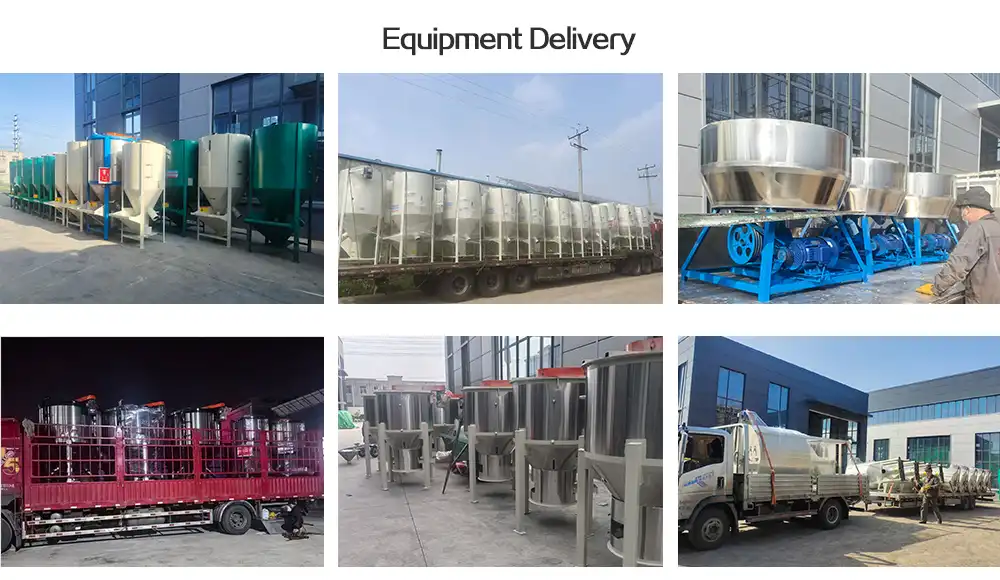
How to Choose the Right 30 Ton Vertical Plastic Particle Mixer with Heating?
Selecting 30 Ton vertical plastic particle mixer with heating function is a big financial decision that needs to be carefully thought out by comparing technical specs to operational needs. Professionals in B2B procurement have to find a balance between short-term practical needs, long-term running costs, and the dependability of suppliers.
Heating Capacity and Temperature Precision
Different types of plastic need different heat processing windows. Some PVC materials need to be slowly heated to 60–70°C to keep them from breaking down too quickly. On the other hand, industrial resins like PC or PA can be pre-conditioned at 80–100°C to get rid of moisture and make the melt flow better. Check to see if the temperature settings on the tools you're thinking about buying are accurate enough to handle all of your materials.
The speed of the heating system is just as important. Equipment that takes hours to reach the right temperature can mess up production schedules, while heating that is too fast can damage the equipment. Find out how long it takes to heat up, how even the temperature is throughout the mixing room, and if there are any safety interlocks that stop things from getting too hot.
Build Quality and Material Compatibility
The anti-rust treatment on the Q235 carbon steel construction makes it strong enough to handle most common plastics. Processors that work with corrosive chemicals or in damp places may need touch areas made of higher-quality stainless steel. Find out if the basic configurations meet your needs or if you need to make any changes to make sure they will work in the long run.
Check the specifics of the mixing spiral form and shaft construction. When loads are put on thickened spiral flights, they don't bend as much, which could lead to mixing dead zones. Also, shafts that are properly supported don't wobble, which speeds up bearing wear. Butterfly discharge valves that are operated by hand are easy to use and reliable. However, automatic discharge systems may be worth the extra work they require in highly integrated production settings.
Manufacturer Reputation and Support Infrastructure
People are more likely to trust established makers with a history of making high-capacity vertical plastic particle mixer than to trust new companies that have only a few sites to show their work. Over the years, Shandong Yude Plastic Machinery has worked with thousands of users from all over the world, giving them experience with a wide range of materials and uses. With this much experience, tech teams can understand problems that come up in the real world and suggest setups that have worked in similar situations.
Manufacturers who offer warranties that last longer than the standard one year show that they are confident in the durability of their products. Full after-sales support, including expert help 24 hours a day, fast delivery of extra parts, and the ability to do service on-site, protects your production continuity. Buyers from other countries should check with local service partners to make sure they can reply quickly and without any language or time zone issues.
Customization and Integration Capabilities
Standard specifications for tools work well for many uses, but sometimes they need to be changed to meet unique output needs. Manufacturers that offer customization services can change the way discharges are set up to fit your material handling systems, add automatic temperature tracking and logging to keep track of quality, or change the way electrical systems work to meet local standards. To keep the job on schedule, find out early on how long it will take to customize and how much it will cost.
Conclusion
For consistent color mixing of plastic pellets on an industrial scale, you need equipment that was made to deal with the difficulties of big volumes. The 30 Ton vertical plastic particle mixer with heating function has a lot of benefits, including vertical circulation that stops stratification, built-in heating that improves color dispersion, and a strong design that makes it reliable for a long time. When compared to multiple smaller mixers or horizontal options, manufacturers of color-critical applications benefit from lower defect rates, easier production operations, and better energy economy. By carefully choosing equipment based on heating accuracy, build quality, and the manufacturer's support infrastructure, you can get the best return on your investment and set up operational capabilities that will help your business grow into more demanding markets where consistent appearance quality sets your products apart from the competition.
FAQs
What temperature range should I use for mixing different plastic materials?
Temperature needs are very different depending on the type of material. Most of the time, processing PVC mixtures works best between 60°C and 75°C, which helps the plasticizer spread out without causing thermal breakdown. Heating materials between 50°C and 65°C makes the changes in viscosity between base resin and color concentrates smaller, which is good for PE and PP. To get rid of surface wetness and make it easier for pigments to stick, engineering plastics like ABS and PA often need to be heated to 70 to 90°C. Always check the technical datasheets provided by the material supplier for specific temperature suggestions. Also, do small-scale tests before processing 30-ton batches at the higher temperatures.
How does energy consumption compare between vertical and horizontal mixers at this capacity?
Vertical tumblers use 25–35% less energy per kilogram of mixed material than horizontal tumblers of the same capacity. Gravity helps move materials around in vertical systems, which means less motor power is needed. Also, the small vertical size reduces the amount of hot surface area where heat loss happens. Integrated insulation and heat return systems make heated vertical mixers even more efficient. This makes them especially cost-effective for high-volume processes that run all the time.
What maintenance schedule ensures consistent color quality over time?
Every 500 hours of use, check the mixing spiral flights and shaft bearings for material growth or wear patterns that could cause dead zones that affect the consistency. When switching colors, clean the inside surfaces once a month to keep them from getting dirty. Periodically check the heating system's performance by making sure the temperature sensors are working correctly and the air is being distributed evenly. If you need to stop material from leaking, replace any worn outlet valve covers. Manufacturers like Yude Plastic Machinery give detailed upkeep instructions that are tailored to the way their equipment is set up.
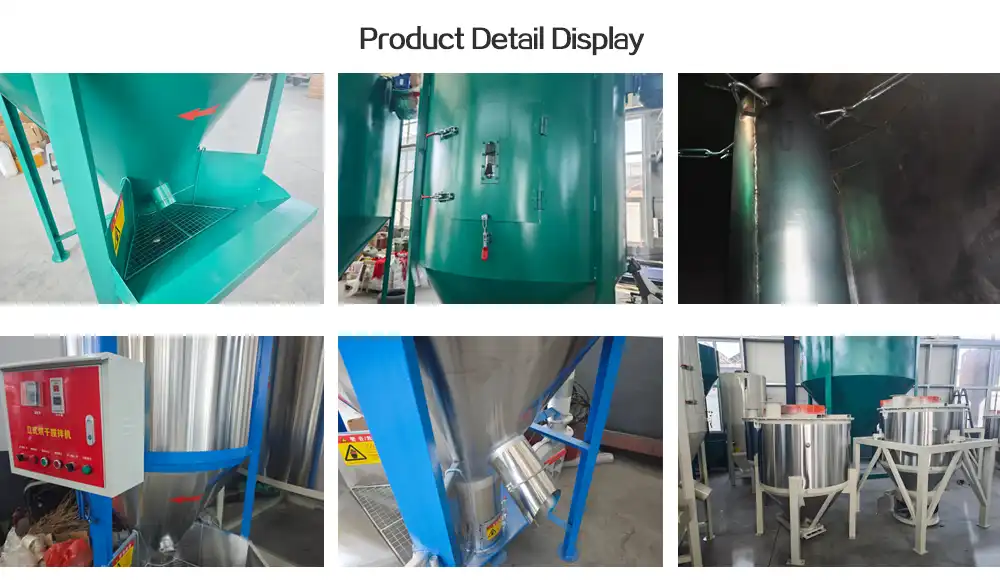
Partner with Yude Plastic Machinery for Superior Mixing Solutions
Industrial-grade vertical plastic particle mixers made by Yude Plastic Machinery are intended for high-volume color mixing tasks. Our 30 Ton vertical plastic particle mixer with heating function gives procurement engineers and sourcing managers the consistency, dependability, and operating efficiency they need for production settings that are very important to the company. Our equipment has been used in tough situations by OEMs, injection molders, extruders, and recycling plants all over North America.
Our expert team can customize equipment to meet your unique production needs. This includes making changes to meet regional electricity and safety standards and adding multilingual control interfaces. We protect your production continuity throughout the equipment's lifetime with a full warranty, professional help 24 hours a day, and established service partnerships in North America. We are an experienced 30 Ton vertical plastic particle mixer with heating function supplier, we maintain inventory for rapid delivery and competitive pricing reflecting our efficient manufacturing scale.
Contact our sales team at sales@yudemachinery.com to discuss your color mixing challenges and receive detailed technical specifications, application recommendations, and quotations tailored to your production volume and quality requirements. We welcome the opportunity to demonstrate how our equipment solutions can eliminate color consistency problems while reducing your operational costs.
References
- Hansen, M.T. (2021). Industrial Polymer Processing: Equipment Selection and Optimization Strategies. Technical Publishing International.
- Chen, W. & Roberts, K.P. (2020). "Vertical Mixing Technologies for High-Capacity Plastic Processing Operations," Journal of Polymer Engineering, 40(8), pp. 623-638.
- Industrial Mixer Technology Association (2022). Best Practices Guide for Plastic Pellet Color Mixing Equipment. IMTA Standards Publication.
- Nakamura, H. (2019). "Energy Efficiency Comparison of Vertical versus Horizontal Plastic Mixing Systems," International Plastics Processing Review, 34(3), pp. 145-159.
- Williams, D.R. & Thompson, L.A. (2023). Procurement Guidelines for Industrial Plastic Processing Equipment. Manufacturing Technology Press.
- European Plastics Processing Federation (2021). Technical Specifications for Large-Capacity Heated Mixing Systems. EPPF Technical Report Series, Volume 17.
Learn about our latest products and discounts through SMS or email