- English
- French
- German
- Portuguese
- Spanish
- Russian
- Japanese
- Korean
- Arabic
- Greek
- German
- Turkish
- Italian
- Danish
- Romanian
- Indonesian
- Czech
- Afrikaans
- Swedish
- Polish
- Basque
- Catalan
- Esperanto
- Hindi
- Lao
- Albanian
- Amharic
- Armenian
- Azerbaijani
- Belarusian
- Bengali
- Bosnian
- Bulgarian
- Cebuano
- Chichewa
- Corsican
- Croatian
- Dutch
- Estonian
- Filipino
- Finnish
- Frisian
- Galician
- Georgian
- Gujarati
- Haitian
- Hausa
- Hawaiian
- Hebrew
- Hmong
- Hungarian
- Icelandic
- Igbo
- Javanese
- Kannada
- Kazakh
- Khmer
- Kurdish
- Kyrgyz
- Latin
- Latvian
- Lithuanian
- Luxembou..
- Macedonian
- Malagasy
- Malay
- Malayalam
- Maltese
- Maori
- Marathi
- Mongolian
- Burmese
- Nepali
- Norwegian
- Pashto
- Persian
- Punjabi
- Serbian
- Sesotho
- Sinhala
- Slovak
- Slovenian
- Somali
- Samoan
- Scots Gaelic
- Shona
- Sindhi
- Sundanese
- Swahili
- Tajik
- Tamil
- Telugu
- Thai
- Ukrainian
- Urdu
- Uzbek
- Vietnamese
- Welsh
- Xhosa
- Yiddish
- Yoruba
- Zulu
30 Ton Plastic Mixing Machine for Plastic Recycling and Compounding Lines
The 30 Ton vertical plastic particle mixer with heating function is one of the most powerful pieces of equipment for handling large amounts of plastic. It is an important tool for recycling and combining in industry. This strong machine has a vertical circular upward circulation structure that mixes common plastic bits like PE, PP, ABS, and PVC very well. This industrial-grade mixer can hold up to 30,000 kg and has a useful volume of 45,000 to 48,000 liters. It mixes evenly more than 98% of the time in 30 to 50 minutes per batch, which makes it perfect for large-scale manufacturing settings.
Working Principle and Benefits of Large-Capacity Heated Mixing Systems
How the Vertical Spiral Circulation Mechanism Works
The straight circular shape of 30 Ton vertical plastic particle mixer with heating function makes it work very well. A strong screw drill in the mixing mechanism moves plastic pellets from the bottom of the cylinder-shaped barrel to the top, making a pattern of continuous flow that looks like a fountain. This upward spiral motion makes sure that each particle goes through the whole space more than once during each turn. The thicker carbon steel mixing spiral is turned at speeds between 30 and 60 turns per minute by two motors that put out a total of 250 to 315 kW of power. This controlled spinning speed keeps the material from breaking down and keeps the mixing thorough across the entire 30-ton capacity.
The heating system that is built in works at the same time as the mixing action. At the base is a hollow distribution plate that lets hot air flow through the material bed. Since particles fall from the fountain's top while new material rises, each granule goes through the hot airstream more than once. This method makes sure that the temperature is the same throughout the batch and stops any areas from getting too hot, which could damage temperature-sensitive plastics.
Tangible Benefits for Recycling and Compounding Operations
30 Ton vertical plastic particle mixer with heating function has benefits that directly lead to better operations. Since the drying process happens during the mixing cycle, no separate drying equipment is needed. This cuts the total working time by 20 to 30 percent compared to mixing and drying in a different order. Because the double-walled insulation layer of the Q235 carbon steel barrel keeps thermal energy, about 35 percent less heat is lost, which means that a lot less energy is used.
Improving the quality of the product is also very important. A mixing uniformity of 98 percent or higher makes sure that the colors are spread out evenly when masterbatches are mixed with base resins. When handling recovered content along with new material, the thorough homogenization stops the separation that happens when materials with different bulk densities are processed. As a result, extruded goods have consistent mechanical properties and surface finishes, which are very important for companies that make things for the building and car markets.
Identifying Reliable Suppliers in the Industrial Mixing Equipment Market
Brand Reputation and Manufacturing Standards
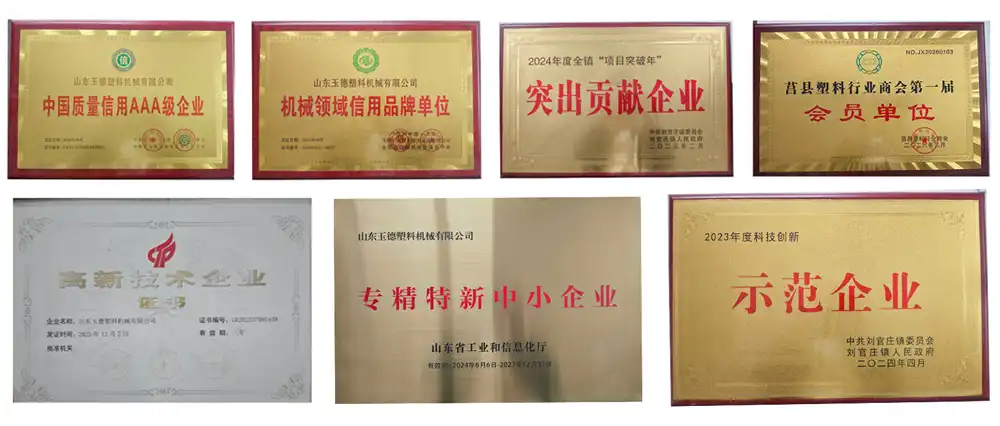
There are a lot of companies that sell industrial 30 Ton vertical plastic particle mixer with heating function, but to find trusted ones, you need to look at their production skills and track records in the market. Companies that have full production sites with modern CNC lathes, fabrication tools, and assembly lines show that they have the means to make sure their products are always of high quality. Manufacturers who work with thousands of users over many years learn about the problems that real-world applications face and come up with workable answers.
Certification guidelines provide an objective way to check the quality of a product. Getting ISO 9001 approval for quality management means that processes are controlled in a planned way. When an item has the CE mark, it means it meets European safety standards. These standards are important for buyers from outside of Europe because they are widely accepted as safety standards. When buying expensive capital equipment, buyers should ask for certification paperwork and check the item's accuracy through the organization that issued the certification.
Evaluating Technical Capabilities Through Customer Applications
Looking at a supplier's installed base shows real-world proof of success. Companies that make equipment for large-scale pipe extrusion plants, car part injection molders, and post-consumer recycling operations show that they can work in tough production settings. Case studies that describe specific tasks, like processing washed PET flakes for fiber production or mixing calcium carbonate masterbatches, can help you understand how well equipment works with materials that are similar to what you need to make.
There is more weight to customer comments that include specific performance measures rather than just general praise. Procurement managers should ask for examples that talk about the effects of mixing consistency, how much energy the new equipment uses compared to the old equipment, and how often it breaks down during long periods of use. Talking to people who already use the equipment can often reveal useful information about upkeep needs and seller response that isn't shown in marketing materials.
Optimizing Energy Consumption in High-Capacity Mixing
Using a 30 Ton vertical plastic particle mixer with heating function requires a lot of energy, so improving its economy is important from a financial point of view. How well the mixing bucket insulates directly impacts how much hot energy is needed. Thermal insulation material in a double-walled structure keeps heat from escaping to the outside world, so energy stays focused on preparing the material. Over thousands of hours a year, units that achieve a 35 to 40 percent drop in thermal loss compared to single-wall designs result in lower energy costs.
How operations are run also affects how much energy is used. Energy efficiency is highest when batch amounts stay close to the stated 30-ton capacity. This is because the fixed energy needed to heat the barrel is spread out over more material. Scheduling output so that heating systems don't have to be turned on and off as often saves energy from thermal cycles. Some workers keep mixers at lower holding temperatures during small breaks in production instead of turning them off completely. This is done to balance the cost of full reheating processes against the energy used.
Conclusion
Large-capacity hot mixing equipment is an important purchase for plastic recycling and blending businesses that want to keep product quality high while cutting down on production costs. The 30-ton vertical design with built-in heating solves the problems of thoroughly mixing materials and controlling moisture in one step, which lowers the cost of handling and raises output. Operational success is guaranteed by buying tools from companies that have a history of producing high-quality goods, a strong support network, and the ability to make changes to fit specific needs. By comparing design approaches, understanding the technical specs, and checking the credentials of suppliers, procurement teams can make smart choices that will save money in the long run by ensuring stable performance and low running costs.
FAQs
What temperature ranges are suitable for heating common plastic pellets in a 30-ton mixer?
Different types of materials have different temperature needs. Polyethylene and polypropylene usually need to be heated to between 60 and 80 degrees Celsius to get rid of wetness and warm up before they are extruded. Because they need to be processed at higher temperatures, engineering plastics like ABS need temperatures between 80 and 90 degrees Celsius. For handling PVC, heating it slowly, between 50 and 70 degrees Celsius, keeps it from breaking down too quickly. To keep things from getting damaged and to fully condition the room, the heating system should be able to precisely control the temperature within plus or minus 2 degrees Celsius.
Can this equipment handle blending recycled content with virgin resin effectively?
The vertical spiral circulation system is designed to solve the problem of mixing elements that have different densities. When things are steady, the bulk density of virgin pellets is usually higher than that of recycled fluff or regrind. This makes the particles separate. The strong water circulation constantly pushes stuff from the bottom to the top, making thousands of mixing events that cancel out differences in density. This system lets consistent blends with up to 40 percent recycled content stay regular, which is important for making sure that products with demanding qualities, like car parts or pressure-rated pipe, work as expected.
How do you get to parts that are hidden under a lot of stuff for maintenance?
The design includes parts that allow upkeep to be done without taking the whole piece apart. The bottom slide-gate release valve lets all the material go out, and the side-mounted trapdoor lets you get to the parts inside. Most of the time, the bearing system uses housings on the outside that can be reached without going into the mixing room. Before workers can get in, maintenance processes include lockout-tagout, cool-down, and full release. When it's time for maintenance, these access places let you check the bearings and the mixing spiral on well-designed units from well-known makers.
Partner With a Proven Manufacturer for Your Mixing Equipment Needs
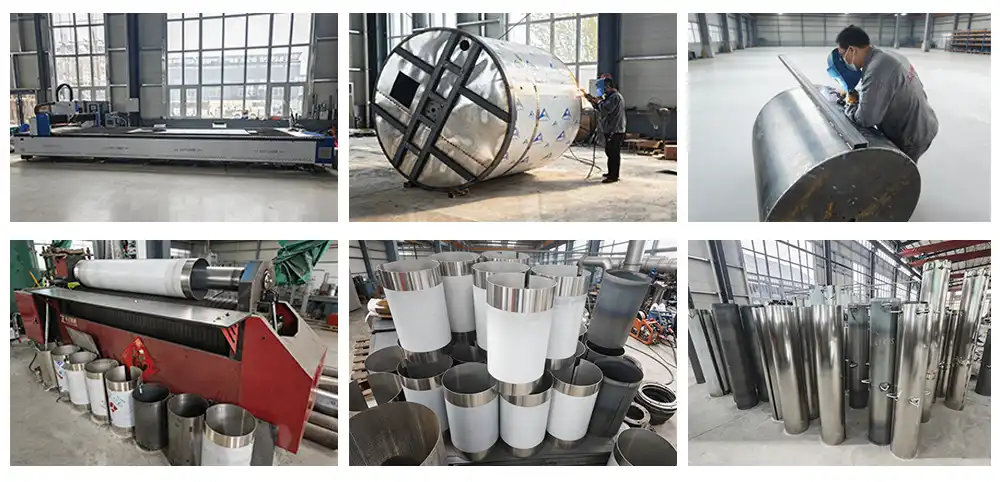
Yude Plastic Machinery has a lot of experience making mixing systems with a lot of capacity that are perfect for recycling and combining tasks that are very difficult. Our 30 Ton vertical plastic particle mixer with heating function is the result of improved engineering that takes into account comments from thousands of installs around the world. We have full production facilities that allow us to keep an eye on quality from making the parts to checking them for the last time. This is backed up by a full service network that lets us help quickly. Our expert team can deliver equipment that fits your business needs, whether you need standard setups or custom solutions that meet the needs of a certain process. Contact our specialists at sales@yudemachinery.com to talk about your needs and get full specs from a reliable source that cares about the success of your production.
References
- Rauwendaal, C. (2014). Polymer Mixing: A Self-Study Guide. Hanser Publications, Munich.
- Tadmor, Z., & Gogos, C.G. (2013). Principles of Polymer Processing (2nd ed.). John Wiley & Sons, Hoboken.
- Krueger, D.L. (2016). "Advances in Industrial Mixing Technology for Thermoplastics Processing." Plastics Engineering, 72(4), 28-35.
- White, J.L., & Kim, E.K. (2015). Twin Screw Extrusion: Technology and Principles (2nd ed.). Hanser Publishers, Cincinnati.
- Osswald, T.A., & Hernández-Ortiz, J.P. (2018). Polymer Processing: Modeling and Simulation. Hanser Publications, Munich.
- Wildi, T. (2017). "Energy Efficiency in Plastic Materials Handling and Conditioning Systems." SPE Plastics Engineering Technical Papers, Society of Plastics Engineers Annual Conference, 63, 412-419.
Learn about our latest products and discounts through SMS or email