- English
- French
- German
- Portuguese
- Spanish
- Russian
- Japanese
- Korean
- Arabic
- Greek
- German
- Turkish
- Italian
- Danish
- Romanian
- Indonesian
- Czech
- Afrikaans
- Swedish
- Polish
- Basque
- Catalan
- Esperanto
- Hindi
- Lao
- Albanian
- Amharic
- Armenian
- Azerbaijani
- Belarusian
- Bengali
- Bosnian
- Bulgarian
- Cebuano
- Chichewa
- Corsican
- Croatian
- Dutch
- Estonian
- Filipino
- Finnish
- Frisian
- Galician
- Georgian
- Gujarati
- Haitian
- Hausa
- Hawaiian
- Hebrew
- Hmong
- Hungarian
- Icelandic
- Igbo
- Javanese
- Kannada
- Kazakh
- Khmer
- Kurdish
- Kyrgyz
- Latin
- Latvian
- Lithuanian
- Luxembou..
- Macedonian
- Malagasy
- Malay
- Malayalam
- Maltese
- Maori
- Marathi
- Mongolian
- Burmese
- Nepali
- Norwegian
- Pashto
- Persian
- Punjabi
- Serbian
- Sesotho
- Sinhala
- Slovak
- Slovenian
- Somali
- Samoan
- Scots Gaelic
- Shona
- Sindhi
- Sundanese
- Swahili
- Tajik
- Tamil
- Telugu
- Thai
- Ukrainian
- Urdu
- Uzbek
- Vietnamese
- Welsh
- Xhosa
- Yiddish
- Yoruba
- Zulu
Which vertical mixer is suitable for mixing plastic powder pellet together?
You need a vertical mixer plastic stainless steel mixing powder granule color powder that can handle changes in particle size, stop separation, and keep the material's purity when blending plastic powders and pellets. The universal plastic pellet mixer is the best option because it is made completely of 304 stainless steel and mixes materials evenly more than 98% of the time. Its soft vertical screw design moves things from the bottom to the top, creating a fountain-like flow that makes sure light color powders cover heavier granules evenly without making too much heat or static electricity.
Challenges of Mixing Plastic Powder and Pellets
Particle Size and Density Disparities
Plastic grains are usually between 2 and 5 mm across, while color powders and additives are made up of bits smaller than 100 microns. This difference in size makes it normal for the materials to separate when they are handled or mixed. It happens that heavier pellets sink to the bottom and lighter powders gather at the top. This makes the color distribution and additive concentrations in final goods less uniform. We've seen this problem a lot when making masterbatches, where the exact amount of color used affects how the finished product looks.
Contamination and Material Degradation Risks
Cross-contamination between groups makes it hard to keep an eye on quality, especially when going from normal grades to food-contact materials or from light colors to dark colors. Equipment with porous surfaces or complicated shapes can catch leftover materials that can infect later runs. Too much shear force or heat production during mixing can break down materials. This can change the chemical structure of polymers, which lowers their mechanical qualities and makes them discolor. When heat from friction is added during rough mixing cycles, temperature-sensitive additives like UV filters and heat stabilizers stop working as well.
Limitations of Traditional Horizontal Mixers
Horizontal ribbon blenders and paddle mixers have trouble mixing powder and pellets together because the way they mix on the side doesn't work well with changes in density. These systems also make more heat through friction, need more floor room, and are hard to clean because their internal shapes are so complicated. The horizontal position makes it hard to release all the material, leaving behind leftovers that add to contamination problems.
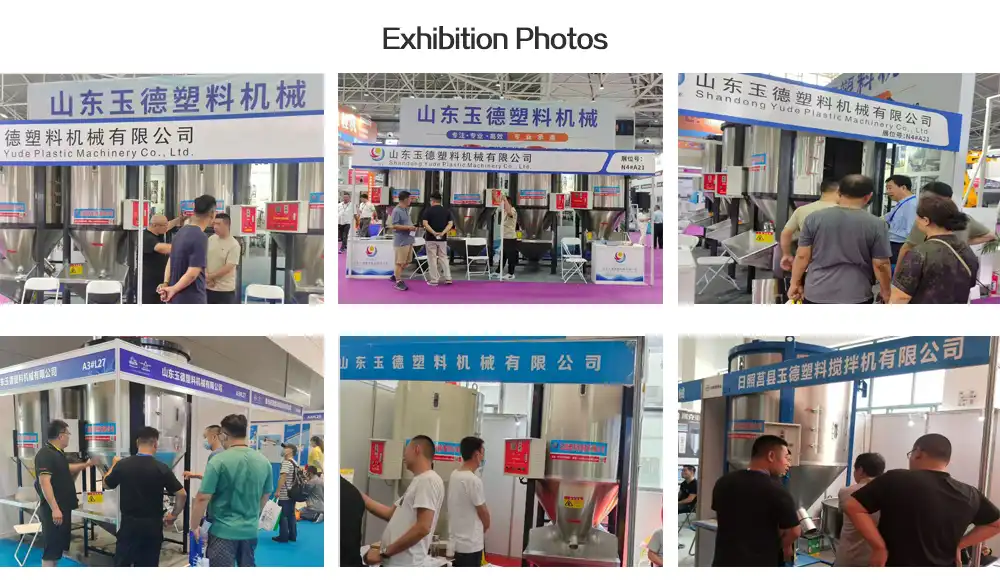
Key Features of Vertical Mixers Suitable for Plastic Powder and Pellet Mixing
Material Construction: Stainless Steel Advantages
Stainless steel equipment made from 304 or 316 grade has many practical benefits that have a direct effect on the quality and speed of production. The surface doesn't have any pores, so it doesn't absorb anything and doesn't leave any places for germs or leftover powders to hide. When working with PVC compounds, flame retardants, or other chemically aggressive chemicals, corrosion protection makes sure that the equipment lasts a long time. Internal surfaces that are mirror-polished and have a roughness value of less than 0.6 micrometers make it easier to release all the material and clean quickly between runs.
The barrel and all of the parts that mix the pellets in our vertical mixer plastic stainless steel mixing powder granule color powder. This choice of material meets the high standards for cleanliness needed for medical-grade polymer processing and plastics used in food packing. Contamination is not an option.
Design Factors Affecting Performance
How well materials move around in the room depends on how the mixing shaft is set up. Low-speed vertical screws that turn between 30 and 60 times per minute lift things gently, which keeps dust and static electricity from building up. The useful amount can be changed, so the tools can be matched to batch sizes from 300 kg for color compounding to 10,000 kg for large-scale production.
The shape of the discharge opening affects how well the material is emptied. At the conical bottom, slide-gate setups make sure that there is no holding, which gets rid of trash and stops cross-contamination. Transparent inspection screens let workers see how the blend is progressing without stopping the mixing cycle. This helps them find the best time for the process based on how the material actually behaves instead of set plans.
Energy Efficiency and Operational Costs
Vertical methods for mixing use less electricity than horizontal ones because they use gravity to help move the materials around instead of against it. Our three-phase asynchronous motor design works smoothly and quietly, and it has built-in safety features that keep it from burning, overloading, and losing its phase, which could damage the equipment or lower the quality of the batch. Vertical designs need less upkeep because they have fewer wear parts and easier bearing arrangements. This means lower long-term costs and more production downtime.
How to Choose the Best Vertical Mixer for Plastic Powder and Pellets?
Application-Specific Requirements
The tools you need depends on the properties of your materials. Fine powders smaller than 50 microns need anti-static properties and dust extraction holes to handle airborne particles. Glass-filled or mineral-reinforced materials, on the other hand, need interior surfaces that don't break down easily. When planning batch sizes, you should think about how much production will grow in the future. Equipment that is too small can cause problems, while equipment that is too big wastes energy and floor space.
How long it takes to mix depends on how complicated the additive blending is. Uniformity can be reached in 8 to 12 minutes with simple color powder applications, but longer cycles are needed for multi-component formulas that contain flame retardants, strengthening fibers, and processing aids. Knowing the types of materials you work with helps you choose the right shaft speeds and chamber shapes.
Supplier Evaluation Criteria
Working with the right maker means more than just buying tools; it also means getting long-term help with running the business. A brand's image is based on its history and how happy its customers are with it in a variety of settings. Since we started, we've worked with thousands of people from all over the world and the United States, giving us experience in the plastics processing, chemical industry, and food packing sectors.
How quickly production can start up again after equipment problems depends on how well the after-sales service works. Our 7x24 support system makes sure that you can get professional help whenever you need it, no matter what time you work. We have service centers in important towns in the United States that allow for 24-hour on-site action. In more than 30 countries around the world, we work with local technical teams through partnerships to provide similar help.
Long periods of downtime can be avoided by having spare parts on hand. Our complete inventory management system keeps track of important parts and makes sure that replacements are sent out within 48 hours. We can also provide documentation in more than one language and change the controls on your tools so that they have language-specific interfaces that meet the needs of your workers.
Customization and Scalability
Standardized methods don't always work perfectly in manufacturing settings. If you can change the way an item works, you can adapt vertical mixer plastic stainless steel mixing powder granule color powder to non-standard installation areas, add automatic feeding systems, or change the way downstream processing equipment discharges to fit your needs. Our technical team looks at specific needs and quickly applies engineering solutions that don't affect the reliability of the equipment.
Planning for scalability saves investments in equipment as production numbers rise. With modular designs, you can add more parts to improve capacity instead of replacing the whole system. We help buying teams come up with phased implementation plans that make sure that new equipment is added at the right time to meet growing market demand and that the process stays the same across all production lines.
Conclusion
To choose the right vertical mixing tools for blending plastic powder and pellets, you need to find a balance between technical performance, operating efficiency, and long-term dependability. Stainless steel construction is necessary for demanding uses in food packing, medical goods, and engineering plastics manufacturing because it is clean, long-lasting, and doesn't let germs in. The vertical mixer plastic stainless steel mixing powder granule color powder uses tried-and-true design principles along with flexible setups that can be changed to meet a wide range of production needs. It also mixes uniformly more than 98% of the time. When making a purchase choice, it's important to think about more than just the original cost. Total ownership costs, such as energy use, maintenance needs, and supplier support skills, all affect the value of an item over its useful life.
FAQ
Can stainless steel vertical mixers handle both fine powders and large pellets simultaneously?
The ventilation method in modern vertical mixing systems is designed to solve this problem. As the materials rise from the bottom and fall, they create many mixing zones where bits of different sizes can mix together. Equipment made of 304 stainless steel and improved screw pitch designs can mix powders smaller than 100 microns with pellets up to 5 mm in diameter, producing uniformity levels suitable for important uses such as medical-grade plastics and materials that come into touch with food.
What factors determine the cost of a vertical mixer for plastic applications?
The price of equipment depends on a number of factors, such as the chamber's capacity (from 300 kg to 10,000 kg batches), the type of material used (304 or 316 grade stainless steel), the level of automation (programmable controls and integrated feeding systems), and any special needs, like motors that won't explode or specific discharge configurations. In general, vertical mixers have a lower total cost of ownership than horizontal ones because they use less energy, need less upkeep, and clean up faster, which makes production more efficient.
Why does energy efficiency matter in mixer selection?
The amount of energy used has a direct effect on working costs, especially in places where production runs all the time. Vertical mixers use gravity to help the flow of material, so they need less motor power than horizontal mixers, which try to stop the material from falling naturally. This difference in efficiency grows over the life of the equipment. For example, a 3kW power reduction running 16 hours a day saves about 17,500 kWh per year, which saves a lot of money and is better for the environment. As a matter of economics and business duty, sustainable operations are giving equipment energy profiles more and more attention.
Transform Your Plastic Processing with Proven Mixing Solutions from Yude Plastic Machinery
Procurement experts and sourcing managers know that the tools they choose has a direct effect on the quality of the products they make and how efficiently they run their businesses. Yude Plastic Machinery makes vertical mixer plastic stainless steel mixing powder granule color powder systems that work in real life to solve blending problems in plastics processing. For your building, our universal plastic pellet mixer gives you the clean performance, constant uniformity, and dependability you need. As a well-known vertical mixer plastic stainless steel mixing powder granule color powder manufacturer with customers in over 30 countries, we offer reasonable prices, full expert support, and quick access to spare parts. Please email our team at sales@yudemachinery.com to talk about your unique material mixing needs and to get a custom equipment proposal with full technical details and low prices.
References
- Manas-Zloczower, I. (2009). Mixing and Compounding of Polymers: Theory and Practice. Hanser Publications, Munich.
- Paul, E.L., Atiemo-Obeng, V.A., and Kresta, S.M. (2004). Handbook of Industrial Mixing: Science and Practice. Wiley-Interscience, Hoboken.
- Tadmor, Z. and Gogos, C.G. (2006). Principles of Polymer Processing. John Wiley & Sons, New Jersey.
- Rauwendaal, C. (2014). Polymer Mixing: A Self-Study Guide. Hanser Publications, Cincinnati.
- Kowalski, A.J. (2009). Modern Plastics Handbook: A Comprehensive Guide to Materials, Processing, and Applications. McGraw-Hill Professional, New York.
- Ottino, J.M. and Khakhar, D.V. (2000). Mixing and Segregation of Granular Materials. Annual Review of Fluid Mechanics, Volume 32, Annual Reviews Inc.
Learn about our latest products and discounts through SMS or email