- English
- French
- German
- Portuguese
- Spanish
- Russian
- Japanese
- Korean
- Arabic
- Greek
- German
- Turkish
- Italian
- Danish
- Romanian
- Indonesian
- Czech
- Afrikaans
- Swedish
- Polish
- Basque
- Catalan
- Esperanto
- Hindi
- Lao
- Albanian
- Amharic
- Armenian
- Azerbaijani
- Belarusian
- Bengali
- Bosnian
- Bulgarian
- Cebuano
- Chichewa
- Corsican
- Croatian
- Dutch
- Estonian
- Filipino
- Finnish
- Frisian
- Galician
- Georgian
- Gujarati
- Haitian
- Hausa
- Hawaiian
- Hebrew
- Hmong
- Hungarian
- Icelandic
- Igbo
- Javanese
- Kannada
- Kazakh
- Khmer
- Kurdish
- Kyrgyz
- Latin
- Latvian
- Lithuanian
- Luxembou..
- Macedonian
- Malagasy
- Malay
- Malayalam
- Maltese
- Maori
- Marathi
- Mongolian
- Burmese
- Nepali
- Norwegian
- Pashto
- Persian
- Punjabi
- Serbian
- Sesotho
- Sinhala
- Slovak
- Slovenian
- Somali
- Samoan
- Scots Gaelic
- Shona
- Sindhi
- Sundanese
- Swahili
- Tajik
- Tamil
- Telugu
- Thai
- Ukrainian
- Urdu
- Uzbek
- Vietnamese
- Welsh
- Xhosa
- Yiddish
- Yoruba
- Zulu
Plastic Mixer Machine Explained: Types, Uses & Advantages
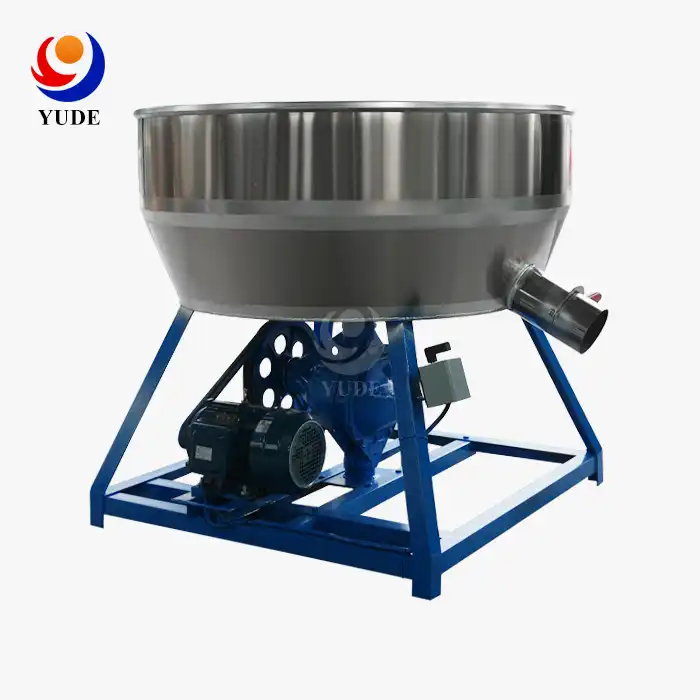
A plastic mixer machine blends pellets, masterbatch, additives, fillers, and recycled material into one uniform feedstock before injection molding, extrusion, or blow molding. A stainless steel plastic particle mixer https://www.yudemachinery.com/plastic-mixer/stainless-steel-plastic-particle-mixerdoes this with rotating blades inside a corrosion-resistant chamber, so color, additive distribution, and strength stay consistent from batch to batch. It also gives food, medical, and daily chemical packaging plants a smooth surface that cleans easily. I wrote this guide for purchasing managers, engineers, distributors, and OEM buyers who want to understand mixer types, uses, selection steps, pricing factors, and upkeep before requesting a quote.
How Plastic Mixer Machines Work and Which Types Exist
How Does a Stainless Steel Plastic Particle Mixer Work?
This is the three-step process. First, pellets and other things were put into the cage. Next, spinning blades move the material so it can be rolled, curved, or made straight. In other words, each pellet is always moving. The mixed batch finally leaves the machine through the output door and is sent to a feeding, hopper, extruder, or shape machine. As the shaft turns faster, more material is added, and the mixing lasts longer. What happens depends on how dense the particles are, how easily they flow, and how concentrated the chemicals are. Most of the time, the bowl, shaft, motor, gearbox, blades, inspection cover, control panel, timer, and safety switch are used. When the recipe says to, some lines heat, cool, weigh, or gather dust.
Main Types of Plastic Mixer Machines
There are different shapes and sizes of blenders, such as ribbon, paddle, high-speed, low-speed, dry, hot, and vertical. They're small and can be used with many styles. This type of model works best for automatic lines, bigger batches, and more work. Things can get hurt, get too hot, or make more dust when high-speed tools are used. Media that is fragile, recycled, or has a mix of densities work better with ribbon and paddle units that move slowly. Warm mixers are used to make things softer, dry, or coat them. With a dry mixer, you can mix things while they are still warm. People who want to buy something should pick a type based on the recipe, the amount, how it needs to be cleaned, and their automation goals.
Why Mixing Quality Matters for Your Finished Parts
In the end, things that were mixed badly will show up. What kind of master batch is this? It makes streaks and changes color. When these aren't spread out well, they change how well one part works with another. If you mix the old and new pieces in different ways, the strength can change. If the feed isn't even, this machine will rise. This is less likely to happen before the material gets to the drum if the stainless steel plastic particle mixer is well-built. It is possible to measure and weigh things and put parts through technical tests to see how well they work. Getting things mixed up right doesn't cost much more than taking things back or deleting parts of them. It takes a little longer.
Applications and Advantages of Stainless Steel Plastic Granule Mixers
Applications of Stainless Steel Plastic Granule Mixers
Before the new resin is pumped or extruded, it is mixed in equipment made of stainless steel with color masterbatch, UV stabilizers, flame retardants, fillers, and processing aids. They also mix new and used pellets, taking into account changes in the particles' size, density, of water, and safety. With the help of recycling and mixing lines, it is ready to be turned into pellets or pushed through a die. The best way to work with plastics is to be careful not to touch those that are used to package food, medicines, or high-end chemicals that are used every day. Some of these things can get broken by rust or extra color. In the US, food and drug companies must follow FDA rules such as 21 CFR 211.65, which states that touch areas must not be too reactive, additive, or absorptive, and 21 CFR 117.40, which states that equipment must be easy to clean. People can see how well the package companies they buy from meet their wants by looking into them.
Advantages and Limitations of Stainless Steel Plastic Particle Mixers
It's possible to draw the lines by hand, partially automatically, or automatically. The surfaces are smooth and easy to clean. Things mix well with it, and it doesn't rust. Chrome makes up about 18% of most types of 304, and nickel makes up about 8%. This book and others like it talk about rust and say that chromium adds a thin layer of inactive oxide to stainless steel. When the caps and drain holes are easy to get to, it's easier to clean and fix things. You can only do so much. Powders that don't mix well or plastics that don't like heat might not be able to be used with a regular machine. Something bad could happen if you mix for too long, too fast, or not enough fill. You could burn something or leave dead spots. That's why I think you should try it out on real things first.
Yude's 304 Stainless Steel Plastic Particle Mixer at a Glance
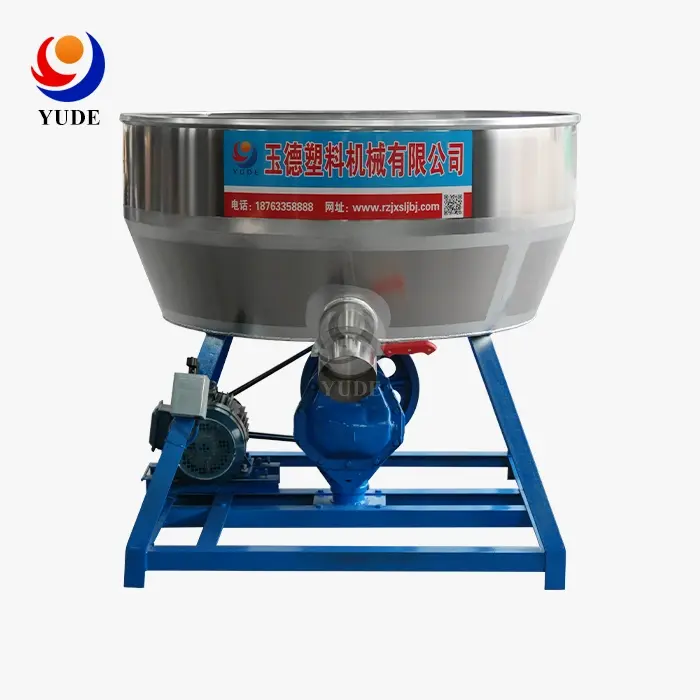
If you work in production, our stainless steel plastic particle mixer is very useful and can be used in a lot of different places. 304 stainless steel is used to make the barrel and other parts that mix things. The most important parts are these.
- Hygiene and cleaning: It's made of 304 stainless steel, which doesn't rust, is easy to clean, and doesn't leave any gunk behind. This is what the barrel and mixing parts are made of. This keeps things clean enough to work with plastic that is meant to be used for medicine and food. It also makes it less likely that contamination will happen when you switch between runs on the same line for different grades, colors, or resins.
- Mixing performance: The useful amount can be changed for each model. Up to 98% of the time, the mixing is even because the rod turns at 30 to 60 r/min. They move slowly because the shaft is moving at this speed. That works well for groups that want a smooth mix that doesn't make the pellets or seasonings rough.
- Power and protection: A stable and quiet three-phase asynchronous motor moves the shaft. Too much power, too much heat, and a lack of phase can damage the machine. If the load or power supply changes quickly during a cycle or a long shift, this keeps the motor and the batch safer.
Together, these features work together to fix common problems like dust, mixing that doesn't make sense, and unstable equipment.
How to Choose and Compare a Stainless Steel Mixer for Plastic Pellets
How to Choose the Best Stainless Steel Mixer for Plastic Pellets
Before you go shopping, make a list of all the things that you will need to fix a stainless steel plastic particle mixer. What should be on this list? The resins, additives, fillers, recycled content, particle size, mass density, wetness, flowability, and heat sensitivity. The next step is to find the gap between the useful capacity and the stated chamber volume. This is because the mixer shouldn't go all the way to the top. How much can be made? Just divide the batch capacity by the batch rates per hour. Every hour, you need to do this. You can make one 500 kg batch, four 500 kg batches, or one 500 kg batch every hour. You will get 1,600 kg per hour. The machine should be the right size, shape, type of blade, speed range, heat, cool, and collect dust for the job. Last but not least, you should think about how often the tests are done, how well the release works, the safety systems, the steel standard, the total cost of ownership, extra parts, and help from a professional.
Stainless Steel Plastic Particle Mixer Comparison for Procurement
Look at the process itself, not just the amount or motor power, to see how the parts fit together. V-shaped tools can mix dry ingredients more often and take up less room on the floor. Lots of the time, horizontal mixers can quickly mix bigger amounts of food. High-speed models move the stuff more quickly, but they use more power and heat. Models that move things slowly are better for the things they move. Carbon steel doesn't rust or get dirty as quickly as stainless steel, but it costs more. Standard machines cut down on lead time, and lines that are already set up work better for one-of-a-kind designs. You should get a list of the technical scope, choices, things that aren't covered, tests, papers, and help with every quote. After that, you can look at deals that are the same.
Plastic Particle Mixer Capacity, Price, and Quotation Guide
To find the capacity, you need to know the amount that can be used, the mass density, the batch weight, the time it takes to load and unload, the number of times it switches, and the time it takes to clean. Separators made of stainless steel come in many styles and price ranges. Prices depend on the type of steel, the finish on the outside, the chamber size, the motor and shaft, the design of the blades, the speed of the machine, its ability to heat or cool, collect dust, automate chores, package, ship, and start up. Like, a full quote request lists the materials, how they are made, the output goal, the layout, the discharge height, the voltage and frequency (like the 60 Hz supply that is common in the US), the rules that must be followed, and the country where the goods are going. It makes small particle mixers that weigh between 300 kg and 500 kg. The same company makes upright plastic mixers that weigh between 600 kg and 10 tons.
Supplier Evaluation, Installation, and Maintenance
How to Evaluate a Plastic Particle Mixer Manufacturer or Supplier
If you ask a reputable company to sell you a stainless steel plastic particle mixer, they should be able to show you that they have worked with pellets, masterbatch, fillers, recycled material, and more. You should ask about the quality of the cutting, welding, putting it together, automation, and the time it takes to export. You should ask for more than just test results and inspection records. You should also ask for drawings, directions, and material licenses. In Shandong, China, Yude Plastic Machinery is a company that makes and sells machines that mix plastics. It does business in more than 30 places around the world. The team checks the new raw materials when they come in. The machines are also checked over to make sure they are all ready to be sent out. Before you work with an OEM or a wholesaler, make sure the price is right, the design is good, and the factory will accept it.
Installation and Operation Basics
Before you mix the first batch in a stainless steel plastic particle mixer, make sure the grounding, guards, bolts, shaft parts, base strength, clearance, electrical compatibility, grounding, and alignment with any lines or equipment further downstream are all in good shape. If the business is in the U.S., make sure the motor can work with the three-phase power and 60 Hz frequency that are used there. When they fill, they have to stick to the set numbers, batch weights, speeds, and cycle times. Going too high or too low won't make the mix better. Test the mix on real things to find the right number. Time the cycle to see how long it takes.
Maintenance and Troubleshooting
As part of routine repair, the oil in the gearbox, the bolts, the noise, the vibrations, the rust, and the discharge parts are all checked for damage. Clean up the space between the pieces and check the shaft seal to make sure there is no grease on the batch. It's simple to find many issues. The fill amount, speed, or time may not be right if the mixing isn't even. Things can get too hot if you put too much on them or let them run for too long. You can clean better if you put down the things you need to clean. Things that are still there can change the colors. When the flow is more steady and the seals are better, there is less dust. Our after-sales team is available 24 hours a day, seven days a week if you need help or have questions about how to use the product.
Future Developments in Plastic Mixing Equipment
Automation and Traceability
More plants can now connect mixers so that they feed, dose, weigh, and discharge on their own. You can see the history of each lot if you keep track of recipes and batches. This helps look over the boxes that food and medicine come in. The control system loads things in the same order every time because it is automated. This saves the user time because they don't have to make as many decisions. Next, people who want to buy a machine should check to see if it can fit an extra dose or scale. You can start out simple and add more power as your business grows and your clients' needs change.
Energy Efficiency and Recycled Materials
You can use less energy without changing the steady state if you have faster confirmed cycles, better blade shape, and motors that use less power. Even though more recovered stuff is being used, it is different in how dirty, wet, and thick it is. So, you need a lot of different ways to manage water, speed, and waste. A consistency test should be done after each shorter cycle to show that it works. A faster cycle that leaves spots of addition that hasn't been mixed isn't useful. As more types of recipes come out, I think unique mixer designs will become more popular.
Condition Monitoring and Predictive Maintenance
Heat, shaking, tongue load, and batch time can all be tracked by sensors. It's possible that the formula has changed or the blade is worn out if the motor load goes up. It's possible that the bearings are having trouble before they break if the noises get worse. Next, groups decide to fix things during breaks so that no one is late for work. To make changes, the service team only needs to look at one simple log. The batch time and motor speed are shown in this log. Usually, these short records are still being made for weeks after they are made.
Conclusion
A plastic mixing machine makes a single feedstock by mixing different pellets, masterbatch, additives, and recycled materials on the same machine. The mix is great because it's the right color, strong, and won't change during the process. To make different recipes, you can use high-speed, low-speed, dry, hot, vertical, or horizontal bands. You should use the one that fits the fabric, how dirty it is, and how it acts. When mixed with a stainless steel plastic particle mixer, clean-contact plastics don't rust as easily and are easier to clean. In spite of this, tests need to be done on polymers that are easily broken by heat or big changes in density. Over time, results will stay safe if quotes are clear, capacity estimates are done, written checks are done on the supplier, the right things are installed, and there is regular upkeep. In the future, tools will be able to check their own state and be run by drives that use less power. The 304 type shows this list. The motor is safe, the motor is even, and the shaft turns at 30 to 60 r/min.
FAQ
Which plastic mixer is best for my material?
In what way should I mix my plastics? Which one works best? What does the answer mean? Time is determined by the type of resin, the mix of additives, the output, the batch size, and the level of precision that needs to be achieved. Vertical mixers work well in small sets that are used for many things. When there are a lot of things to make, flat tools might work better. This will help them match the plan of the chamber and the blade. They need to know your recipe and how much work you want to do every hour.
Do I need a heated mixer?
It gets hot. That sounds like something I should get a mixer for. When you need to control the heat, like when you need to get rid of wetness, coat, or smooth, you should only use warmth. A dry mixer is usually all you need to mix pellets and masterbatch dry. This will save you time and money. Take care with the heat and test the stuff with a hot unit to see if it doesn't mind being hot.
Can a stainless steel plastic particle mixer be customized for my plant?
The plastic particle mixer is made out of stainless steel. Could it be changed to fit my plant? Yes. Different types of plastic can be used with equipment made by Yude Plastic Machinery. The equipment doesn't come in standard sizes and has screens that can be used in more than one language. It also meets local industry standards. Write down everything you need to know about tests, paperwork, wait times, electricity standards (like 60 Hz power), and who is responsible for what after the sale before you agree to buy something.
Request a Stainless Steel Plastic Particle Mixer Quotation from Yude Plastic Machinery
Want to find a company that makes a plastic particle mixer out of stainless steel that works with your resin, batch size, and how easy you want to clean it? Mixed metals made of 304 stainless steel can be bought from Yude Plastic Machinery. When you buy them, you can get help 24 hours a day, seven days a week, and they can be made in any size. They are also about 98% equal. Get in touch with sales@yudemachinery.com and tell them about the material, the voltage, and how much output you need every hour. You can also visit yudemachinery.com to see our products and get a price quote.
References
- Handbook of Industrial Mixing: Science and Practice, Wiley, 2004
- Mixing in the Process Industries, Butterworth-Heinemann, 1992
- Plastics Additives Handbook, Hanser, 2009
- ASM Handbook, Volume 13B: Corrosion: Materials, ASM International, 2005
- Code of Federal Regulations, Title 21, Part 117, U.S. Food and Drug Administration, 2015
- Code of Federal Regulations, Title 21, Part 211, U.S. Food and Drug Administration, 2023
Learn about our latest products and discounts through SMS or email