- English
- French
- German
- Portuguese
- Spanish
- Russian
- Japanese
- Korean
- Arabic
- Greek
- German
- Turkish
- Italian
- Danish
- Romanian
- Indonesian
- Czech
- Afrikaans
- Swedish
- Polish
- Basque
- Catalan
- Esperanto
- Hindi
- Lao
- Albanian
- Amharic
- Armenian
- Azerbaijani
- Belarusian
- Bengali
- Bosnian
- Bulgarian
- Cebuano
- Chichewa
- Corsican
- Croatian
- Dutch
- Estonian
- Filipino
- Finnish
- Frisian
- Galician
- Georgian
- Gujarati
- Haitian
- Hausa
- Hawaiian
- Hebrew
- Hmong
- Hungarian
- Icelandic
- Igbo
- Javanese
- Kannada
- Kazakh
- Khmer
- Kurdish
- Kyrgyz
- Latin
- Latvian
- Lithuanian
- Luxembou..
- Macedonian
- Malagasy
- Malay
- Malayalam
- Maltese
- Maori
- Marathi
- Mongolian
- Burmese
- Nepali
- Norwegian
- Pashto
- Persian
- Punjabi
- Serbian
- Sesotho
- Sinhala
- Slovak
- Slovenian
- Somali
- Samoan
- Scots Gaelic
- Shona
- Sindhi
- Sundanese
- Swahili
- Tajik
- Tamil
- Telugu
- Thai
- Ukrainian
- Urdu
- Uzbek
- Vietnamese
- Welsh
- Xhosa
- Yiddish
- Yoruba
- Zulu
Plastic Material Mixer Machine For Sale
When you search for a plastic material mixer machine for sale, you're looking at equipment that directly influences the quality and consistency of your manufactured products. A plastic mixer is designed to homogenize polymer resins, color masterbatches, additives, and regrind materials before they enter your production line. This equipment eliminates color streaking, prevents material segregation, and ensures batch-to-batch consistency—critical for maintaining product standards in high-volume manufacturing. Whether you operate an injection molding facility or an extrusion plant, selecting the right mixing equipment affects your efficiency, waste reduction, and ultimately, your bottom line.
Understanding Plastic Material Mixers: Working Principles and Benefits
What Are Plastic Material Mixers and How Do They Work?
At their core, plastic material mixers use motorized stirring to make sure that the particles are spread out evenly. A screw device in a vertical mixer moves materials from the bottom to the top, forming a fountain-like flow pattern inside a cone-shaped chamber. This form makes sure that there are no dead spots where the material could settle or break down. Horizontal mixers use paddles that can be used to turn powders into granules or to add liquid ingredients. To get uniformity rates higher than 95%, both types work on timed cycles that last between 8 and 50 minutes, based on the size of the batch and the properties of the material.
The conical shape of our vertical blending frames solves real problems in the industrial process. The form of the chamber makes the best flow patterns for the materials, which guarantees complete mixing with no dead spots. Your production line benefits from steady feed quality, which gets rid of problems with color differences and material separation.
Key Operational Benefits That Drive ROI
Material homogenization tools improve every step of the production process in a measured way. When colors are spread out widely, chromatic aberration can happen in finished parts. Uniform blending can help fix this problem. This regularity keeps expensive rejects and changes from happening with batches. When mixing is done automatically, there is no need for physical work and there is less time needed to switch between batches of materials. Less waste is naturally produced when new pellets are mixed fully with recovered material. This makes the best use of recycled content without reducing the structure's strength. Our model range uses the same amount of energy, and the motor power goes up or down in a linear way, from 4kW in smaller units to 55kW in industrial-scale equipment.
Material Compatibility Across Applications
Polyethylene, polypropylene, PVC, ABS, and industrial plastics like nylon and polycarbonate are just some of the polymers that modern mixing tools can handle. The SUS304 stainless steel design doesn't rust, and the polished inner surface keeps things from getting stuck. When working with glass-filled materials, you need to be extra careful, because regular blades wear out quickly when they have rough fibers in them above 30%. Wear-resistant changes, such as tungsten carbide coatings, are available as options for demanding uses in the production of automobile parts or industrial parts.
How to Choose the Right Plastic Material Mixer Machine for Your Business?
Capacity Matching to Production Volume
By choosing the right size, you can keep your production flow from getting stuck. We manufacture plastic material mixers that can handle a wide range of capacities:
Model YD-300 handles 300 kg batches with 4kW motor power, completing cycles in 8–15 minutes. Its small 1200x800x1800mm size makes it perfect for small fabrication shops or test facilities.
Model YD-1000 processes 1000 kg loads with 11kW of power over 15 to 25 minute rounds. It is good for medium-sized casting operations with several injection presses.
Model YD-5000 serves large-scale production with 5000 kg capacity, 37kW motors, and mixing for 25 to 40 minutes in a 3000x1800x3800mm frame—designed for automotive tier-2 suppliers and heavy industrial manufacturers.
Model YD-10000 delivers industrial-scale performance, able to hold 10,000 kg and using 55kW of power in its biggest 3500 x 2200 x 4500 mm configuration, which supports continuous high-volume extrusion lines.
Figure out how much stuff you need to move every hour and choose equipment that has a 20% extra capacity. The real amount is affected by the bulk density of the material. For example, PE pellets with a density of 0.65 need different estimates than lighter regrind material.
Energy Consumption and Operating Cost Analysis
Long-term operating costs are affected by how well a motor works. Industrial-grade motors and cycloidal pin gear reducers are used in our drive systems to keep the power output stable and noise levels below 70dB. With 7.5kW of power and 12–20 minute runs, the YD-600 type uses about 2.5kWh per batch. When you think about the 6,000 batches of production that happen every year, this means that your fixed energy costs are part of your total cost of ownership. When compared to mixing by hand or having inconsistent batch quality, this has short payback times, usually less than 18 months in environments with ongoing operation.
Maintenance Requirements and Downtime Prevention
How long a piece of equipment lasts depends on how often it is serviced. Every 1,000 hours of use, high-temperature grease is used to lubricate the bearings. After a 100-hour break-in service, the gearbox oil needs to be changed every 2,500 hours. A very important part of quality control is the shaft seal check, which keeps grease from getting into different batches of materials. Our stainless steel design makes it easier to clean between material types or color changes. In line with CE and ISO machinery guidelines, safety interlocks turn off the power immediately when access panels are opened. These built features keep unexpected downtime that delays production to a minimum.
Best Practices for Operating and Maintaining Plastic Material Mixers
Daily Operation Protocols for Consistent Performance
For the plastic material mixer to work well, the anti-vibration pads must be properly leveled. Installing the machine unevenly leads to too much vibration and bearing wear. Load batches within the maximum capacity to keep the motor from getting too hot and the blades from warping. Set the timer settings to the right cycle length for the material. Over-mixing creates static electricity, which separates the particles instead of making the mixture more homogeneous. Check the evenness of the mixing by taking samples from different release places on a regular basis. Consistent particle distribution means that the machine is working correctly, while stratification means that there are problems with the mechanics or that the cycle settings are not right.
Preventive Maintenance Schedule
Set up a written repair schedule to keep track of when to lubricate, check, and replace parts. To keep things from getting dirty, clean the mixing box every time you switch the grades of materials. Check the gap between the blade and the wall once a month. Gaps that are too big create dead zones where material breaks down from contact heat. When you're in a dusty place where tiny particles can get in and cause seizures, check the bearing seals. Analyzing the oil in a reducer can find early signs of wear and tear before a major failure happens. Instead of waiting for the mixing quality to get worse, replace old blades as soon as you notice them.
Troubleshooting Common Issues
If the material inside the cylinder turns black, it means that either the dead zone is too hot or there is a bearing oil leak that is contaminating the batch. To fix, check the blade gaps and the strength of the seal. Too much shaking can be caused by uneven loads, damaged blades, or worn-out bearings, which means the machine needs to be shut down and inspected right away. Grounding chains or anti-static container linings can get rid of static buildup that stops the proper spread of additives. These ways of diagnosing problems keep production running smoothly and make tools last longer.
Top Plastic Material Mixer Manufacturers and Brands to Trust
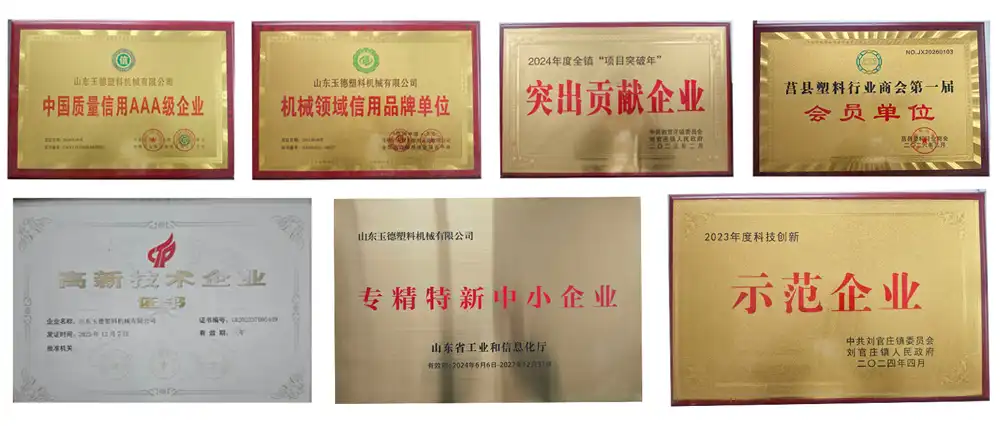
Evaluating Supplier Credentials and Certifications
Working with well-known plastic material mixer manufacturers guarantees the dependability of the tools and help after the sale. Check that the ISO 9001 quality management certification shows that the production controls are set up in a structured way. Look over the proof from a third party that the safety meets local electricity and mechanical standards. Check to see if providers have service networks in other countries or partnerships with approved distributors in your market. Customer examples from similar applications go beyond marketing claims to prove operational success.
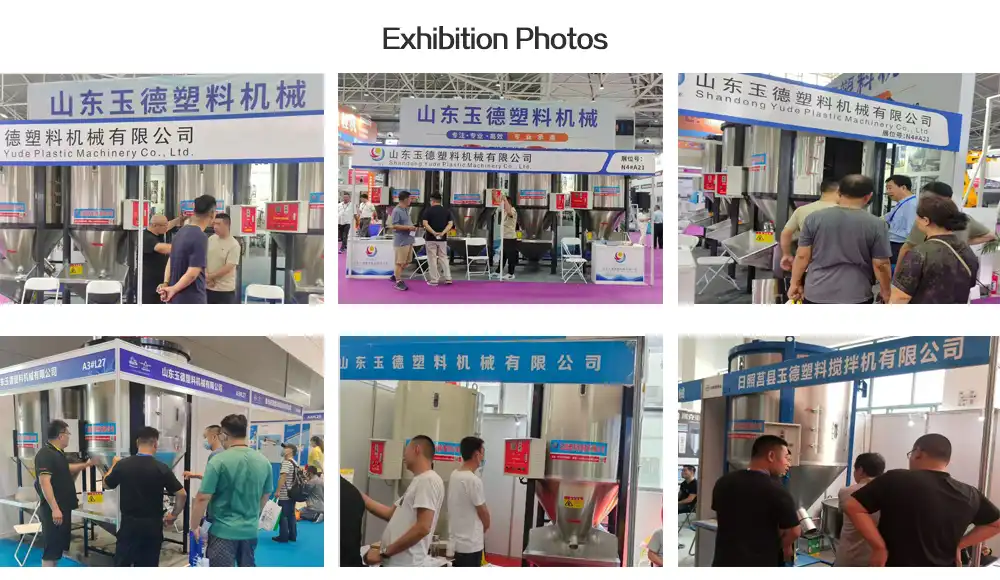
Why Choose Shandong Yude Plastic Machinery Co., Ltd?
Our company mainly makes vertical mixing equipment with capacities ranging from 300 kg to 10 tons, as well as full stainless steel model lines. We have strict quality inspection methods that cover everything from checking the arriving materials to testing the products before they are delivered. This full-process control makes sure that every machine works as it should. Our technical team can quickly make changes to meet non-standard needs, such as control interfaces in multiple languages and electricity setups that are specific to an area.
We have thousands of customers in more than 30 countries in South America, Southeast Asia, and the Middle East. Our 7x24-hour service method includes responding within 24 hours in the United States and helping people in other countries through local agreements. For full traceability, customer file management keeps track of service records and device information. Being able to produce on a large scale lets you offer low prices and keep your shipping promises. This mix of manufacturing know-how and a full service framework helps you reach your buying goals.
Advantages of Direct Manufacturer Relationships
When you work directly with equipment manufacturers instead of middlemen, you save money and get better expert support. Direct contact makes it clear what the needs are for the design and how it can be customized. Engineers from the manufacturer know more about the equipment's strengths and weaknesses than dealers, so they can give more accurate advice on how to use it. Original makers are still the most safe way to get warranty coverage and spare parts. These things lower your overall purchase risk and help you plan for long-term operations.
Conclusion
When looking for the right plastic material mixer, you need to weigh the technical specs against your production needs and your budget. Our wide range of models, with capacities from 300 kg to 10,000 kg, can be used for a wide range of industrial tasks and have been shown to be reliable. The vertical design with conical chambers gets rid of mixing dead zones and keeps feed quality constant, which stops color changes and material separation. Whether you're a procurement engineer at an OEM, the boss of a fabrication shop, or a foreign buyer looking for goods for regional markets, knowing what tools can do and how reliable a supplier is will protect your investment and help you reach your business goals.
FAQ
How do I prevent material stratification after mixing completes?
Segregation usually happens when there is too much mixing or a buildup of static electricity. Shorten cycle times as much as possible to achieve uniformity. Usually, 15 minutes is enough, and longer times make separation worse. When working with foam or PET, which are prone to static electricity, use grounding straps and liquid anti-static products. Using the right cycle time and static control will keep the blend constant while it is being fed and discharged.
Can vertical mixers handle powder materials effectively?
Granular pellets work best with vertical tools. Fine powders don't tend to move around properly and tend to stick together or settle at the base of the chamber. For powder jobs, horizontal paddle mixers or high-speed turbo units work best. Match the type of tools you use to the properties of your material. Particle size, bulk density, and flowability all affect the choice of mixer. Before you buy, check with the manufacturer's experts to make sure it will work.
What capacity should I select for my production volume?
Figure out how much material is used each hour and add 20% to the extra capacity. Take into account changes in the density of the materials. For example, lighter regrind takes up more space than fresh pellets of the same weight. The YD-1000 type can process 1000 kg batches in 15 to 25 minutes and can handle between 2400 and 4000 kg per hour. Match the size of the mixer to the feed rate of your injection molding or extrusion line to make sure that mixing doesn't slow down production.
Partner with Yude Plastic Machinery for Reliable Mixing Solutions
Buying good material mixing tools from a plastic material mixer maker with a lot of experience will protect the quality of your work and make your business run more smoothly. Yude Plastic Machinery offers tested vertical mixing systems that get rid of dead zones, stop color changes, and make sure that the quality of the feed is the same across all of our capacity ranges. Our technical team quickly answers to requests for customization, and our 7x24 service system offers help for as long as the equipment lasts. We keep our prices low by making a lot of products at once and keeping strict quality controls that have won the trust of thousands of customers around the world. Get in touch with our team at sales@yudemachinery.com to talk about your specific needs, get detailed specs, and find out how our mixing equipment can help you reach your industrial goals with dependable performance and full service.
References
1. Richardson, T., & Lokensgard, E. (2021). Industrial Plastics: Theory and Applications (7th ed.). Cengage Learning.
2. Rauwendaal, C. (2019). Polymer Mixing: A Self-Study Guide. Hanser Publications.
3. Tadmor, Z., & Gogos, C. G. (2020). Principles of Polymer Processing (3rd ed.). Wiley-Interscience.
4. Kohlgrüber, K. (2022). Co-Rotating Twin-Screw Extruders: Fundamentals, Technology, and Applications. Hanser Publications.
5. White, J. L., & Kim, E. K. (2018). Twin Screw Extrusion: Technology and Principles (2nd ed.). Hanser Publications.
6. Agassant, J. F., Avenas, P., Carreau, P. J., Vergnes, B., & Vincent, M. (2021). Polymer Processing: Principles and Modeling (2nd ed.). Hanser Publications.
Learn about our latest products and discounts through SMS or email