- English
- French
- German
- Portuguese
- Spanish
- Russian
- Japanese
- Korean
- Arabic
- Greek
- German
- Turkish
- Italian
- Danish
- Romanian
- Indonesian
- Czech
- Afrikaans
- Swedish
- Polish
- Basque
- Catalan
- Esperanto
- Hindi
- Lao
- Albanian
- Amharic
- Armenian
- Azerbaijani
- Belarusian
- Bengali
- Bosnian
- Bulgarian
- Cebuano
- Chichewa
- Corsican
- Croatian
- Dutch
- Estonian
- Filipino
- Finnish
- Frisian
- Galician
- Georgian
- Gujarati
- Haitian
- Hausa
- Hawaiian
- Hebrew
- Hmong
- Hungarian
- Icelandic
- Igbo
- Javanese
- Kannada
- Kazakh
- Khmer
- Kurdish
- Kyrgyz
- Latin
- Latvian
- Lithuanian
- Luxembou..
- Macedonian
- Malagasy
- Malay
- Malayalam
- Maltese
- Maori
- Marathi
- Mongolian
- Burmese
- Nepali
- Norwegian
- Pashto
- Persian
- Punjabi
- Serbian
- Sesotho
- Sinhala
- Slovak
- Slovenian
- Somali
- Samoan
- Scots Gaelic
- Shona
- Sindhi
- Sundanese
- Swahili
- Tajik
- Tamil
- Telugu
- Thai
- Ukrainian
- Urdu
- Uzbek
- Vietnamese
- Welsh
- Xhosa
- Yiddish
- Yoruba
- Zulu
Performance of Plastic Particle Mixer
In industrial making, the performance of a plastic particle mixer directly affects how well products are made and how good they are in the end. A good mixing machine makes sure that the mixture is always the same, cuts down on waste, and keeps throughput rates fixed over long production cycles. Whether they are working with PE, PP, ABS, or PVC pellets, procurement engineers need to know the technical specs and how the mixing equipment works so they can make smart investment choices that meet both short-term production needs and long-term strategy goals.
Understanding Plastic Particle Mixer Performance
Modern factories that work with plastic need reliable mixing tools to make sure that the materials are mixed evenly before they can be used in injection molding or extrusion. Several key success measures that have a direct effect on the bottom line show how well these units work.
What Defines Mixing Performance?
The most important parameter is mixing consistency, which is usually measured with the coefficient of variation (CV) test. Mixing accuracy of ≥98% is achieved with professional-grade tools. This makes sure that color masterbatches, additives, and regrind materials are spread out evenly in the batch. This statistical uniformity keeps all made parts structurally sound and stops chromatic aberrations in finished products.
As operating costs rise, saving energy has become more and more important. In vertical plastic pellet processing equipment, three-phase asynchronous motors that give stable torque while using little energy are usually used for power. Overload and overheating protections keep the motor from shutting down without warning, which protects both the investment and the output plan.
Throughput ability changes a lot depending on how the equipment is built and what the application needs. Batch sizes range from 300 kg to 500 kg for small units to 600 kg to 10 tons per cycle for industrial systems. Matching capacity to real production output stops bottlenecks and keeps you from having to buy equipment that is too big for the job.
Types of Mixing Equipment and Their Mechanisms
Plastic particle mixers are the most common type of equipment used to process plastic pellets because they take up little room and mix materials gently. The screw or paddle form lifts and tumbles the materials, mixing them without making too much heat through contact. This arrangement works especially well for mixing pellets together, where keeping the particles whole is important.
When small powders and pellets need to be mixed, horizontal ribbon blenders work best. The ribbon agitator moves the mixture side to side across the mixing room. This stops density stratification, which is when heavy additives settle and lighter ones rise. For this reason, procurement teams that work with PVC compounding processes often ask for horizontal setups.
For specific tasks that need to create heat during the mixing process, high-speed turbo mixers are used. When you mix PVC resin powder with stabilizers and lubricants, the contact heat that drives off moisture and starts the gelling of the additives is beneficial. These units work at a lot higher RPMs than regular pellet mixers, and you need to make sure that the materials they mix with are compatible.
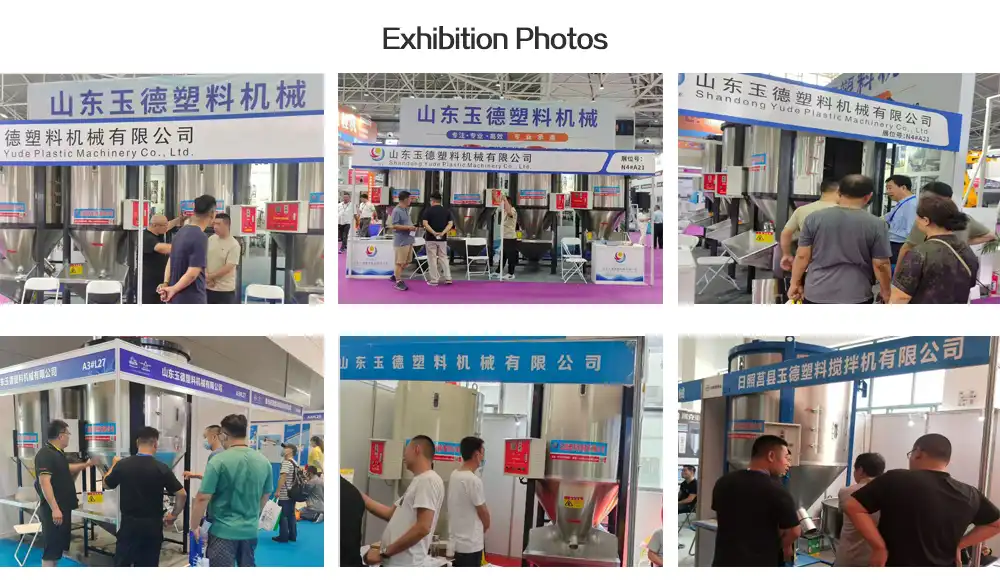
Key Factors Impacting the Performance of Plastic Particle Mixers
When mixing tools can't keep up with working needs, production slows down. By figuring out these limited factors, procurement teams can choose tools with features that keep performance from dropping over time.
Common Performance Bottlenecks
When mixing isn't done evenly, it can lead to quality problems later on, such as color streaking, parts with uneven mechanical properties, or parts with different sizes. This problem usually happens because there isn't enough mixing time, the wrong type of plastic particle mixer was used, or the mixing parts are worn out and don't move the material enough. Differences in particle density between new pellets and regrind flakes make this problem worse. This leads to a process called "demixing," in which materials separate during handling after being mixed at first.
Overheating during long mixing processes breaks down ingredients that are sensitive to temperature and can soften pellets enough to make them stick together. Mixing times longer than 15 minutes for normal pellet mixing usually mean that the equipment is too small or there are mechanical problems. To avoid thermal problems and reach the desired level of regularity, the link between batch size, motor power, and mixing time needs to be carefully optimized.
Material segregation after discharge makes mixing less useful even when it works perfectly. Particles stick to release chutes or storage bins when static electricity builds up, making samples that aren't representative when they feed downstream equipment. Professional setups use grounding chains all over their material handling systems, and ionizer bars can be added to neutralize the charges on particles as they come out of the mixing.
Equipment Wear and Maintenance Impact
The most common technical problem that affects the efficiency of a mixer is a broken bearing. Even though there are seal systems in place, fine dust getting into bottom bearings makes them work very poorly. Quality equipment either places bearings on the outside or uses air-purged seals to make parts last longer than 10,000 usual working hours.
To keep mixing speeds constant, parts of the drive system like gear reducers need to be inspected and oiled on a regular basis. Changes in torque show that mechanical problems are starting to show up and make the mixing less even before they fail completely. Predictive maintenance systems that check shaking levels catch these problems early, so they don't cause unplanned downtime during production runs.
Abrasive materials wear away at the surface from the inside, leaving rough spots that make it harder for materials to move and make cleaning more difficult. Routine inspections should be done once a year to record wear patterns, and mixing elements should be replaced before they stop working properly to keep performance standards. Supply chain problems can be avoided in the future by including price and availability promises in procurement contracts for consumable parts.
Optimization Through Process Control
Programmable logic controllers in new mixing tools automatically set the order of batch processes. Timed rounds make sure that work is the same between shifts and stop mistakes made by operators. It is possible to quickly switch between goods without having to go through long setup processes because recipe management systems store data for different combinations of materials.
Variable frequency drives let you precisely control the speed, which changes the mixing strength based on the properties of the material. For delicate masterbatch mixing, gentle motion works best, but for adding stiff additives, more force is needed. Being able to change operational settings makes tools useful for a wider range of tasks without having to buy expensive specialized units.
In more advanced setups, tracking systems are built right in to make sure that the mixing is even before the batch is released. Near-infrared spectroscopy or color sensors give real-time feedback on quality, automatically increasing the mixing time if sensors find that the mixture is not uniform enough. This closed-loop control gets rid of the need for regular testing and sampling in the lab, which slows down the output process.
Comparing Different Plastic Particle Mixers for Optimal Performance
When making decisions about what to buy, you have to look at how the style of the tools affects how it works. Knowing the pros and cons of each mixer setup helps you choose the right one for your needs.
Vertical vs. Horizontal Configurations
For buildings with limited floor room, vertical forms have a number of strong benefits. The smaller size makes it possible to integrate into current production plans without making a lot of changes. Gravity-assisted release reduces the amount of leftover material that is kept, which speeds up the cleaning process between runs. The soft rolling action keeps the purity of the pellets and stops the formation of fines that can contaminate finished goods.
When working with products that have big changes in density, horizontal ribbon blenders do a better job. Vertical lifting motions are less successful at stopping division than lateral mixing motions. With horizontal designs, it's possible to handle larger batches, and some industrial units can handle amounts of more than one ton. All parts can be reached without using high platforms or lifting tools, which makes maintenance easier.
Comparing how much energy different types of mixers use shows that plastic particle mixers usually use less power for the same batch amounts. The efficient moving of materials uses less motor horsepower, which means that over the life of the equipment, the electricity costs will be lower. Even though they use more power at once, horizontal units make up for it by having faster cycle times that boost the total output of the plant.
Automatic vs. Manual Operation
Automated systems get rid of the need for workers to do repeated batch tasks and make sure that the process is always the same. Operators don't need to be as skilled because of pneumatic discharge valves, ingredient weighing systems, and automatic cleaning processes. Savings on labor costs add up over time, especially in places where wages are high or where sites have more than one shift.
In low-volume specific applications where recipe freedom is more important than automation benefits, manual tasks are still useful. It's helpful for research and development settings to be able to quickly change factors and watch how materials behave during mixing trials. The prices of capital equipment are still much cheaper for units that are handled by hand, which makes figuring out the return on investment easier for smaller businesses.
When operations are automated, process stability leads to better control. Changes made by humans in time, the order of adding ingredients, and the discharge process cause quality differences that aren't present with automatic systems. When machine function takes away the operator's effect as a variable that can change the results, statistical process control data becomes more useful.
Conclusion
To make mixing tools work better, you need to know about the technical factors that affect how regular the mix is, how much energy it uses, and how reliable it is. The best long-term value comes from making purchasing choices that balance these factors against budget limits and the capabilities of the provider. Vertical plastic pellet processing equipment that is built to meet industry standards gives modern plastic processing the even mixing, strong construction, and operating freedom it needs. Successful setups match the capabilities of the equipment to the needs of the production process and make sure that the provider will support the equipment for its entire life. Structured repair plans and operator training make the most of the money you spend on mixing equipment by keeping performance levels high over years of use.
FAQ
How can maintenance practices extend mixer lifespan?
Using structured repair procedures greatly increases the life of equipment. Checking operations every day finds problems as they start to happen before they become major problems. Cleaning materials once a week keeps them from getting dirty, and lubricating drive parts once a month keeps them in good shape. Keeping track of maintenance tasks provides a past that helps with predicting when to replace equipment, which usually means that good equipment that is well taken care of will last longer than 15 years.
Should I choose horizontal or vertical mixers for my application?
Vertical mixers are good for places that don't have a lot of room and need to mix pellets together in a way that doesn't damage the particles. The gravity-assisted release makes cleaning between runs easier. When blending materials with big changes in density or when processing fine powders that need strong lateral mixing, horizontal designs work best. The best design is usually determined by the properties of the materials and the amount of floor space that is available, not by personal tastes alone.
Which energy-efficient mixers work for large-scale operations?
Three-phase asynchronous motors with changeable frequency drives use the least amount of energy possible at all levels of production. Units that process batches of 600 kg to 10 tons do better with motors that are the right size for the highest load and have overload safety to keep them from breaking when things go wrong. As batch size and mixing strength go up, so does the amount of energy used. This means that meeting capacity correctly is very important for keeping costs down in high-volume facilities.
Partner with a Trusted Plastic Particle Mixer Manufacturer
To be successful with procurement, you need to choose providers that offer both high-quality tools and full help throughout the ownership experience, such as plastic particle mixers. Yude Plastic Machinery blends manufacturing know-how with global service skills to make sure that your mixing processes always meet their performance goals. Our vertical plastic pellet processing equipment mixes materials evenly 98% of the time, protects against overload, and lets you choose from a variety of material constructions to meet a wide range of application needs.
We work with procurement engineers and sourcing managers in the car, consumer goods, and industrial manufacturing industries who need equipment that works well and quick expert help. We can handle everything from small installations to large building upgrades because our production ability can handle both standard designs and custom changes. Our established quality control methods and 7x24 after-sales service make sure that the money you spend on tools lasts.
Get in touch with our expert team at sales@yudemachinery.com to talk about your unique mixing needs and get full specs that fit your production goals. No matter if you need help choosing the right capacity, material building choices, or integration with other production systems, our application experts are here to help you make a decision.
References
- Shenoy, A.V. (2020). Mixing and Compounding of Polymers: Theory and Practice. Munich: Hanser Publishers.
- Paul, E.L., Atiemo-Obeng, V.A., and Kresta, S.M. (2019). Handbook of Industrial Mixing: Science and Practice. Hoboken: John Wiley & Sons.
- Tadmor, Z. and Gogos, C.G. (2021). Principles of Polymer Processing. Hoboken: John Wiley & Sons.
- Rauwendaal, C. (2018). Polymer Mixing: A Self-Study Guide. Munich: Hanser Publishers.
- White, J.L. and Kim, E.K. (2020). Twin Screw Extrusion: Technology and Principles. Munich: Hanser Publishers.
- Manas-Zloczower, I. (2019). Mixing and Compounding of Polymers: Theory and Practice, 2nd Edition. Munich: Hanser Publishers.
Learn about our latest products and discounts through SMS or email