- English
- French
- German
- Portuguese
- Spanish
- Russian
- Japanese
- Korean
- Arabic
- Greek
- German
- Turkish
- Italian
- Danish
- Romanian
- Indonesian
- Czech
- Afrikaans
- Swedish
- Polish
- Basque
- Catalan
- Esperanto
- Hindi
- Lao
- Albanian
- Amharic
- Armenian
- Azerbaijani
- Belarusian
- Bengali
- Bosnian
- Bulgarian
- Cebuano
- Chichewa
- Corsican
- Croatian
- Dutch
- Estonian
- Filipino
- Finnish
- Frisian
- Galician
- Georgian
- Gujarati
- Haitian
- Hausa
- Hawaiian
- Hebrew
- Hmong
- Hungarian
- Icelandic
- Igbo
- Javanese
- Kannada
- Kazakh
- Khmer
- Kurdish
- Kyrgyz
- Latin
- Latvian
- Lithuanian
- Luxembou..
- Macedonian
- Malagasy
- Malay
- Malayalam
- Maltese
- Maori
- Marathi
- Mongolian
- Burmese
- Nepali
- Norwegian
- Pashto
- Persian
- Punjabi
- Serbian
- Sesotho
- Sinhala
- Slovak
- Slovenian
- Somali
- Samoan
- Scots Gaelic
- Shona
- Sindhi
- Sundanese
- Swahili
- Tajik
- Tamil
- Telugu
- Thai
- Ukrainian
- Urdu
- Uzbek
- Vietnamese
- Welsh
- Xhosa
- Yiddish
- Yoruba
- Zulu
How does a full-automatic plastic mixer work?
A full-automatic plastic mixer has a PLC-controlled system built in that handles the whole mixing process without any help from a person. The machine puts plastic pellets, masterbatches, and ingredients that have already been weighed into a vertical or horizontal mixing box. Helicoidal screws or paddle blades that turn create controlled mixing. Sensors keep an eye on the temperature, motor load, and the amount of time the mixture is mixed. When the goal homogeneity is reached (usually ≥98%), the system automatically shuts off. This closed-loop technology gets rid of mistakes made by hand, makes sure that each batch is the same, and cuts cycle times by a huge amount compared to standard tumble or hand mixing methods.
What Is a Full-Automatic Plastic Mixer?
A full-automatic plastic mixer is a high-tech piece of industrial homogenization equipment that mixes thermoplastic resins, color concentrates, additives, and recovered materials to exact standards of regularity without any help from a user during the mixing cycle. Unlike semi-automatic systems that need to be loaded or unloaded by hand, or human methods that are prone to errors, these machines use programmable logic controllers to control every step, from taking in materials to releasing them at the end.
Core Automation Features
The unique feature is the use of computer control systems that manage the speed, length, and ordering of the mixing. Modern units have human-machine interfaces (HMI) that can store recipes so that workers can quickly remember tried-and-true formulas. Real-time tracking with load cells and temperature monitors makes sure that the mixing process can adapt to changes in the materials, so that the output stays the same from one production run to the next. This level of control gets rid of the guessing that comes with mixing by hand, where the skill and attention of the user directly affect the quality of the batch.
Common Equipment Configurations
Vertical mixing systems are the most popular because they make good use of room and use gravity to help with release. These machines usually have a bin that is shaped like a cone or a cylinder and has a helical screw in the middle that pulls the material up and then lets it fall, mixing it thoroughly. Horizontal paddle mixers work best in high-shear situations where a lot of mixing is needed to break up clumps. When double cone mixers rotate on a horizontal line, they gently mix things that are fragile, like pellets, or that are sensitive to changes in temperature. Capacity goes from small lab units of 300 kg to large industrial systems of 10 tons made for settings with constant production.
How Does a Full-Automatic Plastic Mixer Work?
The operational process starts when workers enter batch settings into the PLC system. These include the types of materials, amounts, time for mixing, and criteria for discharge. Automated weighing systems or gravimetric feeders precisely measure the amounts of base resin, colorants, and useful additives that go into the mixing room. This gets rid of the problems that come with measuring by hand, which are a problem with traditional compounding methods.
Mechanical Mixing Principles
The full-automatic plastic mixer starts working as soon as the materials enter the room. When the cylinder is set up vertically, pellets are lifted from the bottom by a helical screw that spins at a fixed speed, usually 30 to 60 RPM. When the material hits the top of the screw, gravity pulls it back down through the mass around it, making a pattern of constant circulation. This mix of mechanical movement and cascade caused by gravity creates the random movement of particles needed for statistical consistency. Horizontal paddle systems have two shafts that rotate counterclockwise and blade zones that meet. This creates a high-shear mixing action that spreads additives more quickly than vertical systems.
The shape of the mixing box is very important for keeping materials from sticking together in dead zones. When shapes are properly designed, they make sure that every particle spends the same amount of time in active mixing zones. Some more advanced models have heating parts that add controlled thermal energy while mixing. This is especially helpful when working with materials that need to be dried out or when liquid additives need to be absorbed into porous plastic structures by temperature.
Automation Control Architecture
The PLC gets real-time process data from sensor networks built into the equipment. Motor current sensors pick up changes in the mixing load and can tell when the spread of materials is balanced because the amperage numbers stay stable. Frictional burning that could break down heat-sensitive plastics is prevented by temperature probes. Based on the properties of the material, timer circuits make sure that mixing takes no longer than a certain amount of time. More advanced systems use optical sensors to directly check for color accuracy.
The control system orchestrates discharge operations once the goal parameters are met. Bottom release gates are opened by pneumatic or electric actuators. This lets gravity empty the mixing room into hoppers or systems further downstream. Safety interlocks keep doors from opening by mistake during operation, keeping people safe from moving parts. When moving between runs of incompatible materials, automated cleaning processes can be set up to use neutral resin flushes or compressed air purges to get rid of cross-contamination.
Operational Benefits
Here are the main benefits that this full-automatic plastic mixer system gives you:
- Batch Consistency: Because automated control gets rid of human error, the mixing settings stay the same over thousands of production cycles. This uniformity means that finished goods will have predictable mechanical qualities and colors, which lowers the number of rejects and the cost of rework.
- Labor Efficiency: Once settings are set, equipment works on its own, freeing up skilled workers to do more important jobs like quality control and process optimization. Multiple mixing machines can be supervised at the same time by a single operator, which greatly increases the effectiveness of workers.
- Enhanced Safety: mixing rooms that are enclosed and have entry panels that lock together keep people from being exposed to moving parts and dust in the air. Automated material handling cuts down on the accidents that happen when people lift big bags of resin or chemicals by hand.
- Reduced Cycle Times: Blending tasks are finished in 5 to 15 minutes instead of 30 to 60 minutes with tumble mixers because of improved mixing algorithms and strong drive systems. This increases output without spending more money.
These operational changes directly address the worries of procurement engineers who are looking at investments in equipment, especially when they are figuring out payback periods and total cost of ownership.
How to Choose and Buy the Right Full-Automatic Plastic Mixer?
To get the best operating fit, strategic equipment selection needs to balance technical requirements, cost, and the supplier's abilities.
Essential Selection Criteria
Smart choices about buying start with planning for capacity. Buyers have to figure out how much throughput they need each day, taking into account different types of materials and repair times. Equipment that is too small slows down production, and equipment that can do too much costs money and floor room. Energy efficiency scores affect how much it costs to run a full-automatic plastic mixer over its lifetime. For example, motors with variable frequency drives use less electricity when they're not working as hard as when they are.
Return on investment estimates should take into account things like less work that needs to be done, higher yields from less waste, and better quality that keeps customers from sending things back. When equipment needs to connect to current material handling systems, ERP platforms, or quality management databases, custom connection options should be carefully thought through. Suppliers who offer unique hopper geometries, variable mounting setups, and communications interfaces that work with multiple protocols make installation and starting easier.
Pricing and Commercial Terms
The prices of automatic mixing systems on the market vary a lot depending on their size and how well they are automated. Basic 300 kg to 500 kg units with PLC controls usually cost between $8,000 and $15,000. These are good for small-batch processes or labs. Industrial models that weigh between 1 and 3 tons and have an advanced human-machine interface (HMI), recipe management, and built-in weighing systems cost between $25,000 and $50,000. Large 5-ton to 10-ton systems with redundant safety systems, automatic cleaning processes, and IoT connections cost between $75,000 and $150,000. This is because they are needed for high-volume production plants that need to keep making things.
Sourcing Strategy and Supplier Verification
Doing thorough research is needed to find reliable makers. China's providers have become competitive alternatives to names from Europe and North America. They offer similar technology specs at good prices. As part of the verification process, you should ask for certificates for things like export paperwork, quality management systems, and electrical safety compliance. Site visits or checks by a third party make sure that the manufacturing skills match what the marketing says.
Checking how quick the seller is to contact during the question phase can tell you a lot about the quality of support after the sale. Manufacturers who give thorough technical consultations, unique solution creation, and clear pricing show that they care about their customers. References from current clients who use similar production processes back up claims about how well the equipment works and how reliable the seller is. Building ties with suppliers, keeping spare parts in regional warehouses, and offering expert support in multiple languages can help foreign procurement teams deal with the problems that come up when they have to deal with overseas vendors.
Conclusion
When buying workers understand how automated plastic mixing technology works and what it means strategically, they can buy equipment that makes manufacturing more competitive. When you switch from human or semi-automatic methods to fully automated systems, batch stability, labor efficiency, and workplace safety all get better. These are direct benefits that help with quality goals and cutting costs. By carefully looking at technical specs, source skills, and total ownership costs, it is possible to make sure that the equipment chosen fits both short-term production needs and long-term growth plans. Plastic processing companies are under more and more pressure to be more efficient while still meeting high quality standards. Automated full-automatic plastic mixer options give them the solid base they need to stay ahead of the competition.
FAQ
What is the typical lifespan of a full-automatic plastic mixer?
If you follow the manufacturer's care instructions, these systems should last between 10 and 15 years in normal workplace settings. Sticking to the planned cleaning, replacing wear parts like mixing screws and seals on time, and keeping the machine safe from corrosive additives are some of the most important things that affect its life. When working with non-abrasive materials, heavy-duty models made of stainless steel and drive parts that have been hardened can last longer than 20 years.
Can automated mixers handle multiple resin types simultaneously?
Modern systems are very good at mixing different types of resin, color masterbatches, and useful ingredients into a single batch. During mixing, the equipment doesn't tell the difference between different types of materials; getting uniformity depends on melt temperatures that are suitable and particle shapes that are similar. Teams in charge of buying things should make sure that mixing materials doesn't cause chemistry problems or mean that they need to be processed separately so that they don't get mixed up in later production runs.
How does energy consumption compare to manual mixing methods?
Even though automated systems use more power at once—usually 5kW to 30kW based on capacity—the total amount of energy used per kilogram of mixed material is less because their cycle times are so much quicker. Manual ways use almost no power, but they require a lot of work, which costs a lot more than the electricity. Lifecycle cost analysis always favors automation when production rates go over 500 kg per day. Breakeven points happen even earlier when quality improvements and waste reduction are taken into account.
Partner with Yude Plastic Machinery for Superior Mixing Solutions
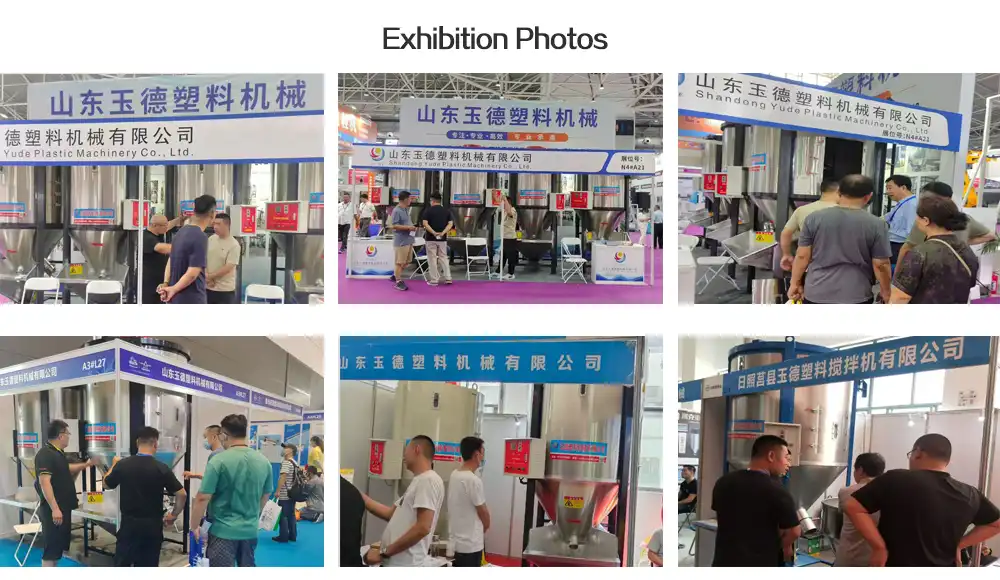
Yude Plastic Machinery has been making specialized products for decades and now sells automatic mixing equipment. They serve procurement workers who need products that work well and are reliable, and they offer quick support. Our wide range of products includes small 300 kg units that are great for research and development (R&D) and large 10 ton systems that are designed for steady production settings. Precision-machined parts, control systems that have been through a lot of tests, and safety features that go above and beyond international standards are all built into every full-automatic plastic mixer we make. We keep a lot of extra parts on hand and run a technical support network that's open 7 days a week, 24 hours a day. This way, your activities will always get help quickly, no matter what time zone they are in.
Our engineering team works directly with customers to create custom solutions, whether you need unique building materials, non-standard capacity setups, or merging with production control systems that are already in place. We are an experienced full-automatic plastic mixer maker and provider that wants to build long-term relationships with our customers. That's why we offer full paperwork, operator training, and ongoing technical advice that goes far beyond just delivering the equipment. Get in touch with our team at sales@yudemachinery.com to talk about your unique mixing needs and find out how our custom solutions can improve your production while giving you a great return on your investment.
References
- Rauwendaal, Chris. Polymer Mixing: A Self-Study Guide. Hanser Publications, 2021.
- Tadmor, Zehev and Gogos, Costas G. Principles of Polymer Processing, 2nd Edition. John Wiley & Sons, 2013.
- Manas-Zloczower, Ica. Mixing and Compounding of Polymers: Theory and Practice, 3rd Edition. Hanser Publications, 2022.
- Society of Plastics Engineers. Plastics Technology Handbook, Volume 1: Materials and Processing. CRC Press, 2020.
- Michaeli, Walter. Extrusion Dies for Plastics and Rubber: Design and Engineering Computations, 4th Edition. Hanser Publications, 2018.
- White, James Lindsay and Kim, Seung Jong. Twin Screw Extrusion: Technology and Principles, 2nd Edition. Hanser Publications, 2019.
Learn about our latest products and discounts through SMS or email