- English
- French
- German
- Portuguese
- Spanish
- Russian
- Japanese
- Korean
- Arabic
- Greek
- German
- Turkish
- Italian
- Danish
- Romanian
- Indonesian
- Czech
- Afrikaans
- Swedish
- Polish
- Basque
- Catalan
- Esperanto
- Hindi
- Lao
- Albanian
- Amharic
- Armenian
- Azerbaijani
- Belarusian
- Bengali
- Bosnian
- Bulgarian
- Cebuano
- Chichewa
- Corsican
- Croatian
- Dutch
- Estonian
- Filipino
- Finnish
- Frisian
- Galician
- Georgian
- Gujarati
- Haitian
- Hausa
- Hawaiian
- Hebrew
- Hmong
- Hungarian
- Icelandic
- Igbo
- Javanese
- Kannada
- Kazakh
- Khmer
- Kurdish
- Kyrgyz
- Latin
- Latvian
- Lithuanian
- Luxembou..
- Macedonian
- Malagasy
- Malay
- Malayalam
- Maltese
- Maori
- Marathi
- Mongolian
- Burmese
- Nepali
- Norwegian
- Pashto
- Persian
- Punjabi
- Serbian
- Sesotho
- Sinhala
- Slovak
- Slovenian
- Somali
- Samoan
- Scots Gaelic
- Shona
- Sindhi
- Sundanese
- Swahili
- Tajik
- Tamil
- Telugu
- Thai
- Ukrainian
- Urdu
- Uzbek
- Vietnamese
- Welsh
- Xhosa
- Yiddish
- Yoruba
- Zulu
Can vertical stainless steel blender mix fine color pigment without stratification?
A vertical mixer plastic stainless steel mixing powder granule color powder can mix fine color pigments with plastic granules without causing stratification. The important part is the vertical airflow system that moves things up from the bottom and outward, making a constant rolling action. By keeping moving all the way through the batch cycle, this fountain-like flow pattern stops separation based on density. When these stainless steel mixers are set up with the right screw pitch designs and run at the right speed ranges (30 to 60 r/min), they achieve mixing consistency of over 98%, which makes sure that the colors are spread out evenly throughout every production run.
Challenge of Mixing Fine Color Pigments Without Stratification
Stratification is still one of the biggest problems that industrial powder mixing processes have to deal with. When you mix light color powders with heavy plastic granules, the particles naturally separate during and after the mixing process because they are different in density, size, and shape.
What Causes Stratification in Color Pigment Mixing
There are several physical processes that lead to particle division. Lighter pigment particles move upward, while heavier plastic pellets fall downward due to gravity. This is called density-driven separation. Changes in particle size make this effect stronger—color powders that are only a few microns thick can slip through spaces between bigger grains and gather at the bottom of the mix. Vibrational forces during shipping or storage make stratification even worse and can undo even the best original blends.
The Real Cost of Stratification in Production Environments
Material segregation leads straight to problems with quality and loses in money. Injection molding operations have trouble with color differences between batches of products, which costs a lot of money in wasted material and machine downtime for cleaning. The end goods from extrusion lines are streaky or blotchy, so they fail quality checks. Stratification affects more than just the appearance of flaws; uneven distribution of UV stabilizers or reinforcing agents makes weak spots in plastic parts, which could cause failures in the field in industrial or automobile settings.
Why Traditional Mixing Methods Fall Short
Horizontal ribbon blenders and tumble mixers often have trouble mixing different kinds of materials. Their main ways of mixing are shear and rolling, which can mix things at first but can't stop them from separating afterward. Fine powders stick together on plastic surfaces because static electricity builds up and pulls them together. These systems can't keep the same quality throughout long batch rounds or discharge processes if they don't have continuous vertical circulation.
How do vertical stainless steel mixers work for fine color pigment and granule blending?
Vertical stainless steel mixers use special technical ideas to get around the problems of stratification that come up in plastic mixing. Getting to know how these systems work helps buying teams understand why they are better than other tools at what they do.
The Vertical Circulation Principle Explained
A helical screw that spins inside a cylinder-shaped stainless steel tank is at the center of the core mixing device. Lifting materials from the cone-shaped base along the central shaft and then throwing them outward near the top makes a continuous flow pattern that looks like a fountain. This upward and outer flow keeps the lighter color powders mixed in with the larger granules instead of separating. The 304 stainless steel construction gives the surface a smooth, non-porous finish with a hardness level of less than 0.6 μm. This keeps particles from sticking to the surface, which would affect the stability of the color from batch to batch.
Design Features That Prevent Segregation
When working with different batch densities, variable pitch screw shape makes the best use of material lift efficiency. Tighter pitch sections at the bottom give tightly packed granules a strong lifting force, while wider pitch sections close to the outlet keep the flow soft so that particles don't get damaged. Controlled spinning speeds of 30 to 60 r/min balance thorough mixing with too much shear force, which could cause heat or static electricity. Conical bottom shapes get rid of dead zones where materials could get stuck, making sure that every batch is fully involved in the mixing cycle.
Material Advantages of Stainless Steel Construction
Stainless steel has important performance benefits that go beyond its basic ability to prevent rust. The non-reactive surface stops harmful colorants or ingredients from reacting chemically, so the product stays pure in medical- and food-grade settings. Electro-polished inner surfaces lower friction coefficients, which lowers the production of static electricity that makes powder stick together. Because of their thermal sensitivity, certain materials can have heating or cooling jackets added to them for precise temperature control during mixing.
Operational Efficiency and Batch Consistency
Modern vertical mixer plastic stainless steel mixing powder granule color powder evenly more than 98% of the time in 8 to 15 minutes, based on the size of the batch and the properties of the materials being mixed. Transparent viewing windows or sample holes let you see the homogeneity of the blend in real time, without stopping the mixing cycle. Complete bottom release through pneumatic slide gates makes sure that no material is held between runs. This means that there are no risks of cross-contamination when moving between color formulations or grades of material.
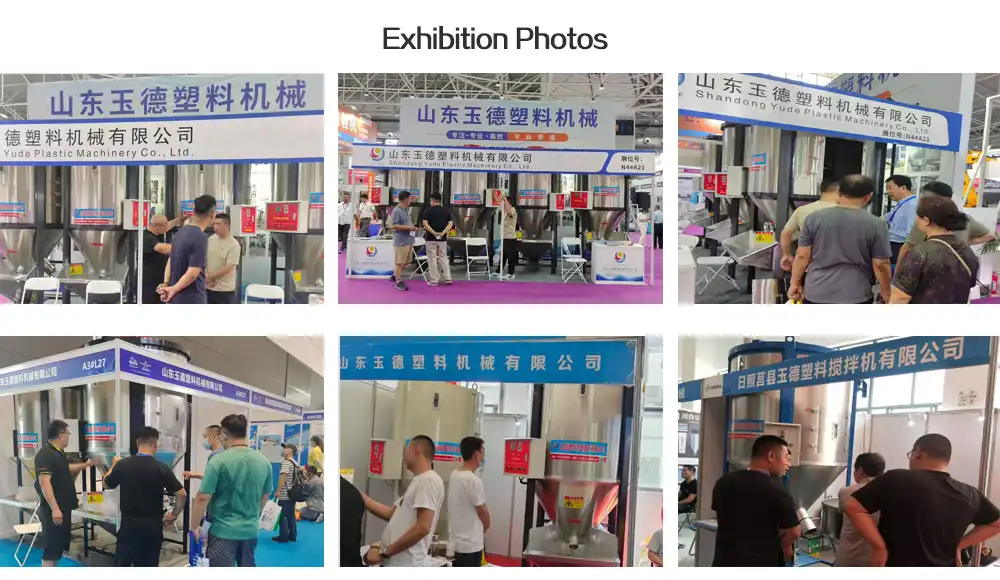
Best Practices to Ensure Homogenous Mixing Without Stratification
Paying attention to operational factors, preventative maintenance routines, and systematic quality verification processes is needed to get constant mixing that doesn't cause stratification.
Optimal Loading Procedures and Batch Sequencing
The loading process has a big effect on how well mixing works. When you add bulk plastic grains before small color powders, the pigment doesn't stick to the vessel walls during the initial filling process. Filling the vertical mixer plastic stainless steel mixing powder granule color powder to 60–75% of its total volume capacity gives the materials enough room to move around while still allowing the mixing action to work well. When you overfill, it stops upward flow patterns, and when you underfill, it leaves too much empty room that lets density-based separation happen during spinning.
Speed Selection and Mixing Duration Guidelines
The choice of rotation speed is based on the properties of the material and the batch density ratios. When the ratio of lightweight pigment to granules is more than 1:50, slightly faster speeds (50–60 r/min) help keep the pigments suspended. On the other hand, slower speeds (30–40 r/min) that don't make as much heat are best for more balanced formulas. Adding three to five minutes more to the mixing time after the color is visually uniform makes sure that the pigment is spread out evenly across the sides of the granules. This stops spots of different colors in the finished products.
Preventive Maintenance for Sustained Performance
Screw-to-barrel clearances should be checked regularly to make sure they stay within the specified range (usually 3–5 mm), since too much wear causes escape paths that make circulation less effective. Checking the temperatures of bearings once a month finds problems with the grease before they cause a catastrophic failure. Interior checks every three months find surface pitting or the start of corrosion early, so re-passivation processes can be done on time to recover the non-stick properties needed for full material release.
Quality Verification and Sample Testing Protocols
Implementing organized sampling methods proves that mixing works. It is possible to measure how uniform a blend is by taking samples from the top, middle, and bottom parts right after mixing is done and then using spectrophotometry or eye comparison with master standards to figure out how much colorant is present. Keeping sample files from every production batch lets you find out what went wrong when there are problems with quality later on. This helps you figure out what went wrong and take the right steps to fix it.
Yude Plastic Machinery makes vertical mixer plastic stainless steel mixing powder granule color powder systems specifically designed to get rid of stratification in tough plastic combining situations. Our Universal Plastic Pellet Mixer is made entirely of 304 stainless steel for the barrel and all of its mixing parts. This makes it resistant to rust and easy to clean, meeting strict food-grade and medical-grade processing standards. The equipment achieves mixing consistency of more than 98%, and the speed of the stirring shaft can be changed from 30 to 60 r/min. It is powered by three-phase asynchronous motors that protect against overload, overheating, and phase loss for stable continuous operation.
We work with plastic producers in North America, Southeast Asia, Europe, and South America who make food packaging, medical devices, and high-end daily chemical packaging. Our technical team makes sure that the tools you need fits your unique mix of materials, output volume, and space limitations. Procurement experts and buying managers can quickly customize our products and get technical information in multiple languages. Our modification services also make sure that they meet regional industry standards.
In addition to selling equipment, Yude Plastic Machinery also offers full support, such as help with installation, training programs for operators, and expert support 24 hours a day, 7 days a week through our world service network. Our customer file management system keeps track of service records and how well equipment is working. This lets us schedule preventative repair that increases uptime and makes equipment last longer.
Get in touch with our technical experts at sales@yudemachinery.com to talk about your problems mixing color pigments. We offer in-depth technical talks that look at your material requirements, capacity needs, and quality goals in order to suggest the best vertical mixer plastic stainless steel mixing powder granule color powder designs. You can ask for performance data, customer examples, or facility visits to see how our equipment works in a setting that is similar to your working situation. Work with a reliable vertical mixer plastic stainless steel mixing powder granule color powder provider that is dedicated to giving you solutions that improve the quality of your products and the efficiency of your operations.
FAQ
Can vertical mixers handle ultra-fine pigment powders below 10 microns without segregation?
Yes, vertical circulation patterns keep ultra-fine particles in suspension by constantly moving upward, which fights the settling effect of gravity. The spiral screw shape makes turbulent zones that keep particles from settling into layers, even when the colors and plastic granules have very different densities.
What maintenance frequency ensures consistent mixing performance?
Lubricating the bearings every 2,000 hours of use and checking the inside every three months keep them working at their best. Visual checks of the outlet gate seals every day and temperature checks of the motor housings every month find problems early on, before they affect the quality of the mixing or break down the equipment.
How should I select mixer capacity for my production requirements?
Figure out the average weight of a batch and choose equipment that has 25–30% more space than it needs to avoid overfilling. Mixing works best at 60–75% fill levels, so slightly oversizing allows for more production freedom while keeping the best circulation patterns that stop stratification.
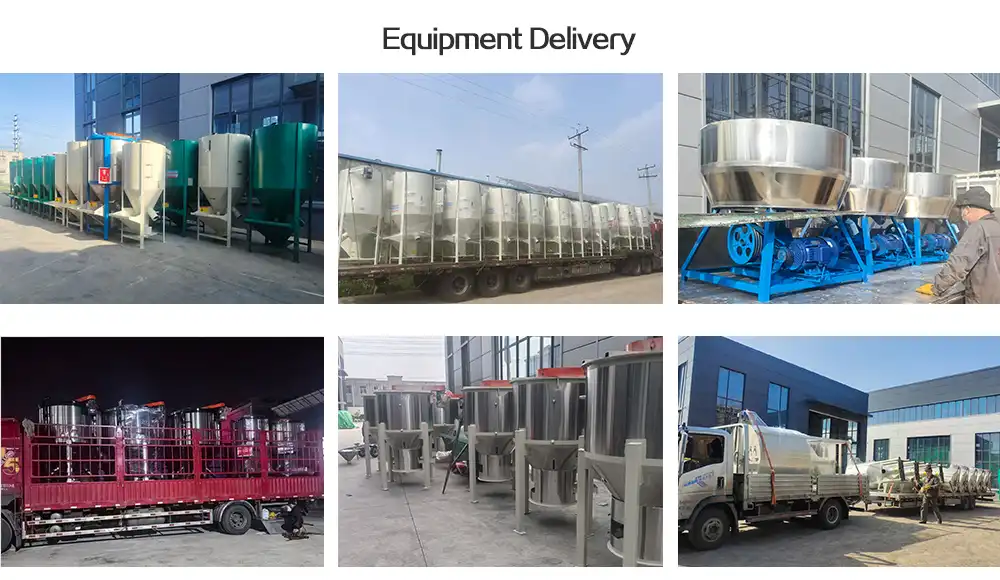
Conclusion
Vertical stainless steel mixers have been shown to solve problems with stratification in color pigment mixing. They do this by using designed circulation patterns, improved screw geometries, and construction that doesn't rust. Their vertical circulation principle keeps light powders continuously suspended within heavy granule masses, making consistency levels higher than 98% across a wide range of material combinations. Vertical mixers are better at preventing segregation than horizontal ribbon systems. They are also easier to maintain and work better with more materials. To be successful, you need to pay attention to how you load, choose the speed, and do preventative maintenance that keeps the machine running well for a long time. When making a procurement choice, you should look at the specs for capacity, the customization options, the supplier's support, and the total ownership costs that go beyond the initial purchase price. Working with skilled makers that offer full technical support makes sure that the equipment choices are in line with quality goals and output needs.
References
- Smith, J.R. & Williams, K.T. (2021). Powder Mixing Technology in Plastic Processing: Principles and Applications. Industrial Press Publishing.
- Chen, L., Thompson, M., & Rodriguez, A. (2020). "Segregation Prevention in Heterogeneous Powder Blends: Comparative Analysis of Mixing Technologies." Journal of Polymer Engineering, 40(7), 523-538.
- European Federation of Chemical Engineering. (2019). Best Practices for Color Masterbatch Production: Equipment Selection and Process Optimization. EFCE Technical Guidelines Series.
- Anderson, P.D. (2022). Stainless Steel Equipment in Food-Grade Plastic Manufacturing: Material Specifications and Quality Standards. Society of Plastics Engineers Monograph.
- Zhang, W. & Kumar, S. (2021). "Vertical Screw Mixer Performance in Fine Powder-Granule Systems: Experimental Validation and CFD Modeling." Powder Technology, 389, 214-227.
- International Society for Pharmaceutical Engineering. (2020). GMP Requirements for Mixing Equipment in Regulated Industries: Design, Validation, and Maintenance Protocols. ISPE Good Practice Guide.
Learn about our latest products and discounts through SMS or email